
I’ve read about Dorothea Quarry quite a lot and it does tend to be a place that features in much recycled articles in various newspapers and websites. One good example being this article from Wales Online which I think was the first I’d read about the place. https://www.walesonline.co.uk/lifestyle/nostalgia/old-forgotten-welsh-village-been-26990230
You can understand that with seeing the site featured in the newspapers online coupled with the fact that today is a very sunny summers day in North Wales, and the site being so easy to access that I was expecting there to be lots of people here that we would have to unwillingly share the experience with. This turns out not to be the case at all which is good with me. I don’t come out into the wilderness to share it with lots of people (apart from in writing form). Arriving in the area it’s apparent that there’s not really anywhere proper to park here if you plan on visiting but on the plus side if you aren’t super adventurous walking trails go straight through and criss-cross the site, there’s even a basic kind of map at the entryway. Still, I’d say you want some proper walking shoes on and some supplies for the day, nobody is going to thank you if you get yourself rescued this close to a town. I say that for all the people reading this who head to these places wearing normal trainers and then get surprised when they end up on their ass and expect there to just randomly be a Starbucks in the middle of these areas.

We get about 20 metres down the trail before Llur spots a massive dragonfly on the path which is a great photo opportunity. The big bug seems to have lost one of its wings, maybe in a territory fight with another male. We end up spending about half an hour taking photos well in Llur’s case trying to get his camera to take a photo…it appears to have been destroyed by the last time we went out and got caught in heavy rain on Pen Yr Ole Wen.

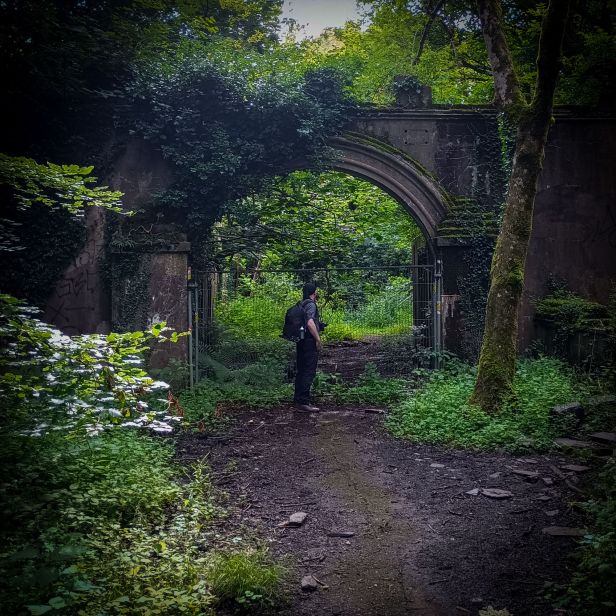
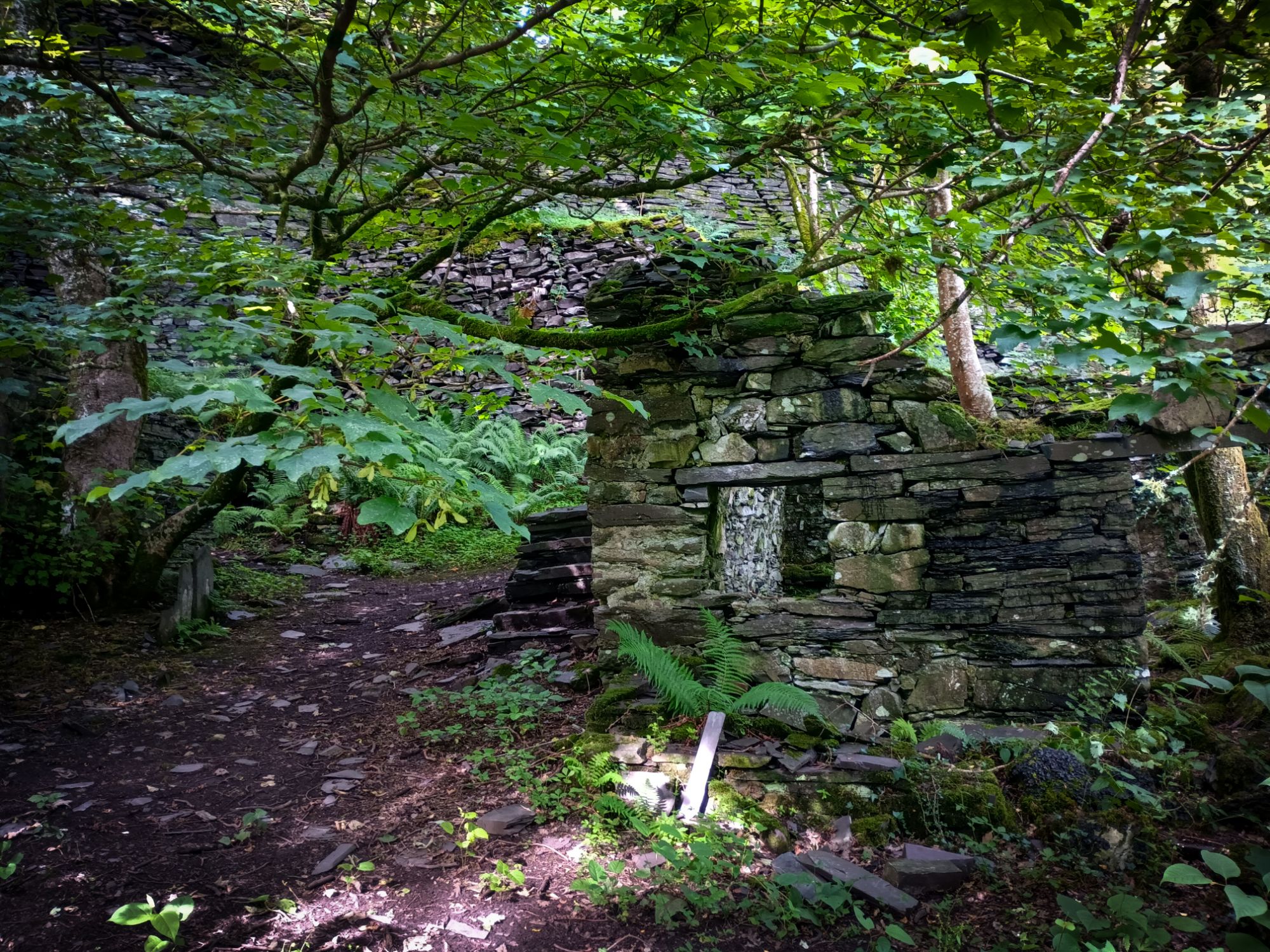
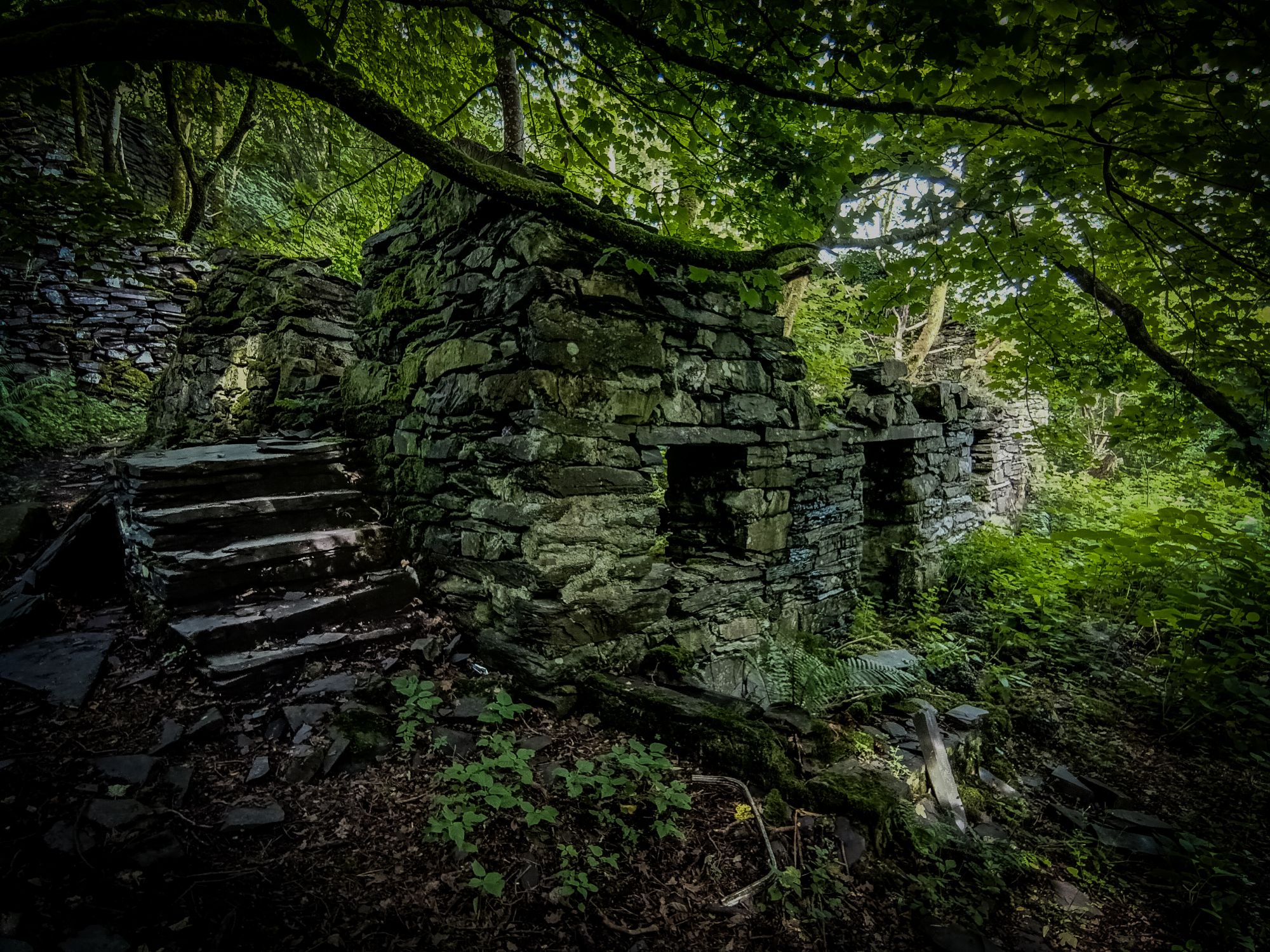
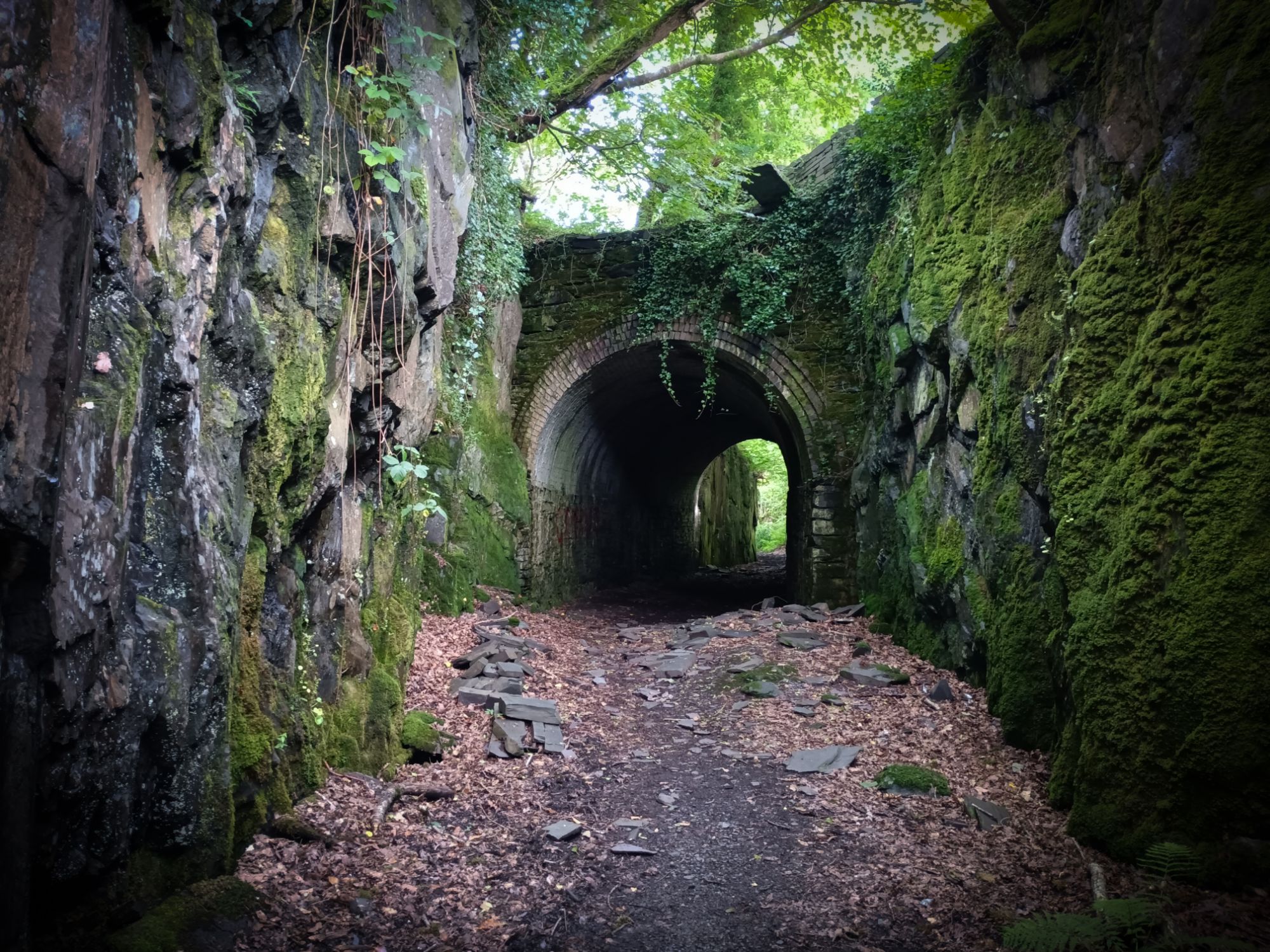
Finally leaving the massive insect in peace to fly off / die maybe, we walk a short distance before we come to a large archway, barriered off with metal fencing. This is the beginning of the ruined original village of Talysarn and the reason for this being left to nature is that in the 19th century the quarry began to expand and the village was relocated, leaving quite a few of the original buildings still here and quite a haunting site. More haunting than my face first thing in the morning if you make the mistake of trying to wake me up.
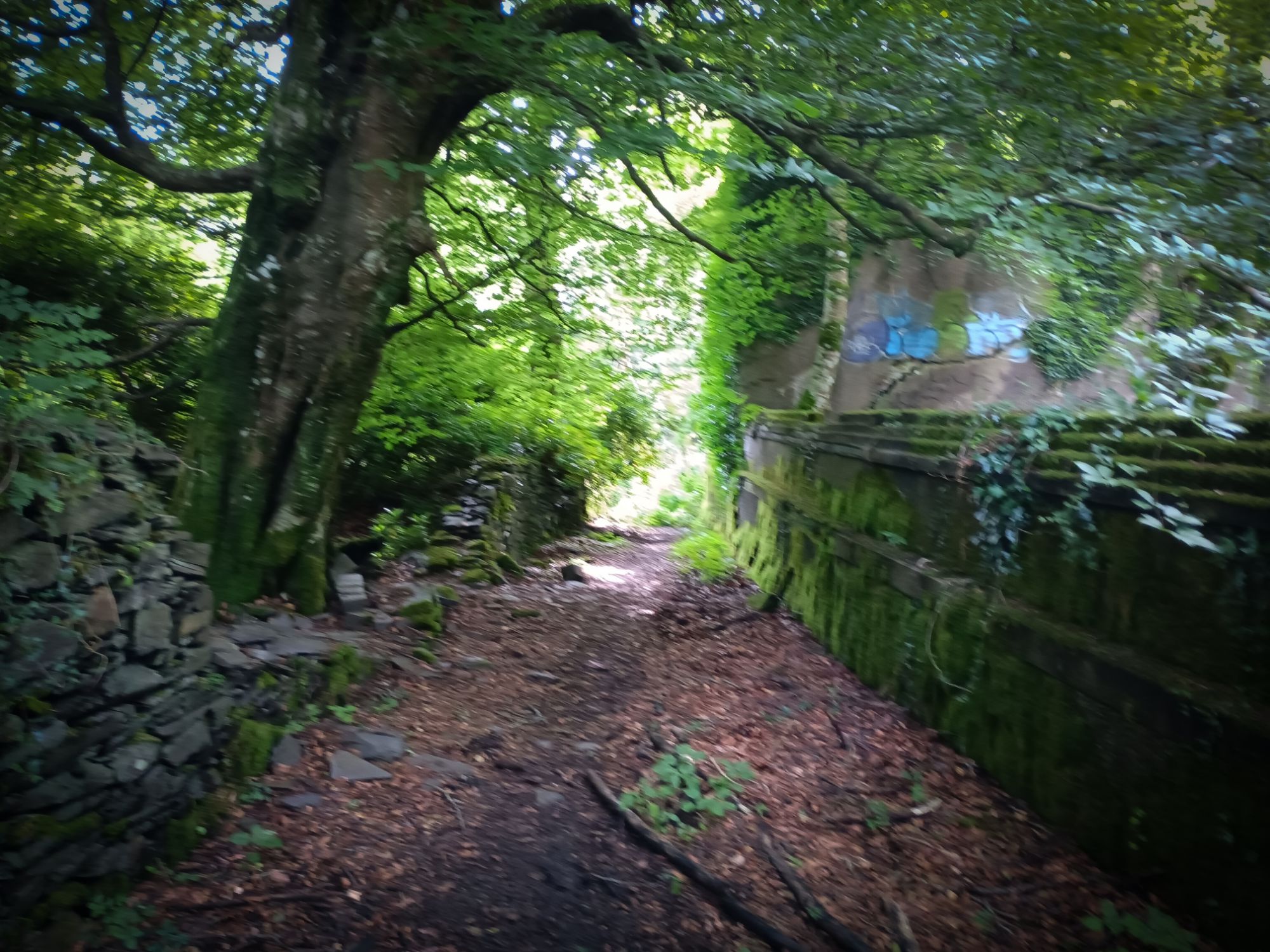
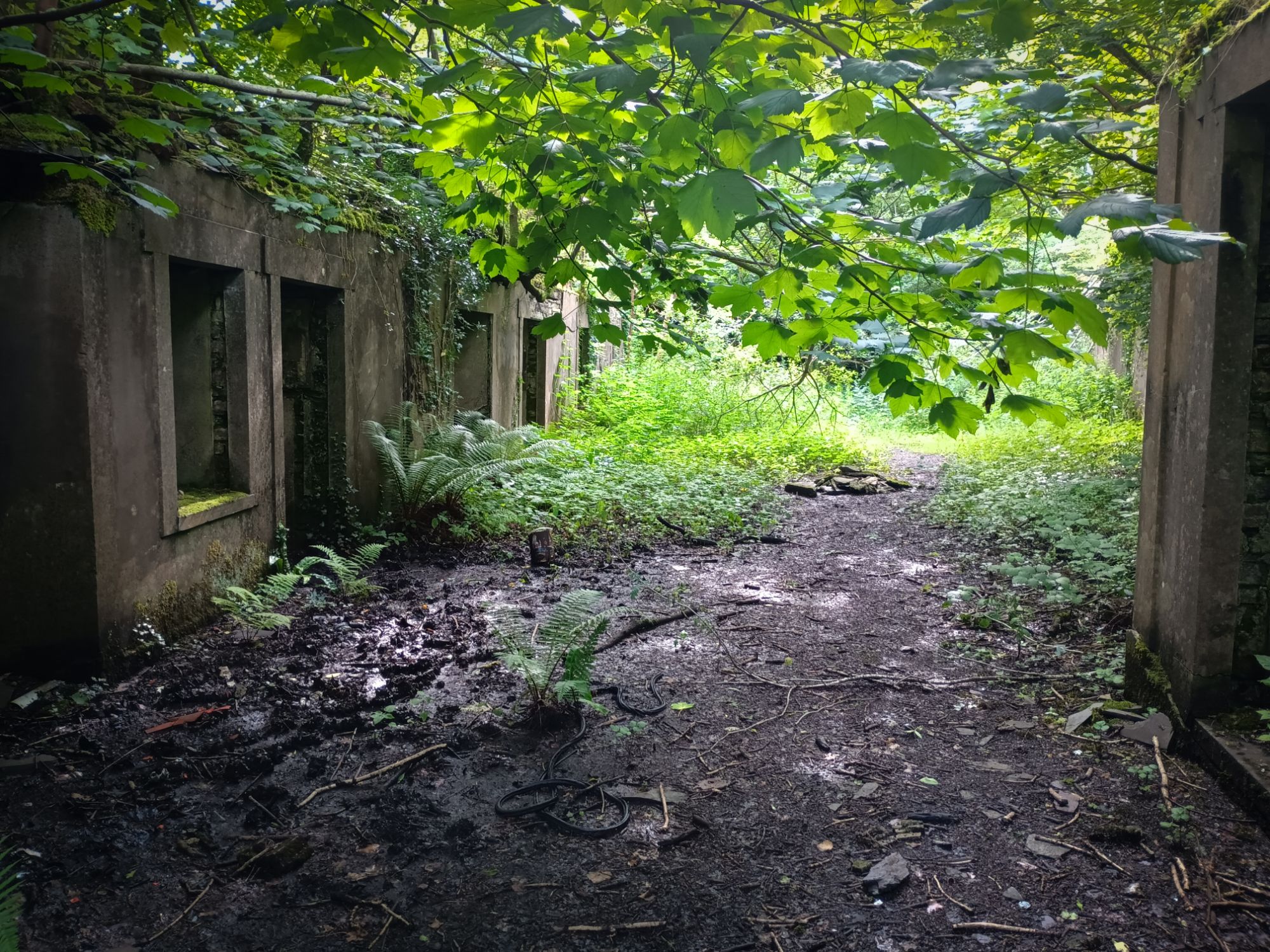
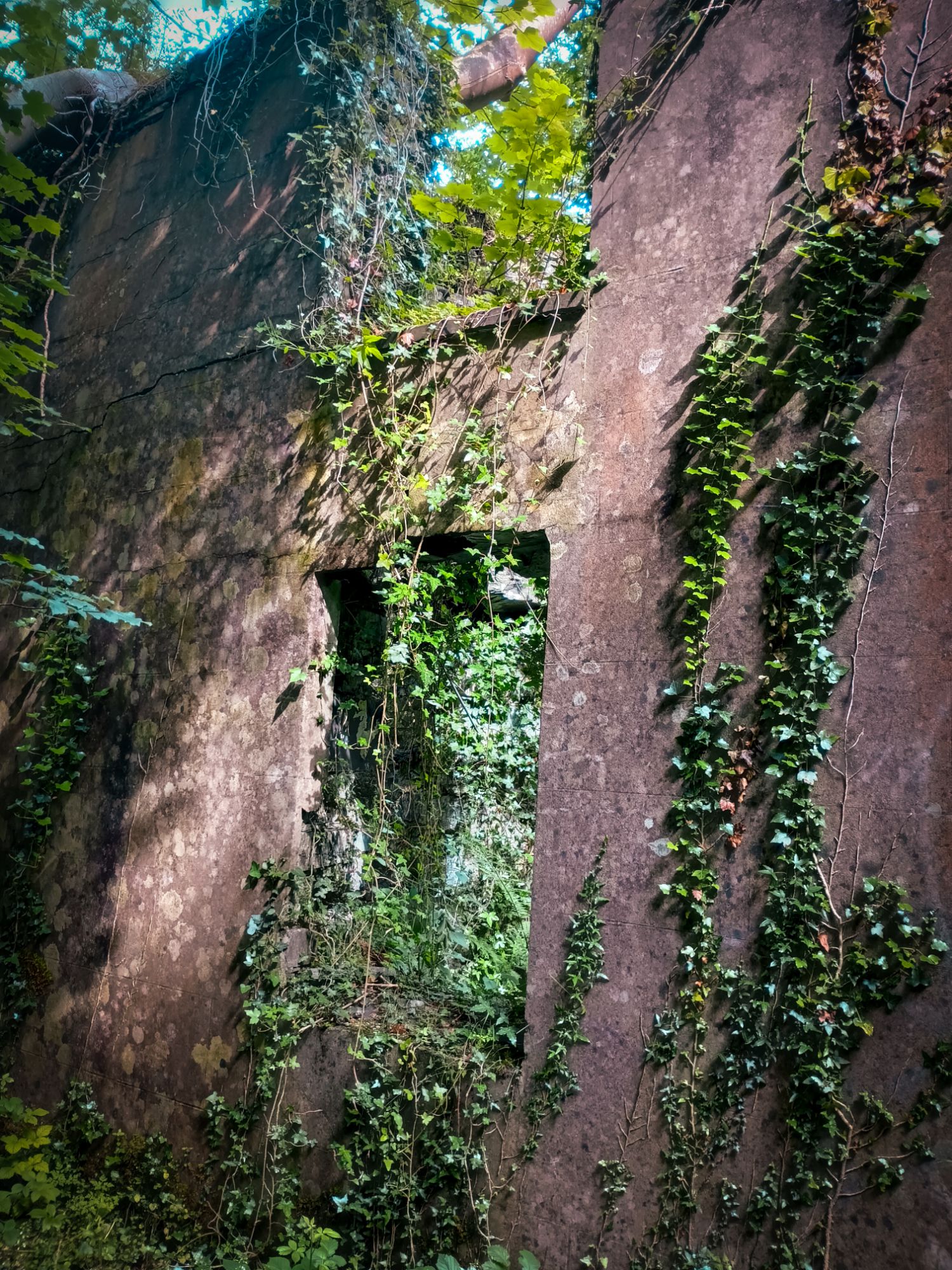
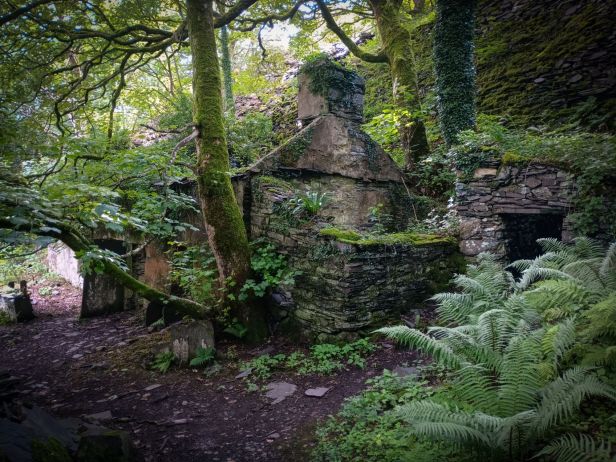
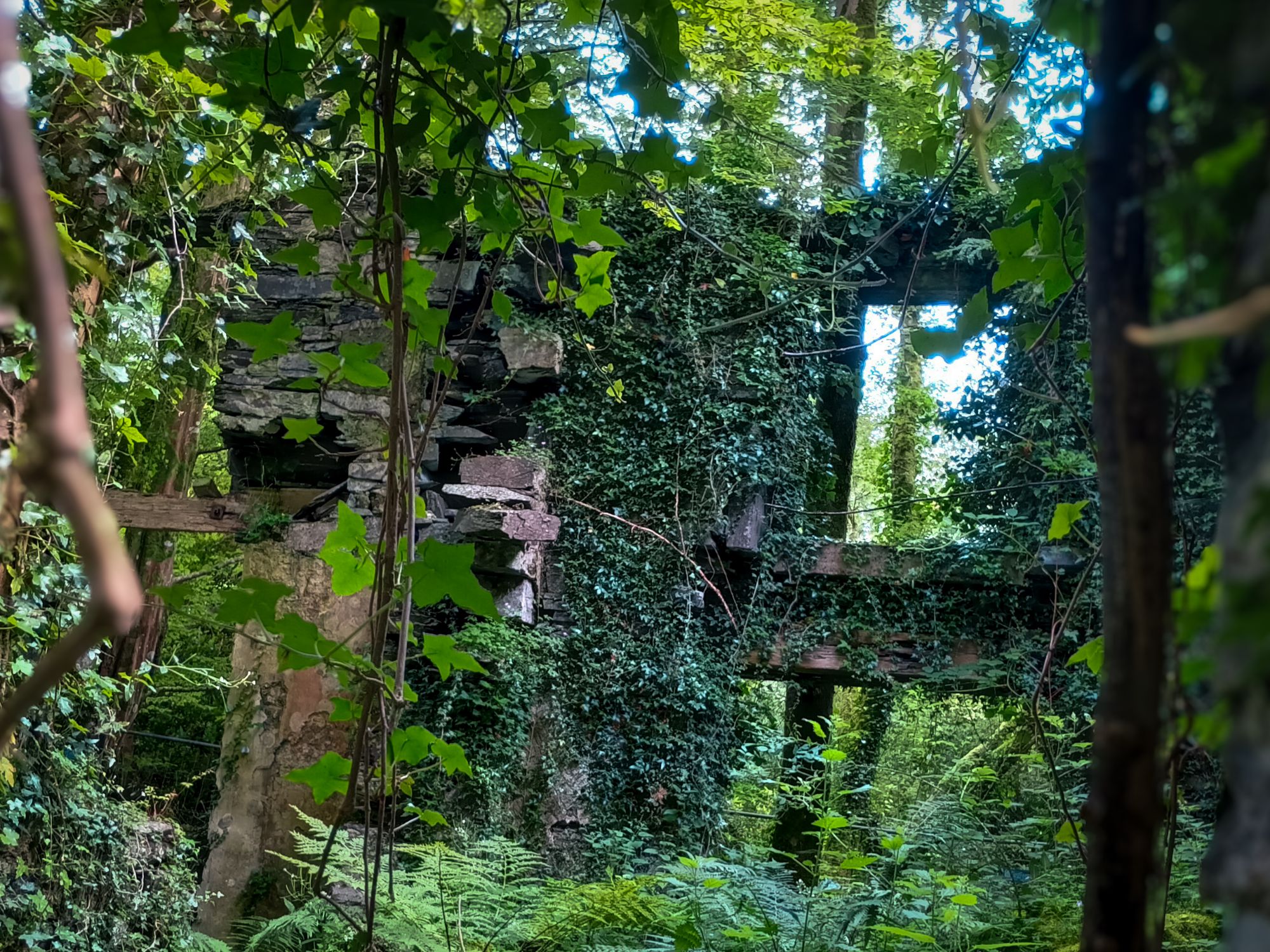
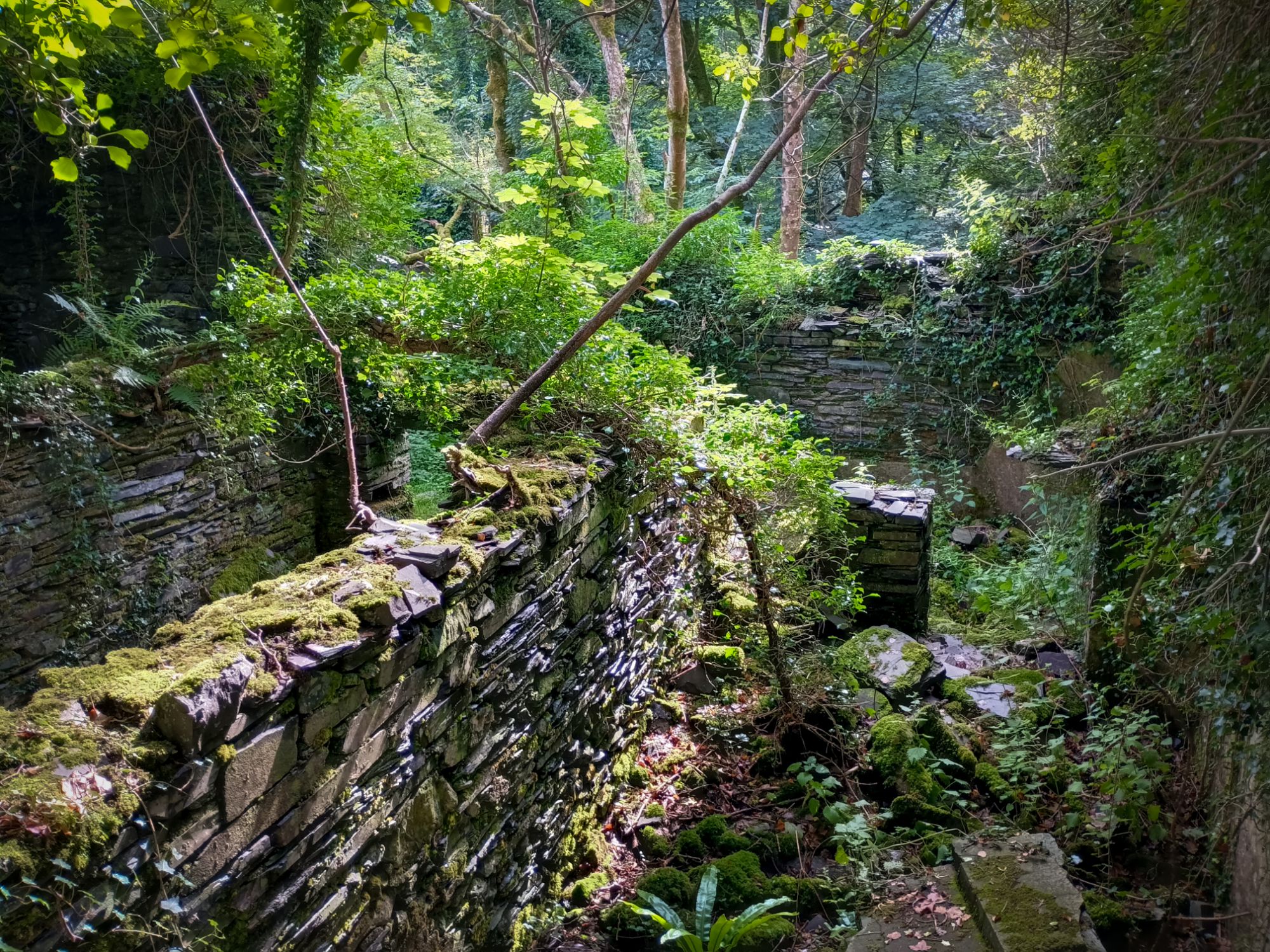
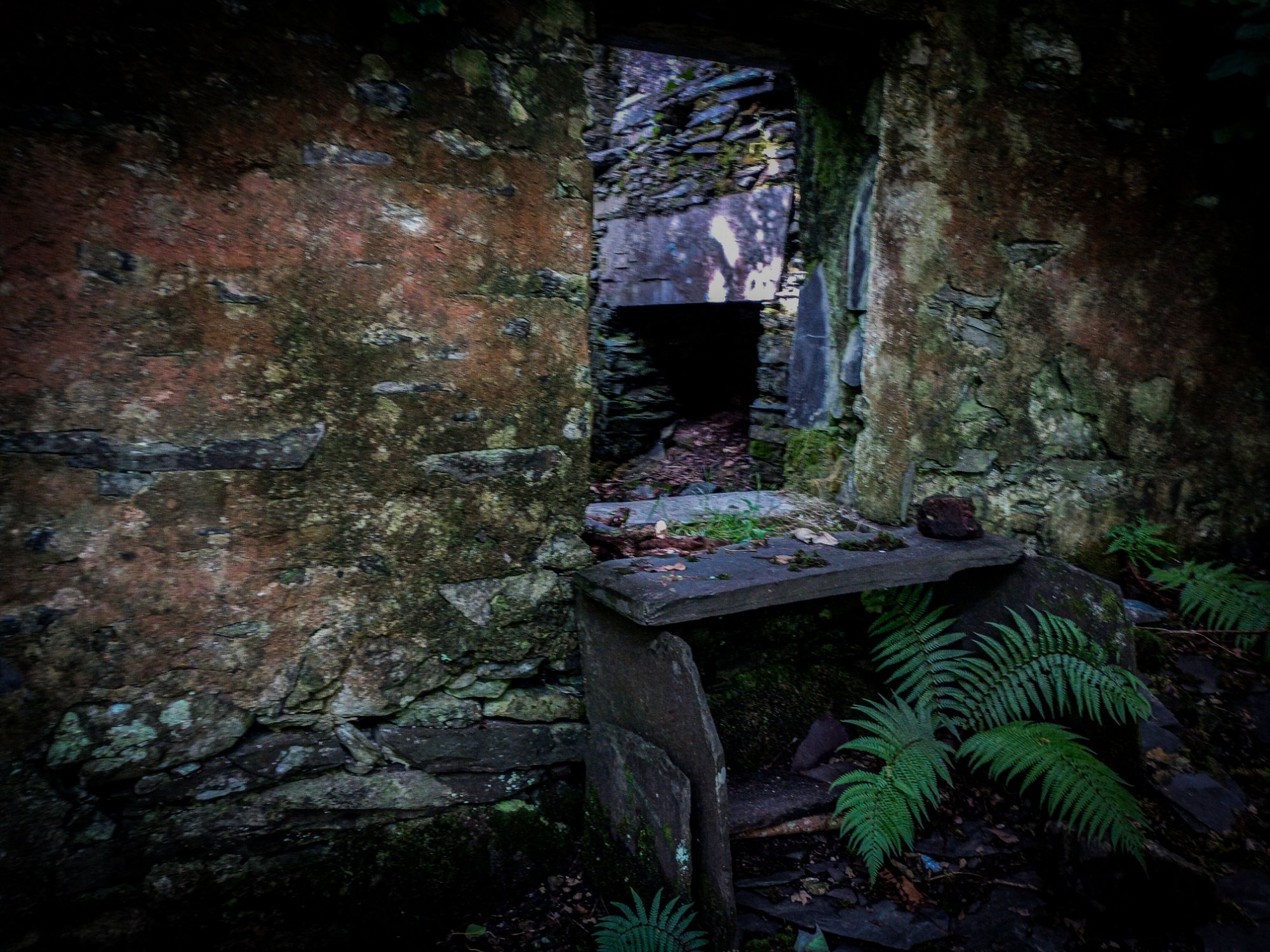
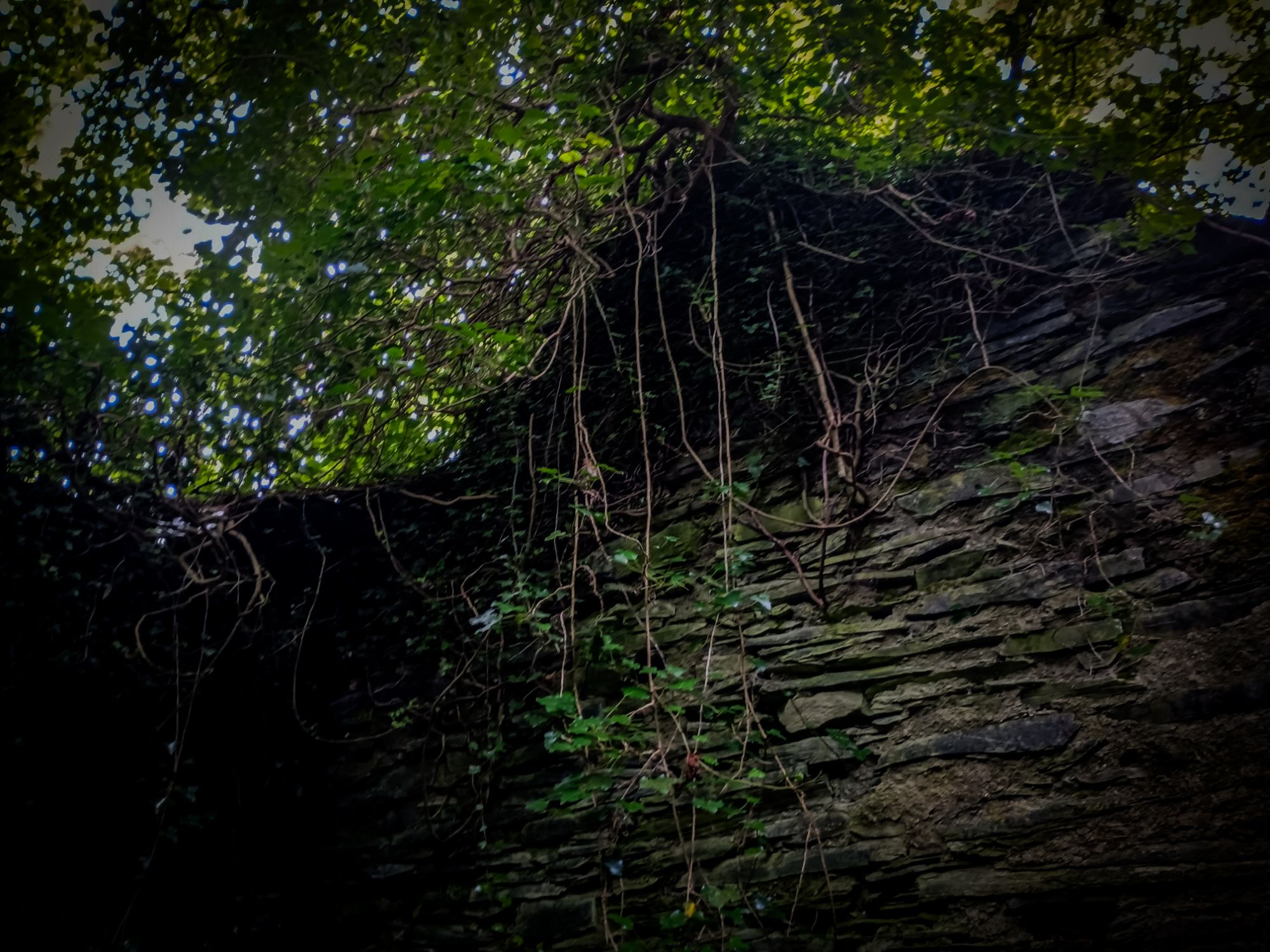
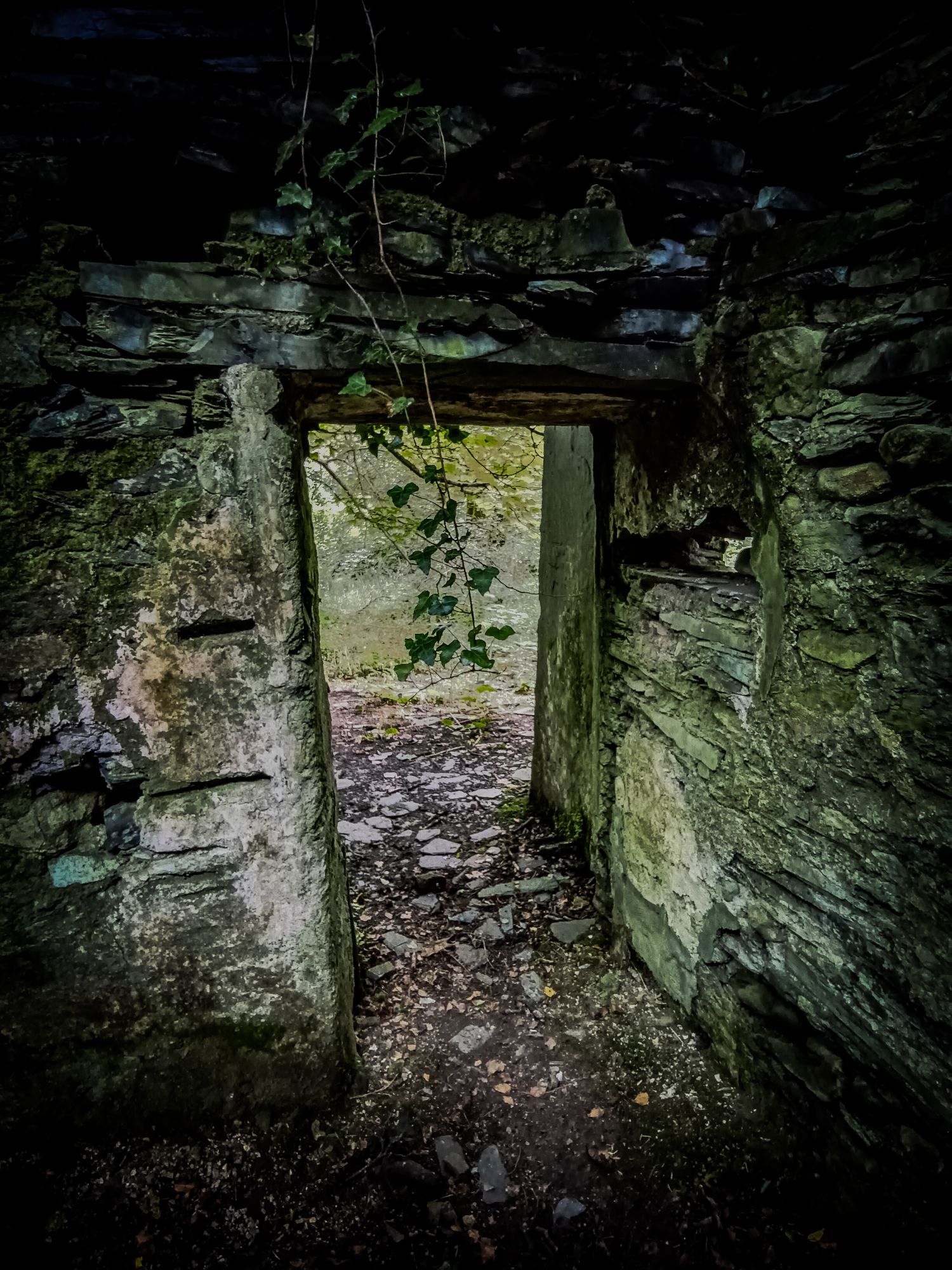
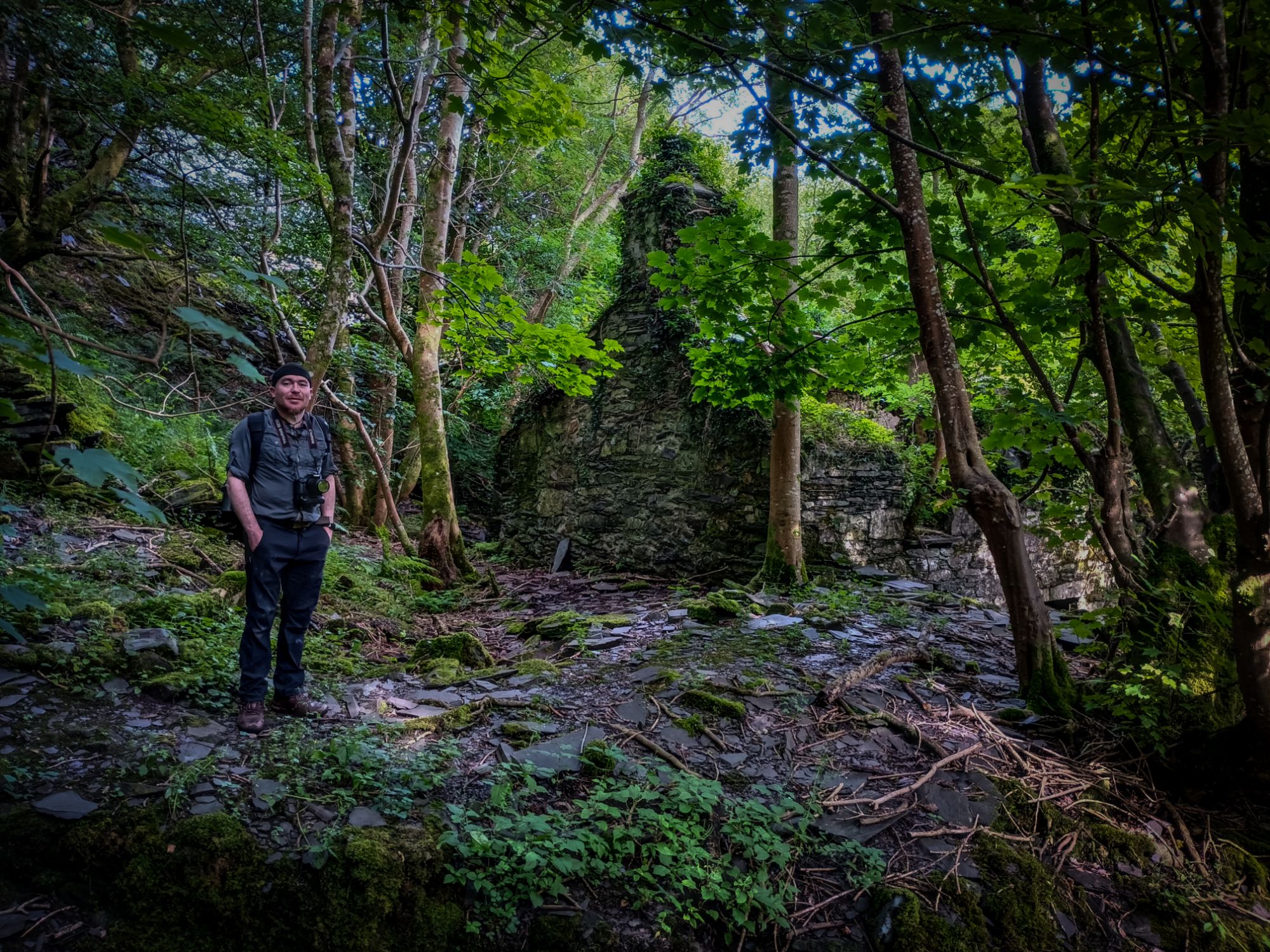
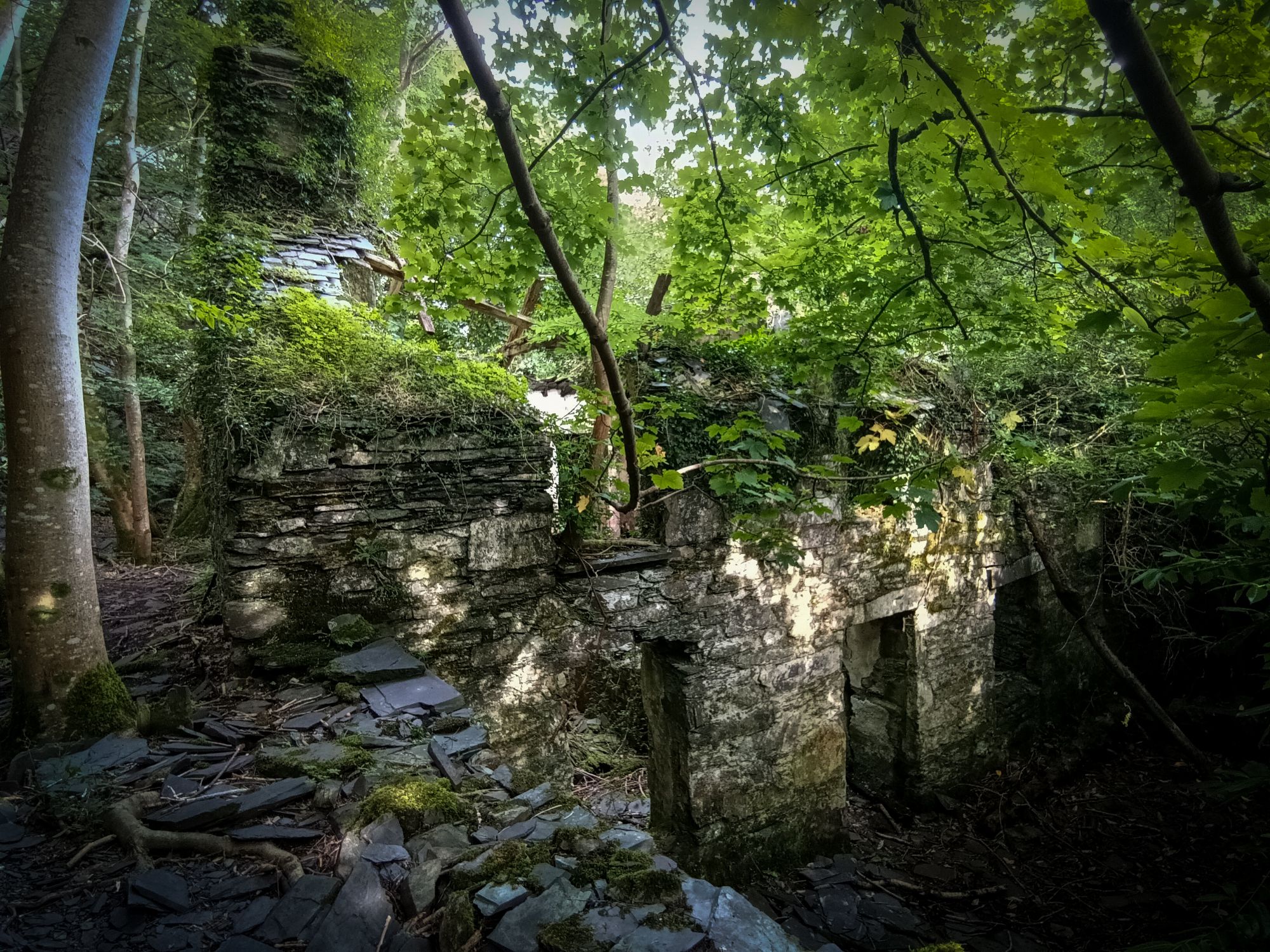
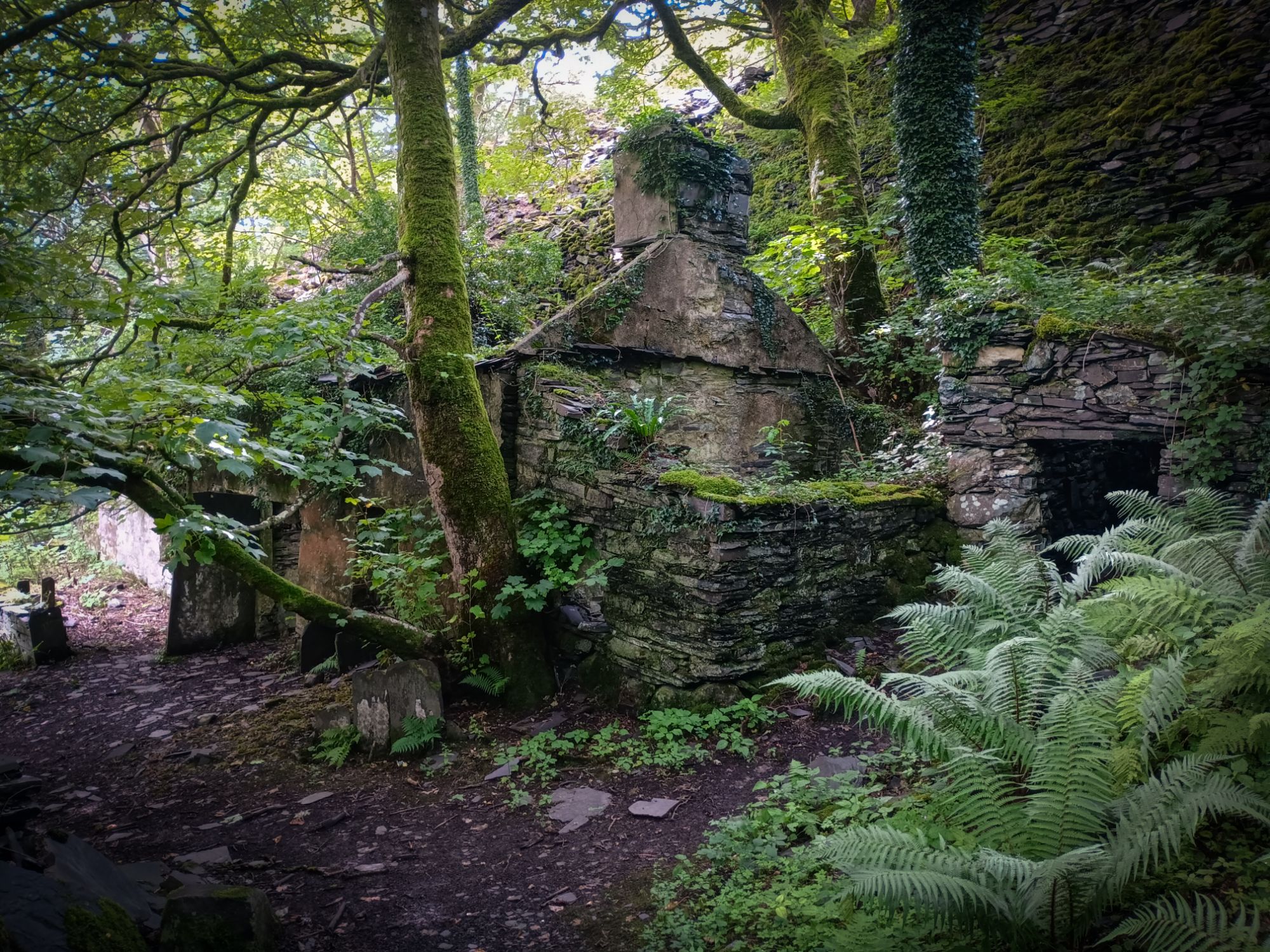
The area is heavily shaded with thick vegetation and ivy aggressively pours out and over things like a sea of green, looking like like an apocalypse film set or some sort of horror which I’m always down with. Light only occasionally fully penetrates the canopy of trees shading the remains of the village and due to this spooky atmosphere, while walking through some of the old buildings I’m half expecting my mate Llur to be dragged off by some mysterious force or vengeful ghost. Accessing the buildings isn’t difficult as someone has taken down the fences in places and once you are through one that’s pretty much it. I can totally understand why they don’t want people in here though due to the potential for falling masonry, luckily we don’t have any drop on us which is never a recipe for a good day. All of the buildings are overgrown but in a way that really gives the place a mysterious atmosphere, It’s always interesting to see how nature, especially in Snowdonia takes over these places again, in some cases rapidly. Having lived in the mountains specifically around Llyn Gwynant, I know from experience – having cleared the garden at my staff accommodation only to see it grow straight over again in around two weeks like nature just wanted to eat the cottage, much like what’s happened here.
It says a lot about the building techniques used for these cottages that they still mainly intact apart from the roofs, the wood having rotten away long ago . In one we still get a good idea of where the upper floor was with the fireplace area still quite obvious.

Dorothea has a bit of a rough past, like many of the quarries around Snowdonia Dorothea opened in the 1800’s to be exact in 1820 which is 204 years ago to the date I’m writing this blog. The quarry was named Cloddfa Turner (Turners Mine) however was changed to Dorothea in the 1830s apparently after the wife of the landowner Richard Garnons. Apparently naming a quarry after your wife was a romantic thing to do back then, most of us just go for flowers and chocolate.

Troubles began here when serious flooding happened in the quarry in 1884 with the pit becoming flooded and several men drowning as a result. The drownings haven’t ended either in the present day as the quarry pit is an unofficial deep water diving centre and 21 divers have also drowned here. The diving here requires some special equipment due to the pit being around 106m deep and as you can imagine is a dangerous undertaking, not that this has stopped this guy from the 50m Plus Divers channel on Youtube who took this video below. It’s fascinating to see how well everything underwater is preserved however. I can imagine being all the way down there in the darkness is probably pretty freaky especially knowing how much danger you are in. The video is impressive though, as much as I love scuba diving not currently something I want to try.
At the start of the 20th century the quarry had reached a depth of over 500 feet and this made it difficult to keep free of water. A better solution was needed so in 1906 a Cornish Beam engine was brought in, the one used was one of the last three of these ever built. It could pump 10 gallons of water per second from a depth of 500ft. This was in use until 1951 when it was replaced by an electric pump. Knowing this it’s fairly obvious to see why the majority of the site is now underwater.
The work here was originally very lucrative however in 1835 the Quarry was bought by an Englishman called Muskett and you can’t really get more English than being named after a civil war gun I guess. Muskett overspent on new equipment to raise wagons from the bottom of the quarry. And due to this he eventually had to declare himself bankrupt. This resulted in the closure of the quarry and at this stage many of the workers were still owed three months wages so the quarrymen revolted and demolished Muskett’s new house, Plas-y-Cilgwyn in retribution which is fair enough I guess.
Following this in the 1840s the Quarry went up for sale and was purchased by a group of quarrymen however they also failed to make the venture profitable and the quarry again went up for sale by 1864 however nobody purchased the site. Instead however, John Williams of Denbighshire set about buying out a considerable amount of the quarries shareholders, resulting in the ownership of more that 70% of the shares and making him a majority shareholder. At it’s peak in production in 1872 around 500 men were employed at the quarry and it was producing thousands of tons of slate, however coming into the time of WWII production yet again slowed. Eventually in the 1970’s the quarry closed for good however the slate landscape of Northwest Wales became designated as a UNESCO World Heritage Site in 2021 of which Dorothea is a part meaning that this site will be preserved.

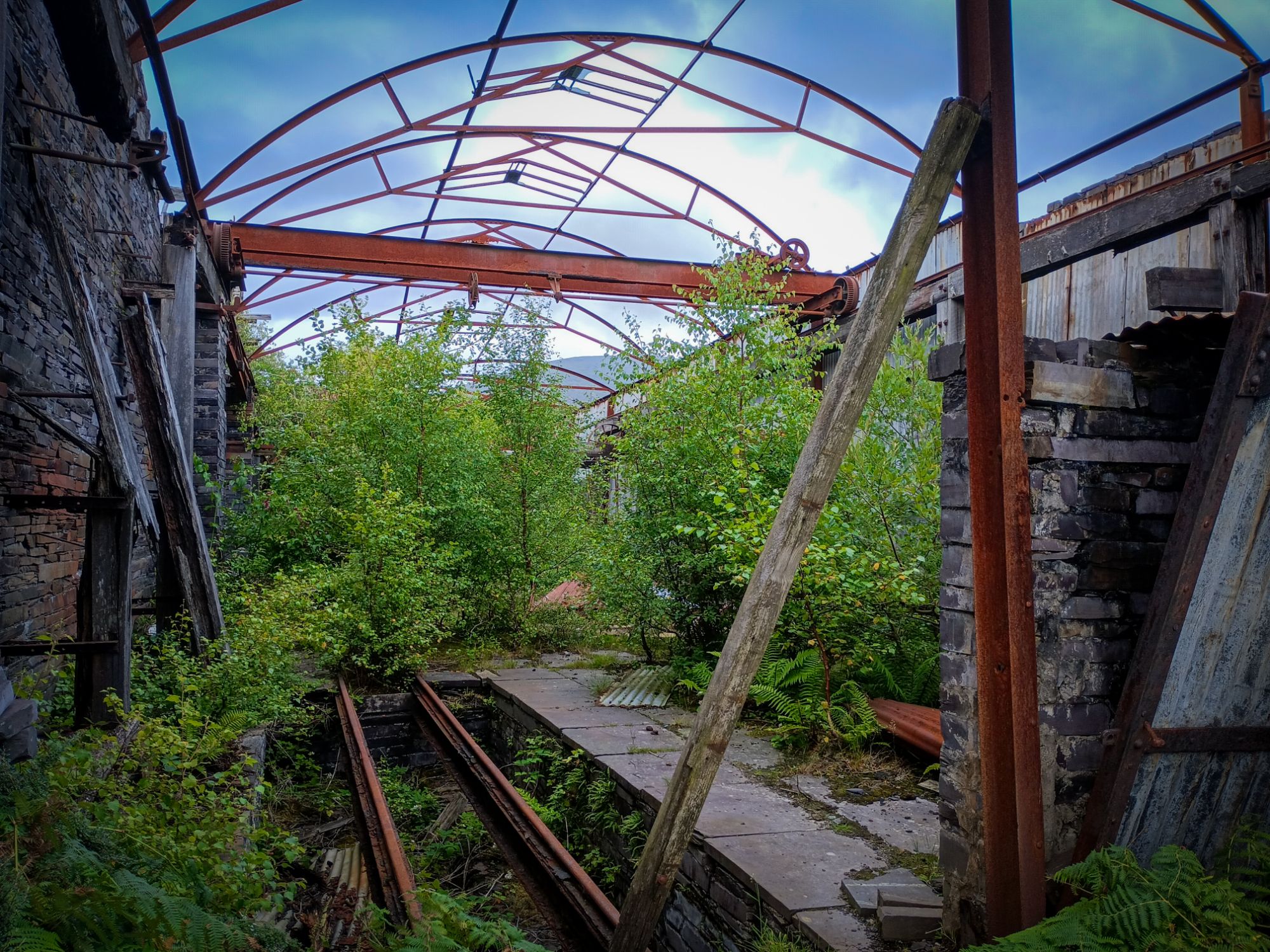

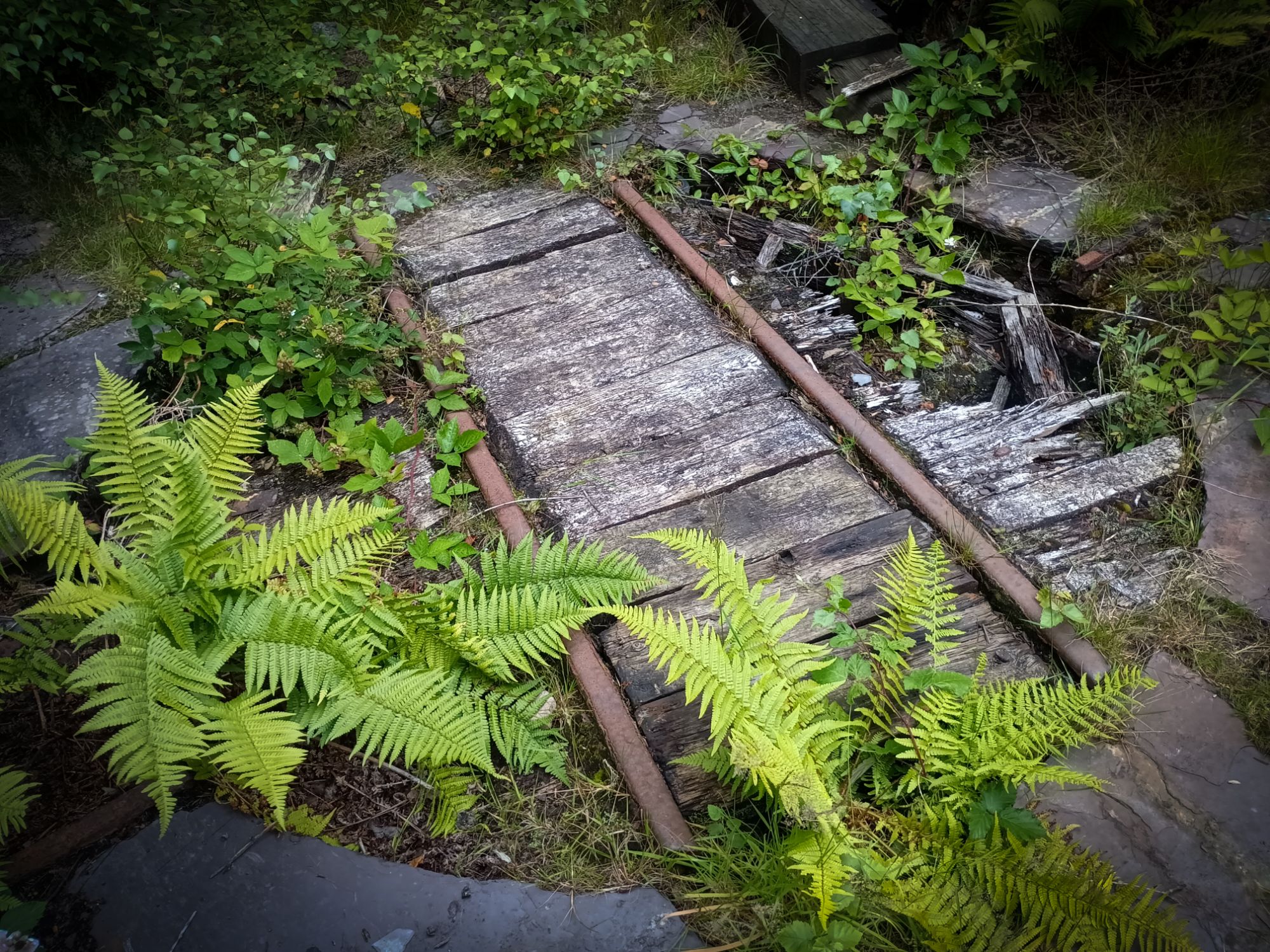
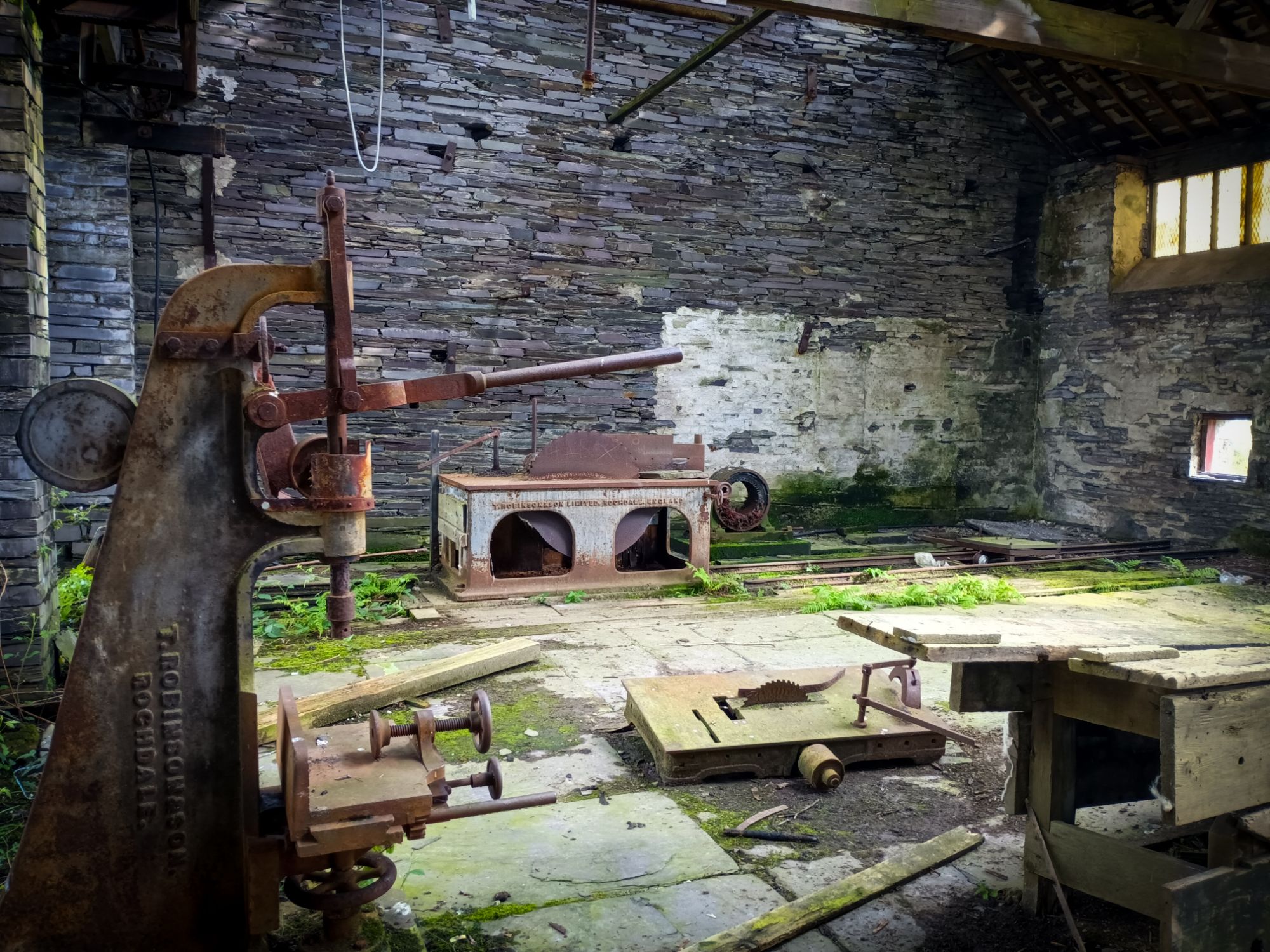
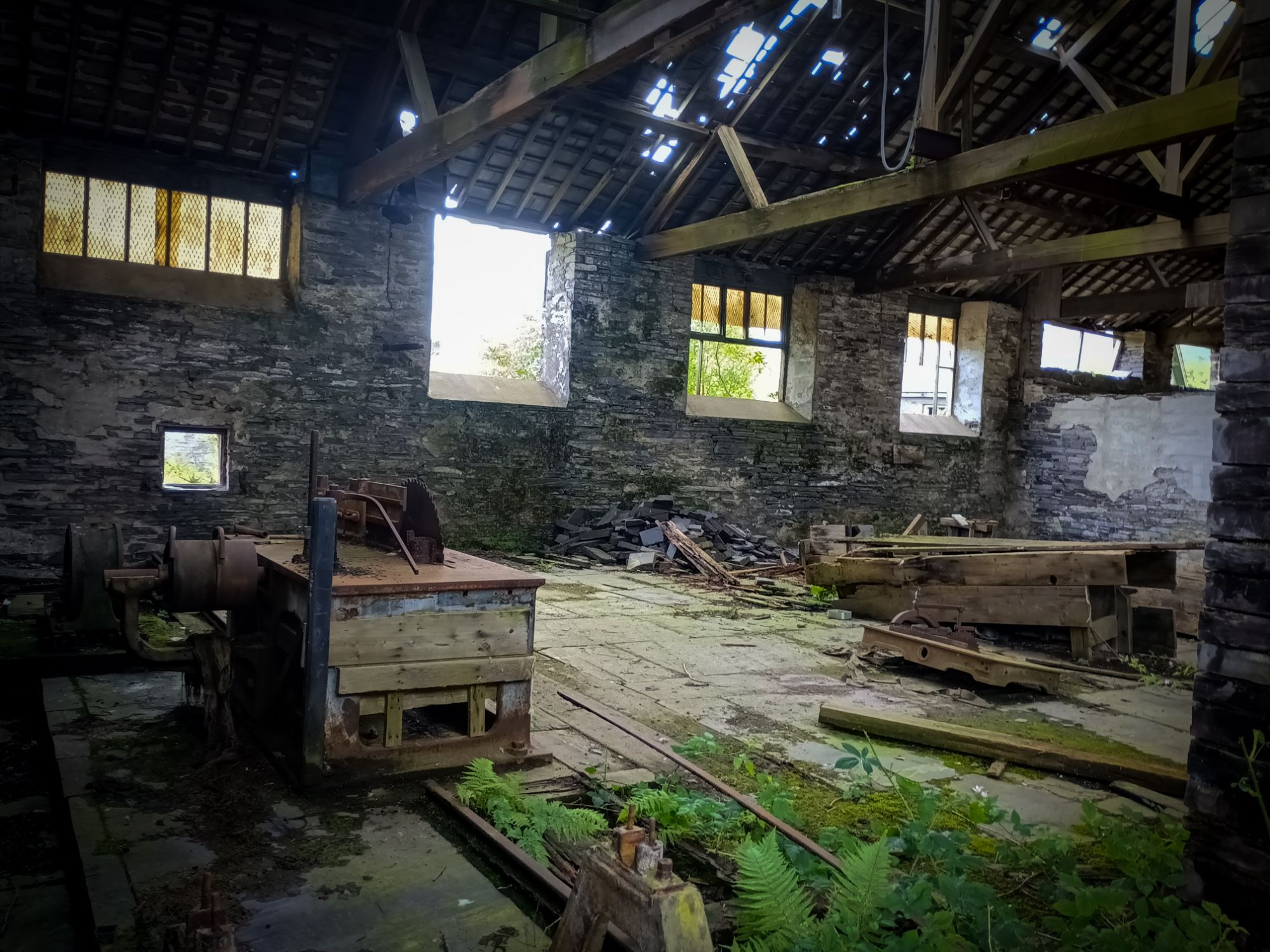
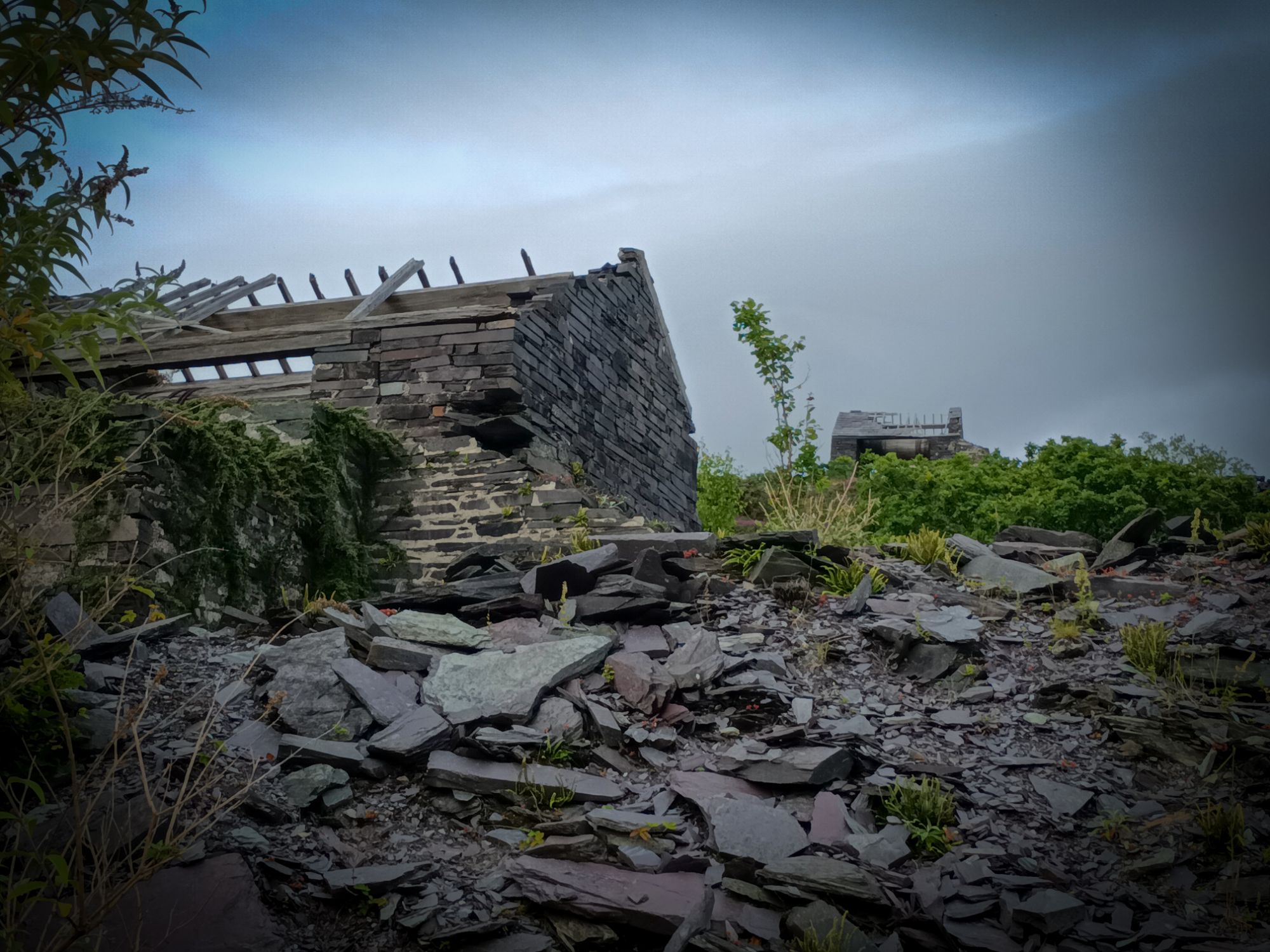

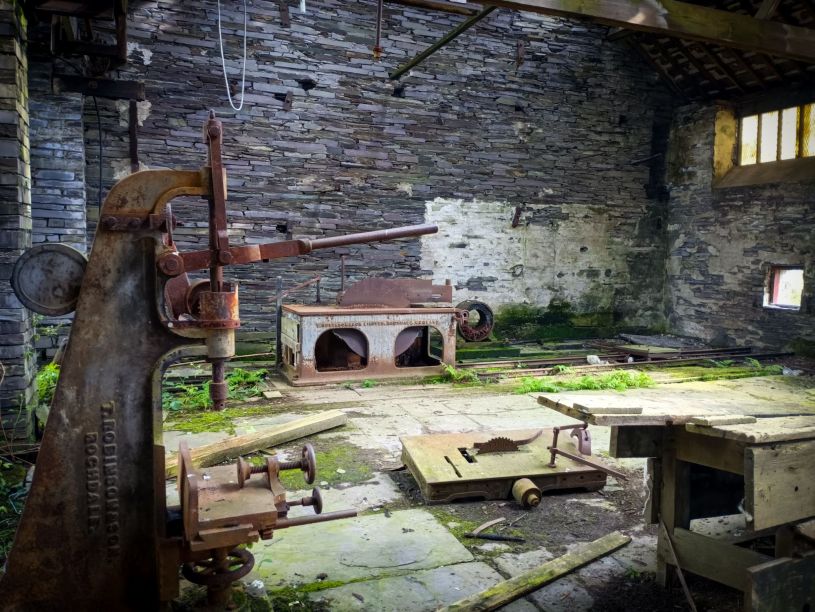
Possibly the most interesting part of us exploring this area is when we find the newer parts of the quarry workings where the buildings and some of the old equipment are still fairly intact, including a massive circular saw likely used to cut slate and turntable used to spin mining carts around, making for some very moody looking photos.
So is Dorothea worth a visit? I’d say if you like a bit of history it really is a interesting place you could spend a whole day if not longer exploring.
If you enjoyed this blog, guide or review and don’t mind spending a further moment of your time to help us out please like, comment and subscribe below – it all helps keep the blog going and we love to hear your views on the content! Is there somewhere we should visit or something we should try? Are you a manufacturer who want’s us to take a look at your kit? Let us know!
 Requiem For The Extreme
Leave a comment