For some tonight is Halloween, to others it is the beginning of the ancient festival of Samhain, Gaelic for ‘the end of summer’. Halloween or ‘All hallows eve’ is a modern religious / commercial invention, widely believed to have stemmed from Christianity absorbing pagan beliefs and practices like those of the festival of Samhain and becoming commercialised. Samhain starts at sunset on October 31st and ends at sunset on the 1st November. It’s on the night of the 31st that the veils between the worlds of the living and the dead are said to be their thinnest, and it’s said that while friendly spirits could reach out into our world, so could dark spirits. Traditionally costumes were worn to hide the identity of the living from dark spirits, and turnips were carved with faces, and lit from the inside to ward them off. These days it’s more common to see pumpkins carved in the same way, derived from American culture. Trust me though a carved pumpkin is much more disturbing!
On this night at 11pm with just an hour to go until the ‘witching hour’ we could be in the pub drinking by a warm fire surrounded by pumpkins with carved funny faces, and according to folklore pretty safe. Instead we are hiking through the heavy mist on what’s said to be the most haunted hill in Lancashire, the infamous Pendle Hill with a mini bottle of whisky (for protection of course). So, how did we end up out here?
The Usual Stupid Plan in The Pub
I haven’t had an adventure in a while so I put out to a few friends that for Halloween we should go somewhere that’s meant to have more spirits than a distillery. We decide to head to Pendle Hill in Lancashire, infamous for the Pendle Witch Trials of 1612 and the hill itself, is one of a number of places said to be haunted by the spirits of those who lost their lives in these trials, amongst others. Sounds like a charming place to spend an evening.
Pendle Hill Looms
As we are driving towards where we are staying we get a glimpse of Pendle Hill with it’s top in the clouds. It looks desolate yet still dominates the skyline here at 557m (just 53m below the height of a mountain), it wont be much of an effort for me and Andy though even at 12 midnight after a few beers. When we arrive at Greendale House And Tearooms the place is absolutely lovely. See the end of the blog for details if you want to take the same trip as us! The owner gives us a warm welcome and makes us tea, which is always a winner as I don’t think I can be classified as human without a constant flow of caffeine. We discuss heading straight away to Newchurch in Pendle very quietly, maybe subconsciously thinking the owner would think we are weird as this is to go and find what’s what’s often referred to as ‘the witches grave’, so we finish our tea and jump in the car ready to go and lurk around a graveyard. I guess when I write it like that it does sound weird.
Arriving in the small village of Barley we grab a quick drink in the Pendle Inn, with it’s Witch inspired sign. Unsurprisingly there’s a few goths blending into the shadowy corners of the bar, which makes sense as Halloween is like goth Christmas. We are only about a mile from Newchurch-in-Pendle so we decide to walk it from here, with darkness is creeping in as we finally stroll into the village. The residents of Newchurch clearly put a lot of effort into their Halloweens, massive pumpkin displays, lots of fake human bones sticking out of the hedges almost someone blew up a load of skeletons and of course plenty of witches.
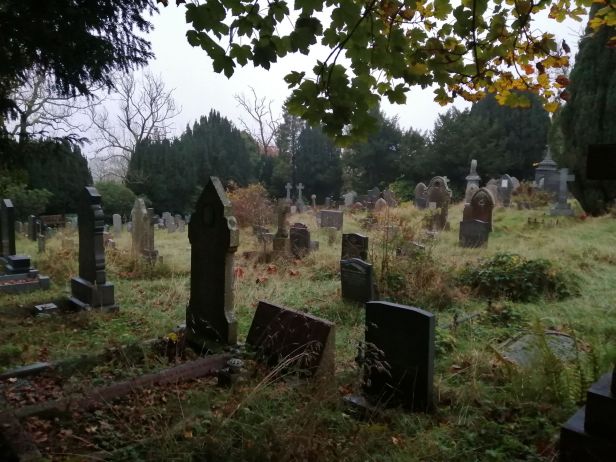
Passing the very appropriate ‘witches galore’ shop we soon spot St Marys Church, and the gate to the graveyard is open. As we walk into it we have one of the weirder conversations of my life which is how to find the grave of the relative of a long dead person accused of witchcraft. To say it’s a bit spooky here would be an understatement as the graveyard is ancient and to add to it’s B movie horror feeling we discuss how it was alleged in the Pendle witch trials that one of the accused witches ‘Chattox’ had desecrated the graves here by collecting bones to use in rituals.
“And further saith, That twelve yeares agoe, the said Anne Chattox at a Buriall at the new Church in Pendle, did take three scalpes (skulls) of people, which had been buried“
Lets be realistic here, Chattox was described as extremely frail and very old, it’s highly unlikely she could have exhumed someone. To our modern thinking, that doesn’t make any sense, to people in the 1600’s thought they could explain almost anything however impossible with religion and superstition.
Original Nutters
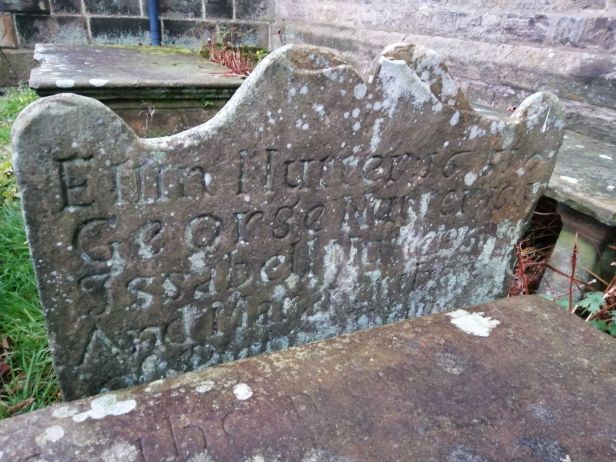
Quite a few others seem to be in the churchyard, possibly looking for the same thing as us. After some traipsing around we realise the oldest graves are actually the closest to the church, and soon find the grave of Ellin Nutter said to be a relative of Alice Nutter behind the back porch of the church. This stone is barely legible though we can quite clearly see Ellin Nutters name among others etched into the stone. It’s known as ‘The Witches Grave’ from the skull and crossbones etched further down the stone which is barely legible and the folklore that Alice herself was buried here however as an executed witch this is doubtful, as they would not have allowed her to be buried on consecrated ground. The skulls and crossbones would be more of a memento mori than a warning, but you have to appreciate peoples imaginations.
On the subject of imagination, on the west facing of the tower of the church is what’s known as the ‘eye of god’ which is an oval stone set in the wall of the tower with a smaller oval in the middle, giving the impression of an eye. This is rumoured to be there to protect the village from evil however, in reality is more practical than superstitious. The smaller oval shape would have originally been an opening to the outside allowing the warden to see funeral or wedding processions outside approaching the church and giving a cue to start bell ringing.
Lancaster Castle
Today is Halloween and getting set up with one of the best breakfasts I’ve had, we head out into a day that’s closer to being night, the sky is a steely grey and the morning looks more like a miserable evening. It really starts to set the scene with the weather for Halloween. Today we are heading for Lancaster castle where the Pendle ‘Witches’ were taken and imprisoned before trial.
When we arrive at the castle walking up to the main gate I instantly feel the formidable and unwelcoming presence of this huge 11th century building and walking through the looming front gate, I get a sense that those arriving here were not expecting to leave unless it was in the back of a Hangman’s cart. If you were poor the chances of you ever leaving were slim. Those arriving here to be incarcerated would be aware they may be tortured and even hung, including the ‘witches’. We get a guide who tells us over 200 executions by hanging have taken place at Lancaster Castle. Of places that could be haunted that would put the place pretty high on the list.
Gallows Humour Getting Roped Into It
If a hanging was taking too long a person known as a hanger on would pull down on their leg, apparently giving rise to the saying ‘you’re pulling my leg’. Strangely a custom evolved in the middle ages of the used hanging rope being cut into pieces and sold on, in the macabre belief that the rope was somehow lucky for those who possessed it. This may have been one of the origins of the turn of phrase ‘Money for old rope’, though it may have also stemmed from reuse of rope from shipbuilding. Death by hanging wasn’t just for serious crimes like murder in fact only 43 of these executions were for this crime the other 157 were for robbery, using forged notes, burglary, cattle rustling, and witchcraft (in medieval times) . Of these executions 131 of these were said to have been carried out by just one hangman who’s name was Ned Barlow, who during his career as an executioner was ironically caught cattle rustling. Luckily or unluckily for Ned hangmen were hard to find so his sentence was reduced to ten years as long as he continued to execute and flog for the prison. At the time of the Pendle witches and before the 1800’s hangings were carried out on the moors above Lancaster, with those to be executed transported by cart from Lancaster Castle via Moor Lane. It is rumoured that the condemned were allowed into the Golden Lion Pub for a drink before they were taken to the gallows. Talk about having a severe hangover.
The Road To The Trials
The families caught up in the witch trials were the families of Chattox and Demdike, all were considered to be vagrants, outsiders, cunning folk (healers) and notable enemies, the Chattox’s being accused of robbing the home of the Demdikes. At this point you’ll be wondering how the ‘witches’ ended up here at Lancaster Castle , well it begins with Alison Device, part of the family of ‘Demdike’ or Elizabeth Southernes was begging on the road to Colne in March 18th 1612. A travelling salesman (know then as a peddler) called John Law passed her and she asked him for a pin, an item that wasn’t cheap in the 1600’s . He refused and walked away from her at which point Alison had testified the figure of a dog materialized which was apparently her witches ‘familiar’ and asked her if she wanted to harm John. Alison agreed that she did and as John walked away he became paralysed down one side of his body and fell to the ground. Today we would have recognised these as symptoms of a stroke but in middle ages Lancashire medicine had a long way to come before a stroke would be identified. And Alison unfortunately truly believed she had cast a spell on John and instead of doing what we all would have done knowing thoughts and attitudes at the time got the hell away from there, she instead attended his bedside at the local inn where she apologised. This was a huge mistake on her part as although John forgave her, his son did not and reported the event to the local magistrate Roger Nowell.
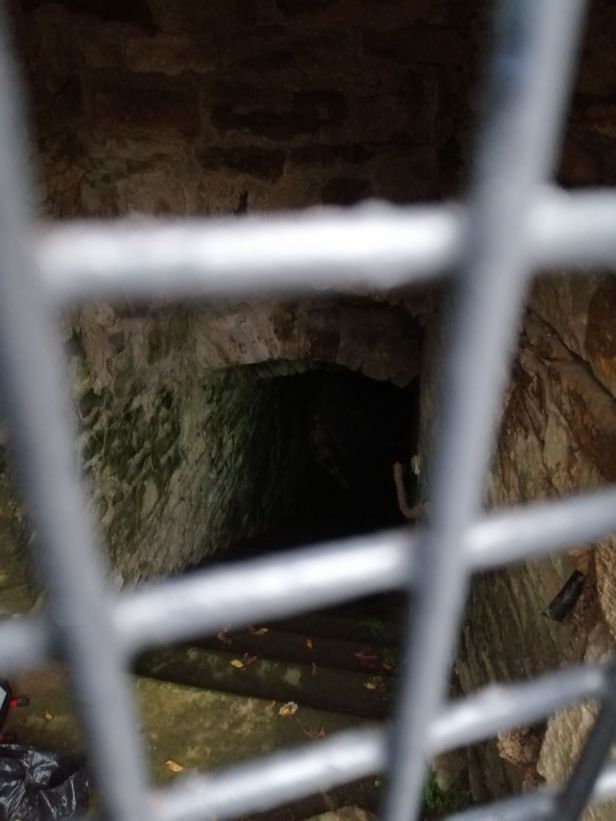
Nowell interviewed the local families of Old Demdike and rival family of Old Chattox and they admitted engaging in witchcraft to him, why they did we will never know. It’s likely these families were healers or ‘cunning folk’ healing people was a good way to make money, though if you could not heal someone, it’s a good way to gain enemies. Maybe for this reason the families did not get on with each other, maybe they sought to incriminate each other, or to outdo each others claims and exaggerate their supernatural power? Either way the result was the arrests of both families and ending up here at Lancaster Castle in the dungeon here in the well tower. Not what you would call a winning outcome, maybe they did really hate each other, or they didn’t realise how much trouble they were really in.
The End Of Demdike
‘Demdike’ who’s real name was Elizabeth Southernes, did not survive being kept here at the castle for trial, which reflects the poor jail conditions at the time. Her nickname ‘Demdike’ reputedly means ‘Demon -woman’ which hints at the attitude taken towards her. Described as “about the age of four-score years” which is around eighty she was reputed to have been a witch for fifty years. She had up until now had a long life until she arrived here considering the average life expectancy of this time was only around 35-40 years old, it’s not a stretch to believe she had the skills to keep herself healthy which would more likely point at experience with natural medicines than witchcraft. Unfortunately she had already admitted to Roger Nowell she was a witch and seriously implicated all others on trial by doing so. She may have truly believed she was a witch like Alice Nutter did, or she may have been pressured into confession or, sought to implicate others on purpose. We may never know, though it is rumoured she may have died in the dungeon we are currently standing in front of, in the bottom of the well tower where it’s said her spirit still haunts to this day and what ghost hunters call blue orbs have reportedly been witnessed.
The Trial Of The Pendle Witches
In 1612 on Tuesday the 18th August here at Lancaster castle the trial of the Pendle Witches began as part of the ‘assizes’ these were periodic courts that were held in main county towns and run by visiting judges from the larger courts based in London. The trials caused a massive public sensation in the witches, and surrounding counties. Sir Edward Bromley and Sir James Altham, the judges of the assize instructed Thomas Potts, the clerk of the court to collect and publish evidence and documents from the trial, under revision from the judges themselves. Make no mistake, this trial was to be by no means a fair one.
The trials began with Anne Whittle known as ‘Chattox’ in the dock. A women described as very old also and decrepit and almost blind who was apparently an enemy of Elizabeth Southerns, known as ‘Demdike’ She was accused of murdering Robert Nutter eighteen years previously to which she pleaded not guilty. Chattox’s daughter Anne Redferne was accused of murder by witchcraft of Christopher Nutter eighteen years previously. Alison Device of course stood trial for harming John Law with witchcraft, Elizabeth Device the daughter of Demdike was accused of two murders and so was her son James Device. Others outside of the two families has become ensnared in the proceedings also. Katherine Hewitt was accused of murdering Anne Foulds, Alice Nutter was accused of killing Henry Mitton for not giving Demdike a penny, Margaret Pearson for the strange crime of casting a spell on a neighbours horse that killed it. Jane Bulcock and her son John were on trial for causing madness with witchcraft and for attending a witches sabbath at Malkin Tower on good Friday in 1612.
Jennet Device Condemns Her Family
Elizabeth Device was charged with murders which she strongly denied with great emotion, however Elizabeth’s daughter, Jennet device was brought in as the main witness of the prosecution. Jennet told the court that the family had made clay images to cause the death of victims, witches riding flying ponies, a witches sabbath held at Malkin Tower on Good Friday where a plan was apparently formed to blow up the castle and kill its governor. All pretty fantastic stuff, though it was in fact coming from a child of just 9 years old at the time and would have usually have been dismissed. Up until this exact point any child under the age of 14 would not have been able to testify in court. The rules had been changed for this trial and you have to consider that young Jennet may have been pressured or coached into what she would say. It is very likely this is the case, and the ‘evidence’ she presented would condemn her whole family. Her mother Elizabeth was reportedly overcome with anger at the child and was removed from the courtroom, maybe incensed her own child had been instrumental in their impending deaths.
When James device was put on trial he reportedly looked terrible, possibly following torture during his imprisonment and following more unsubstantiated evidence he was found guilty of witchcraft as was Alice Nutter who was convicted just on Jennet Devices word that she was present at Malkin Tower at the ‘witches sabbath’. Anne Redfearne was convicted from James Device’s report of her making clay images of people. As the daughter of Christopher Nutter ‘remembering he thought he was the victim of a curse’ she was also convicted of his murder. Jane and John Bulcock were convicted for assisting a witch due to Jennet Device alleging they were at the ‘witches sabbath’ and John was turning a spit roasting lamb. Isobel Windle from Roby was also convicted of witchcraft along with Katherine Hewitt ‘Mouldheels’. Margaret Pearson was tried three times, firstly for murder by witchcraft, then for bewitching a neighbour. Having been aquitted for these alleged crimes she was then sentenced for bewitching a horse. Her punishment? Being put on a pillory (That’s wooden stocks) in Clitheroe, Padiham, Colne and Lancaster for fours market days with a statement of her ‘offence’ displayed, on printed paper on her head
Unfortunate Alison Device was convicted of witchcraft with the main witness being John Law himself, apparently crippled at this point. Alison still believed that she was responsible for this went to him and again asked for his forgiveness which he gave, though this would not save Alison. The court asked if Alison could make him well again. She stated that if Demdike had lived she may have been able to but she was not ‘powerful’ enough. The brutal irony in this was that the chances were Demdike would have actually been a healer who may well have been able to have provided folk medicine and even advice to recover from what was most likely a stroke.
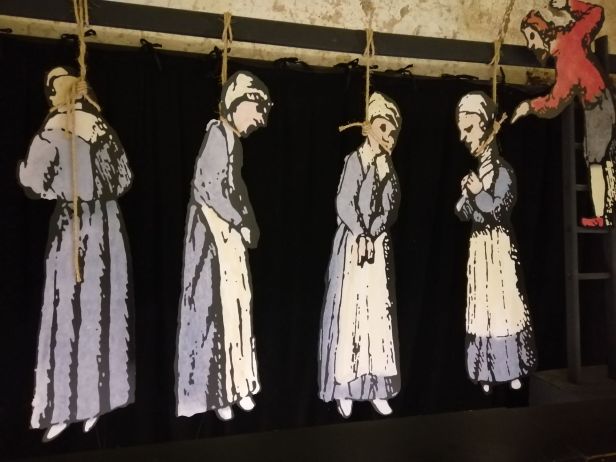
Under the 1604 Witchcraft act all of the convicted were sentenced to death by hanging and on the 20th August 1612 were taken on the cart, outside of Lancaster to be hung on the moors above town.
Jennet Devices Ironic End
Unfortunately for Jennet and soon many others she had helped set the trend by testifying against her family and in a brutal twist of fate she herself was accused of witchcraft by a ten year old and she and a number of others were found guilty by a jury. England had become more sceptical over time however and physical evidence was demanded and the case referred to the Privy Council. The result was that the accused were acquitted and with more than a dash of irony the accuser Edmund admitted that he had lied, because of the stories he had heard about another trial, which was of course the Pendle Witch trial. Somewhat ironically Jennet was being held at Lancaster Castle and despite being acquitted she was poor and probably not able to leave as its unlikely she could have paid for her board at the prison. She probably never left the jail and would have spent her last days there Dying here just like her grandmother before her. Maybe this was a fitting fate, but we will probably never know if she truly deserved it.
Leeting The Witches
Standing by the grim dungeon our guide tells us of the practice of lating or leeting the witches, a strange practice carried out on Halloween / Samhain which is tonight (of course) where a candle would be taken onto the hill and lit from 11 to 12 at night. A route was taken over the moors and Pendle Hill and past Malkin Tower and during this journey it’s said that spirits would do everything they could to put out the candle especially upon passing the site of the Malkin Tower the witches spirits would attempt to blow the candle out. And if they succeeded that was an evil omen for the person. In fact until the person returned from leeting that it was bad luck for them if someone crossed the threshold of where they lived and then only if they had succeeded in their task. Yet If it stayed lit all that time on the hills and moors it was said to have beaten the witches evil powers and the person was said to be safe from them for the rest of that season. Our guide explains Malkin Tower was likely not a tower, and more of a derogatory name used for the building. Malkin has a few potential meanings such as an untidy woman or scarecrow or puppet or a badly made effigy, or a lower class woman As the guide points out though trying to keep a candle lit in Autumn weather especially on he Lancashire hills sounds almost impossible. So on that note, it is Halloween so off we go to Pendle hill. I’d like to see those spirits try and blow out a headtorch.
11pm On Pendle Hill
We set off about half seven to the closest pub which is the Assheton Arms a short walk from where we are staying , have a bit of a food and a quick drink and then we head off walking for Pendle hill, which seems to be way closer than we actually think. The night air is thick with mist and it is unusually quite though we are the middle of nowhere. Soon we come off the road onto a steep side track taking us onto the slopes of the hill, where the mist becomes thicker. There’s horror film vibes for sure, the headtorches only penetrate a few metres into the mist, stopping to look around you can’t see anything in any direction, at least until we come to one of the first marker posts. I’m thinking of the modern day rumours of Pendle Hill which are pretty disturbing themselves, those of satanic rituals on and near the hill and worse, though there is no hard evidence and these may just be urban (rural?) legends. In 2000 A psychotherapist, Valerie Sinason after interviewing 76 alleged abuse victims for a Department of health research paper stated that she spoke to some abusers with genuine satanic beliefs and that some devil worship rituals were carried out by paedophiles who wanted to scare their victims into not talking. “There has been a particular group of victims from the Lancashire area. They have told me about murder and other extremely perverted activities.” “They claim to have witnessed enforced abortions, animal killings, physical and sexual abuse, drug use, pornographic film-making and desecration of churches.” However “A report published by the Government in 1994, which reviewed 84 cases, concluded there was no evidence of Satanic abuse and only three cases of ritual abuse.” All pretty messed up stuff but generally unproven, don’t let it stop you visiting this lovely area of the country.
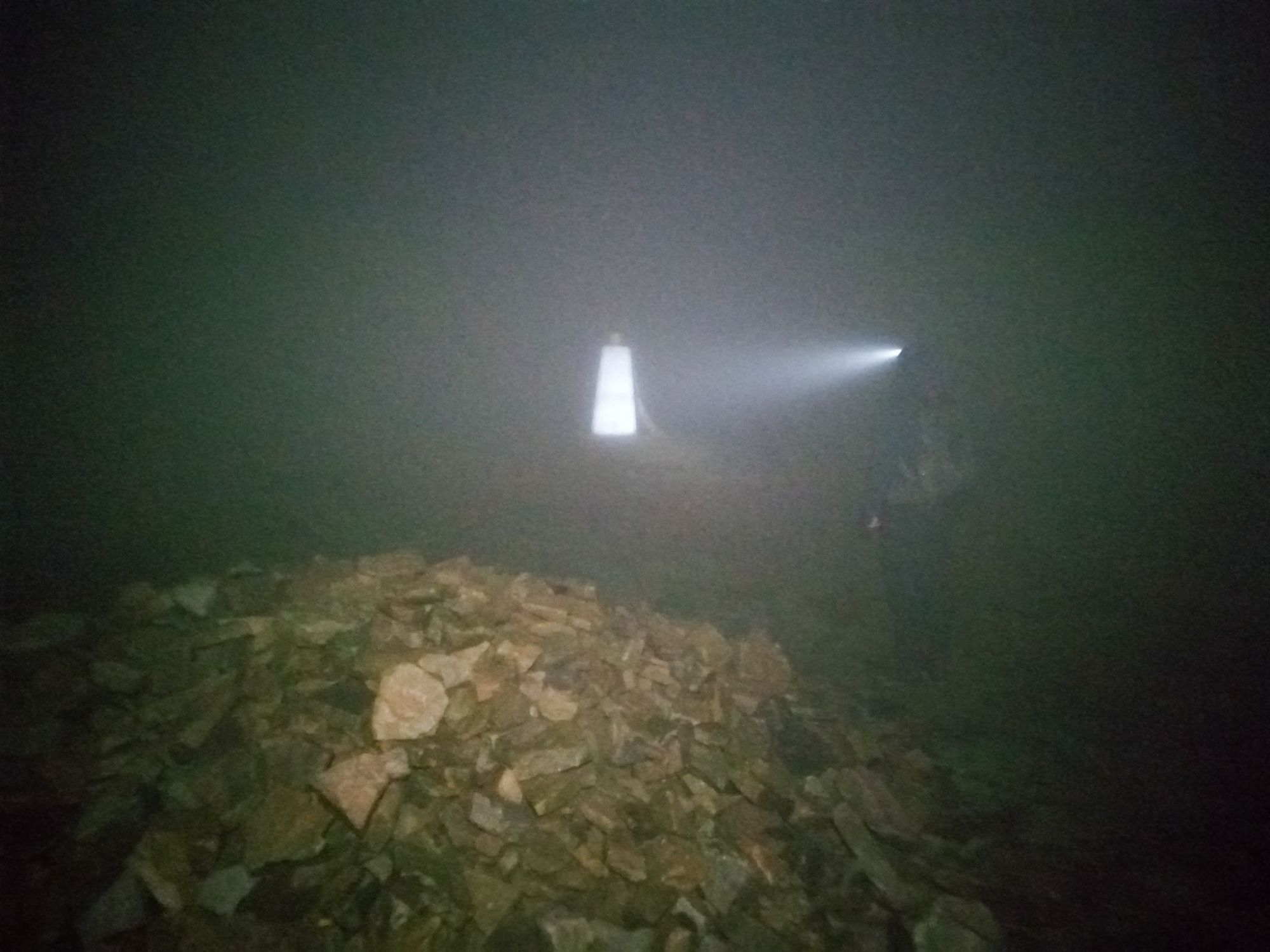
At 11:40pm, close to midnight we arrive at the summit and the fog is almost impenetrable, there is nobody here, just a witches broomstick and a carved pumpkin which is either someone’s idea of a memorial or a joke. We take a few pics then turn off the headtorches and stand there in total darkness, swigging whiskey.
It’s very atmospheric but nothing happens and we get bored very quickly so decide to head to one supposed site of Malkin tower be as it’s meant to be the worst place to be at 12pm on Halloween according to the leeting the witches tradition. We see no ghouls on the way down but after ten minutes of some kid making stupid witch noises just a bunch of kids who seem to think we are mountain rescue, just because we ae wearing proper hiking gear. We stop to talk to them a bit and they ask us seriously if we believe in ghosts, to which we both essentially respond we believe there is stuff out there we cant explain. They ask if we have seen anything and we are honest in saying we really haven’t, and that we are going to try and find the possible Malkin Tower area. We are still on the hill after 12:00 and bar the weird noises made by the people we just passed, maybe being murdered nothing happens.
The Witches Cottage: Malkin Tower?
Back in 2011 while the company united utilities was carrying out work at Lower Black moss reservoir where were are currently headed a 17th century cottage was unearthed, a cat was bricked up inside the wall of a sealed room, a practice noted as being a superstitious practice to ward off evil spirits. See the BBC News article here https://www.bbc.co.uk/news/uk-england-lancashire-16066680
This has been noted as a good candidate, though unconfirmed for Malkin Tower. The other is Malkin Tower Farm, The building is now covered yet again to preserve it so unfortunately you can’t go and look around, but we stop to ponder this while we wait for midnight near lower black moss reservoir. And the spirits, well bar the Whiskey in my coat pocket there are none, it has however been an unusual hike. We head back to the hotel in the darkness and fog and I’ve probably got more questions about the whole thing than I did heading out.
A Terrible Legacy
At the Salem Witch Trials in 1692 in America over 200 people were accused of witchcraft. A large amount of the evidence was provided by children with none other than the Pendle Witch Trials being the possible reason for this. These trials are considered as the largest and most terrible in history. Really the scariest part of this whole story is not the supernatural but the atrocities carried out by people, against those they didn’t feel fit in usually the poor and more than often women. If there are spirits around Pendle Hill you could forgive them for being pissed off.






 Requiem For The Extreme