

I’m pretty buzzing for this weekend as not only have I got an SRT course booked but my mates joining me and we are going down Porth Yr Ogof cave also, to make a proper adventure of it!I’ve been part of the North Wales caving club for a while now and most caving clubs have training courses available so when SRT popped up I jumped at the chance. SRT means ‘Single Rope Technique’ which is essentially a combination of skills required for using one rope to ascend, descend and traverse in order to access a cave. It’s not just used by cavers but in lots of different forms of rope access, and as an adventurer it’s a hell of a skill for your arsenal. If you climb already getting into a cave may seem easy, you can abseil, but how do you get back out again? Well that’s where the SRT comes in. Cavers originally used ladders to get in and out but these were big, often heavy and hard to manoeuvre so SRT was employed instead, anyway more about in the next blog.
Porth Yr Ogof
We both drive down to the Brecon Beacons area and arrive in Tredegar where are staying at the Cambrian Bar and grill for the next few days, the rooms nice but the moment we get there we get a cuppa on get all of the gear out and head straight out for Porth Yr Ogof.
Parking up near the seven waterfalls walk located in the Fforest Fawr (Big or great forest in English) Geopark. we drag our kit out of the car, and head down the trail into a 60ft deep gorge to the cave mouth. Time to go Super Mario on this hole in the floor. The cave mouth is huge at 5m tall and 17m wide it’s not the only entrance to this cave but it is the largest, in fact It has the largest cave entry of any cave in Wales. Walking towards it the thing is impressive, if this was a Welsh legend there would most definitely be a big ass dragon or some sort of murdering water spirit in there. Which considering the accidents that have happened here would be an understandable legend. The cave also has the most entrances of any in Wales which stands at 15 currently, it’s name, Porth Yr Ogof translates as ‘gateway to the cave’ or ‘mouth of the cave’. We are extremely lucky that today there are no adventure groups, other cavers or school groups going down here which miraculously gives us the place almost to ourselves which is as rare as finding a polar bear in the Sahara. We start suiting up at the cave entryway just on the stone path, and a few kids with an adult are milling about inside the entryway but don’t go in which is probably for the best as they definitely not prepared or equipped for this.

We wade into the cave mouth through the river which is currently quite low, having checked the weather previously we are pretty certain the water levels should stay low, though as you make your way inside the cave and see bits of trees wedged into the rocks you can get a sense of the rivers power once it rises. You wouldn’t want to be here when it’s very high, which is only highlighted by the large bits of tree embedded every now and then in…the roof.

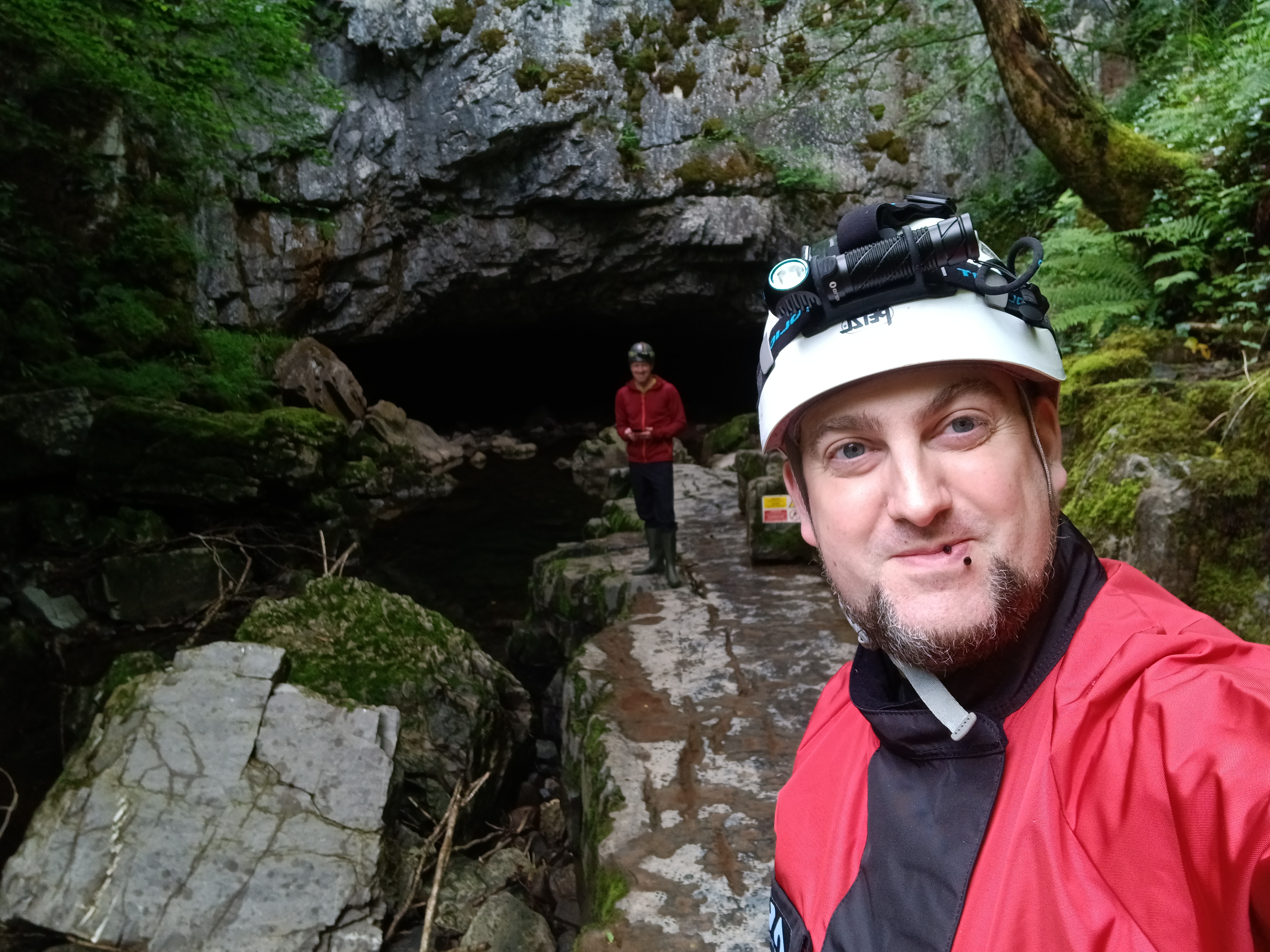
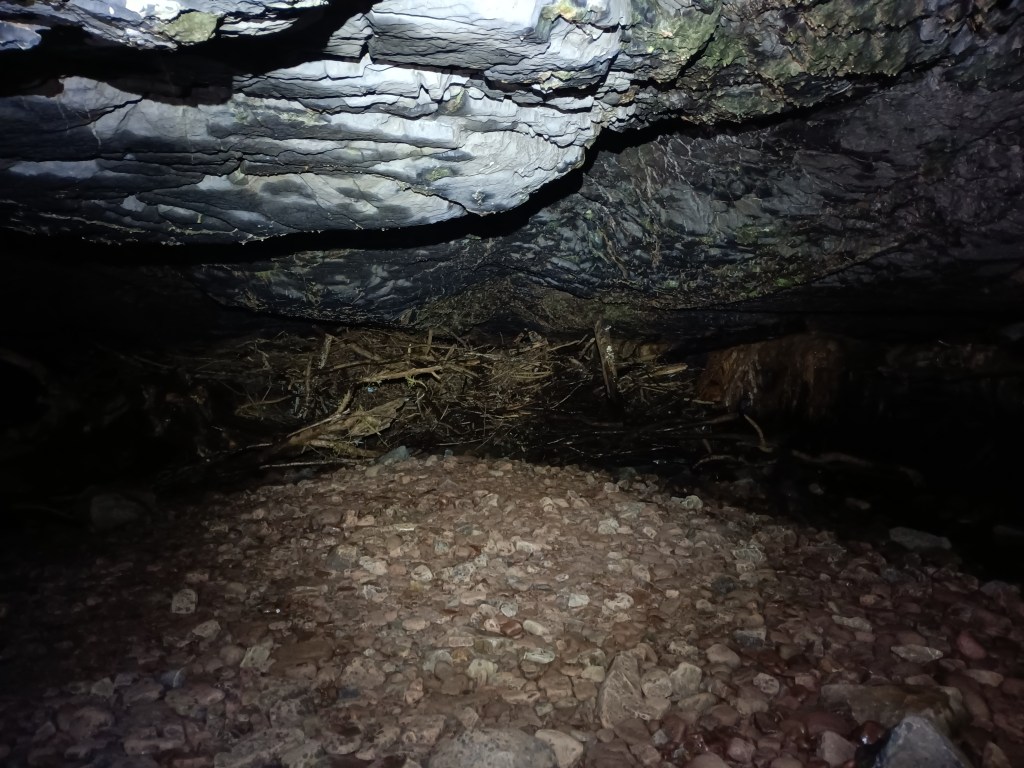
The river that runs through the cave we are currently splashing through is called the ‘Afon Mellte’ (the Lightning River) and can quickly rise in wet weather. This in mind we stop for a second and take a last glance at the daylight streaming in from the huge cave mouth now behind us. We pass a bend where a ton of bits of trees have been wedged in tightly against the rock by the rising and falling of the river.

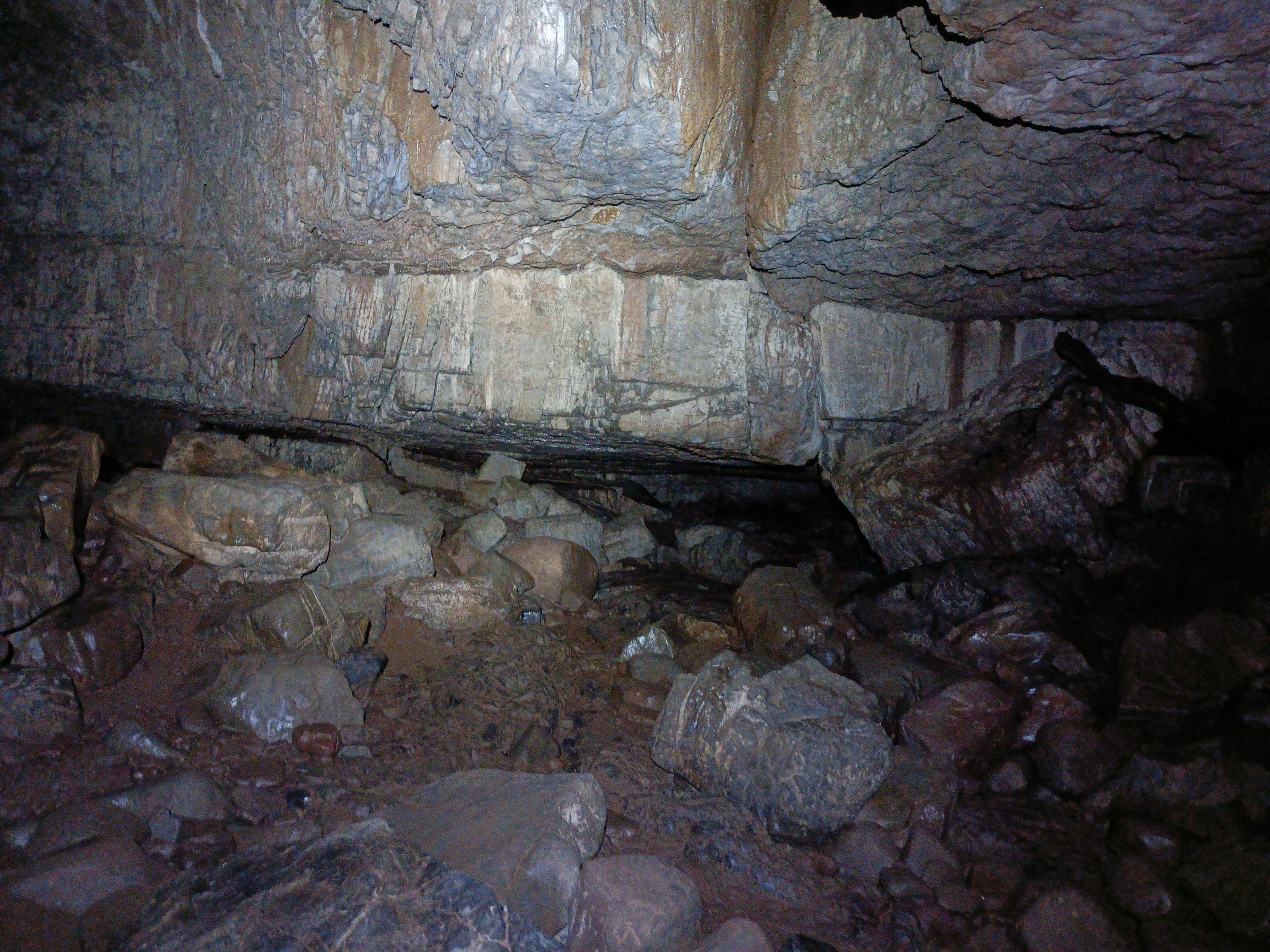
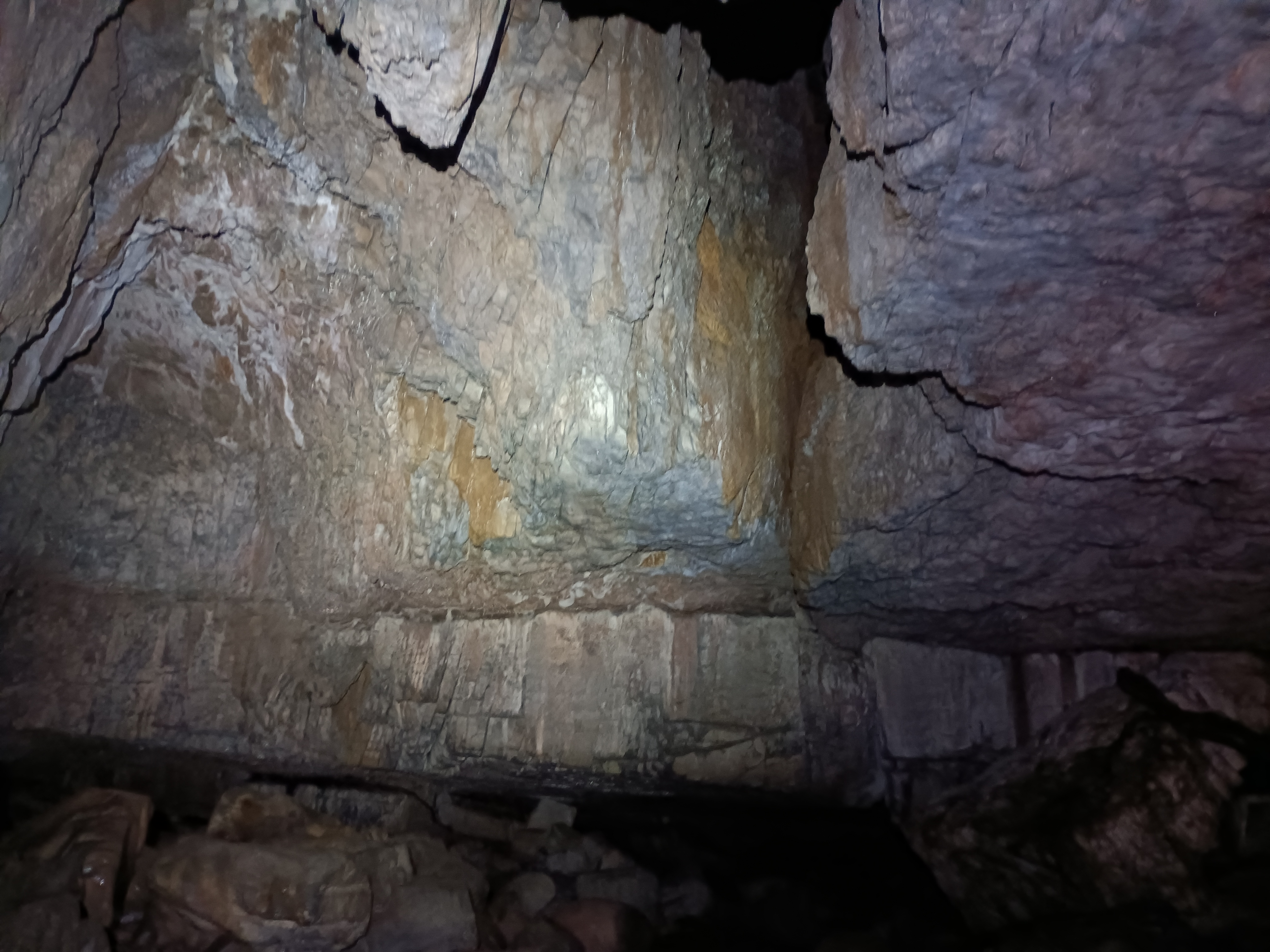
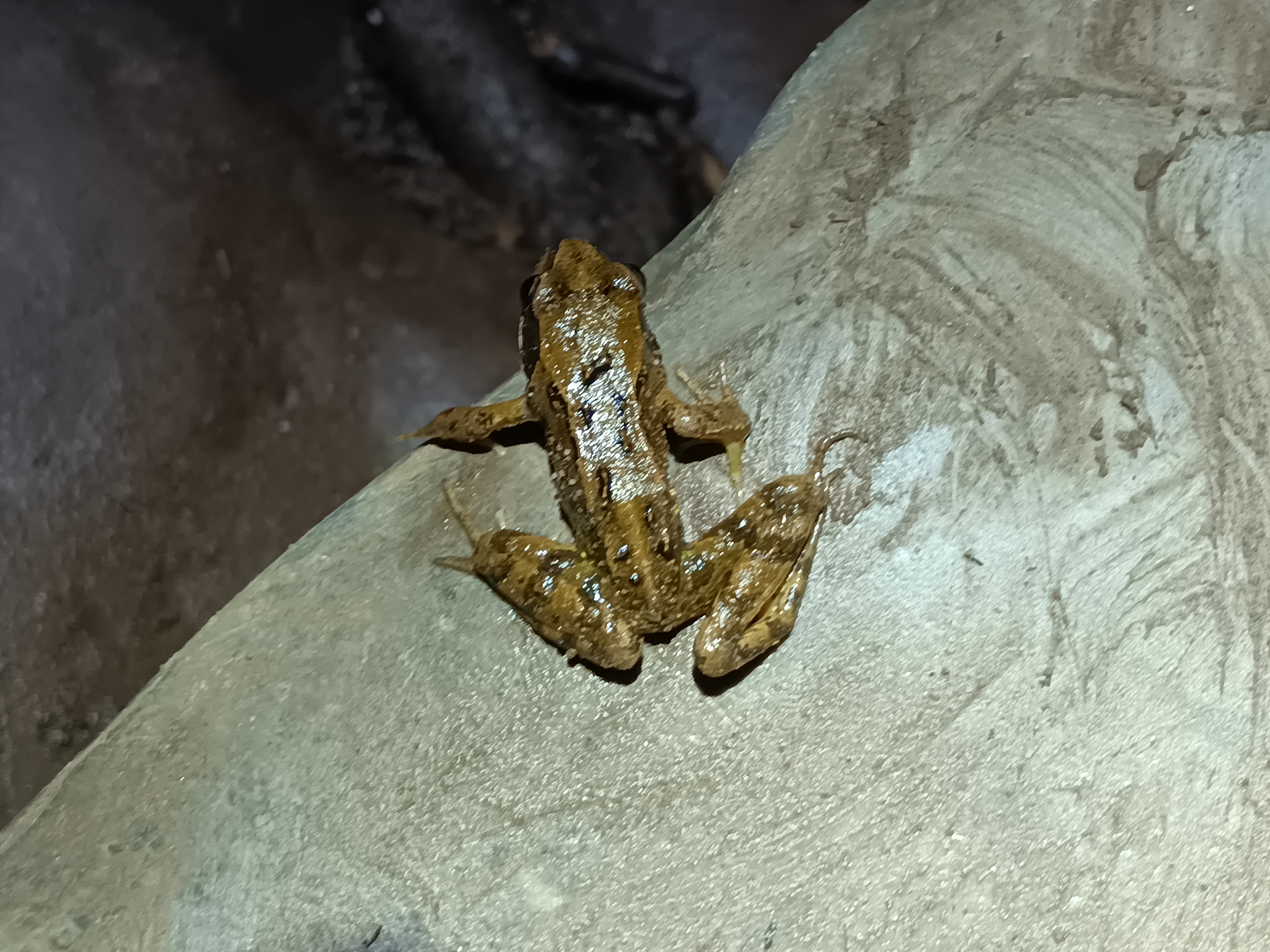
And interesting bedrock feature of this cave is called ‘the letterbox’ a narrow limestone slot, shining brightly in our headlamps and smoothed by the many people passing this way through it. Unfortunately I haven’t got a full picture of this as I got distracted by a frog. If that doesn’t sound neurodivergent I’m not sure what does…
White Horse Pool
Me and Andy stop at White horse pool, so named by cavers imaginations as apparently the white calcite in the ceiling resembles a horse. Although we don’t see this feature as at the time we aren’t really looking for it, it’s worth mentioning that this was the caves name in it’s previous life as a showcave, something Victorian people loved as much as Laudinum and bare ankles I’d expect. Despite not seeing the horse, there’s something pretty magical about the headtorches reflected in the pools water, though apparently the camera isn’t picking that up on the photos it just looks like a black void.

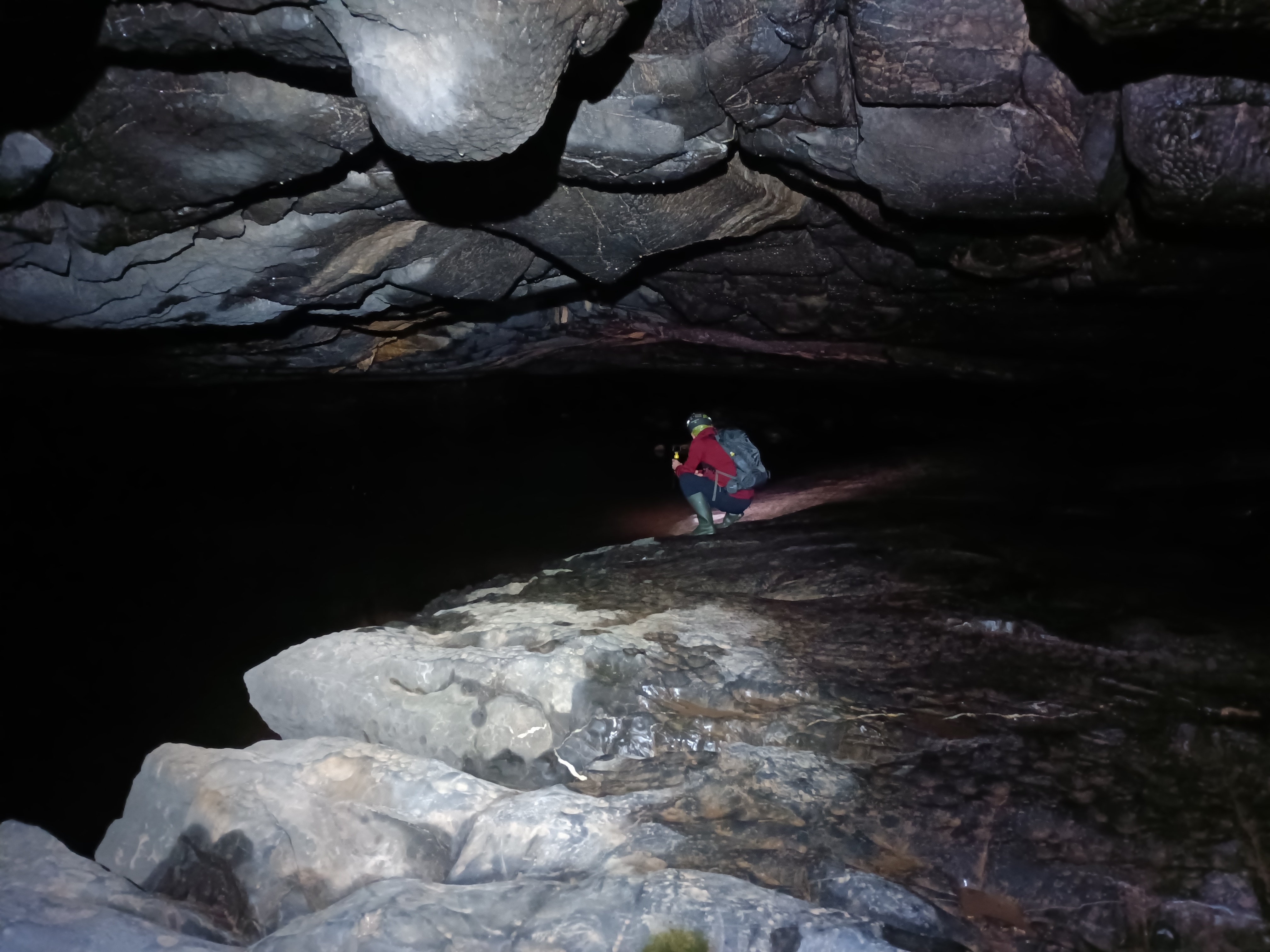
Better Not Be A Hydrophobic Claustrophobic
This is a large cave and though there’s plenty to explore here however as it’s Andy’s first time out caving properly without a hired guide we are keeping it simple and mainly following the main route through the cave downriver and take a few peeks inside some of the other side passages.
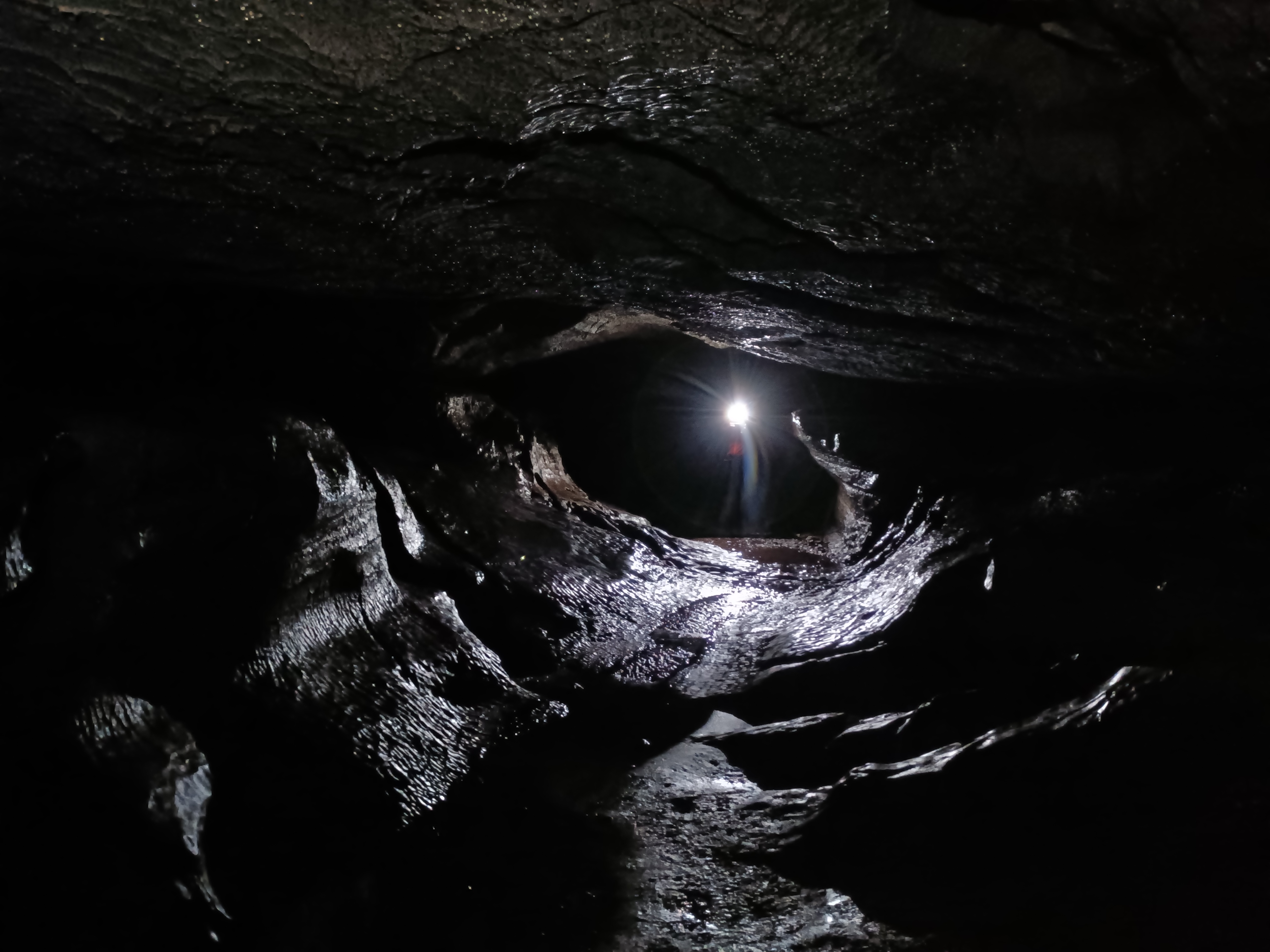

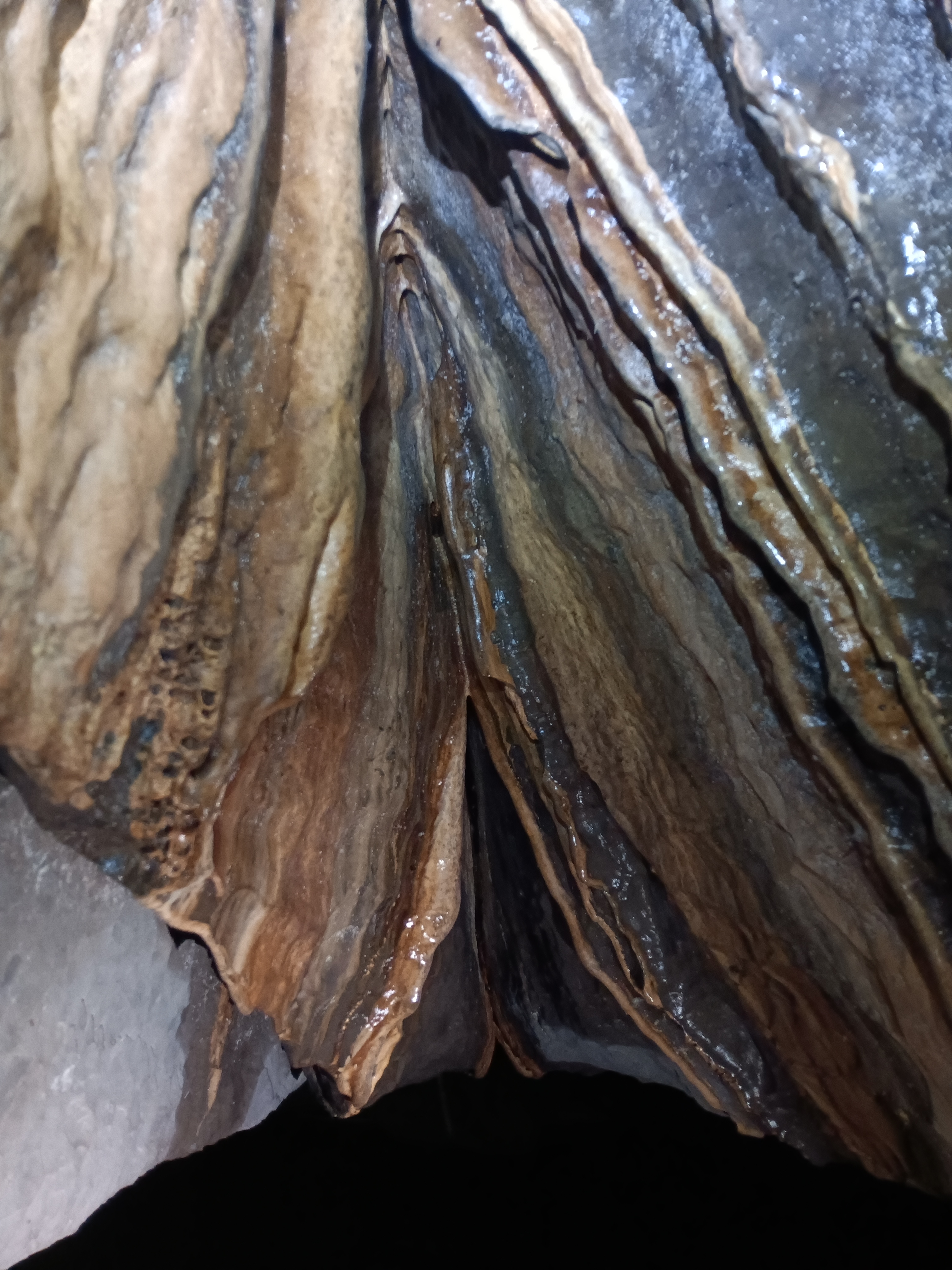
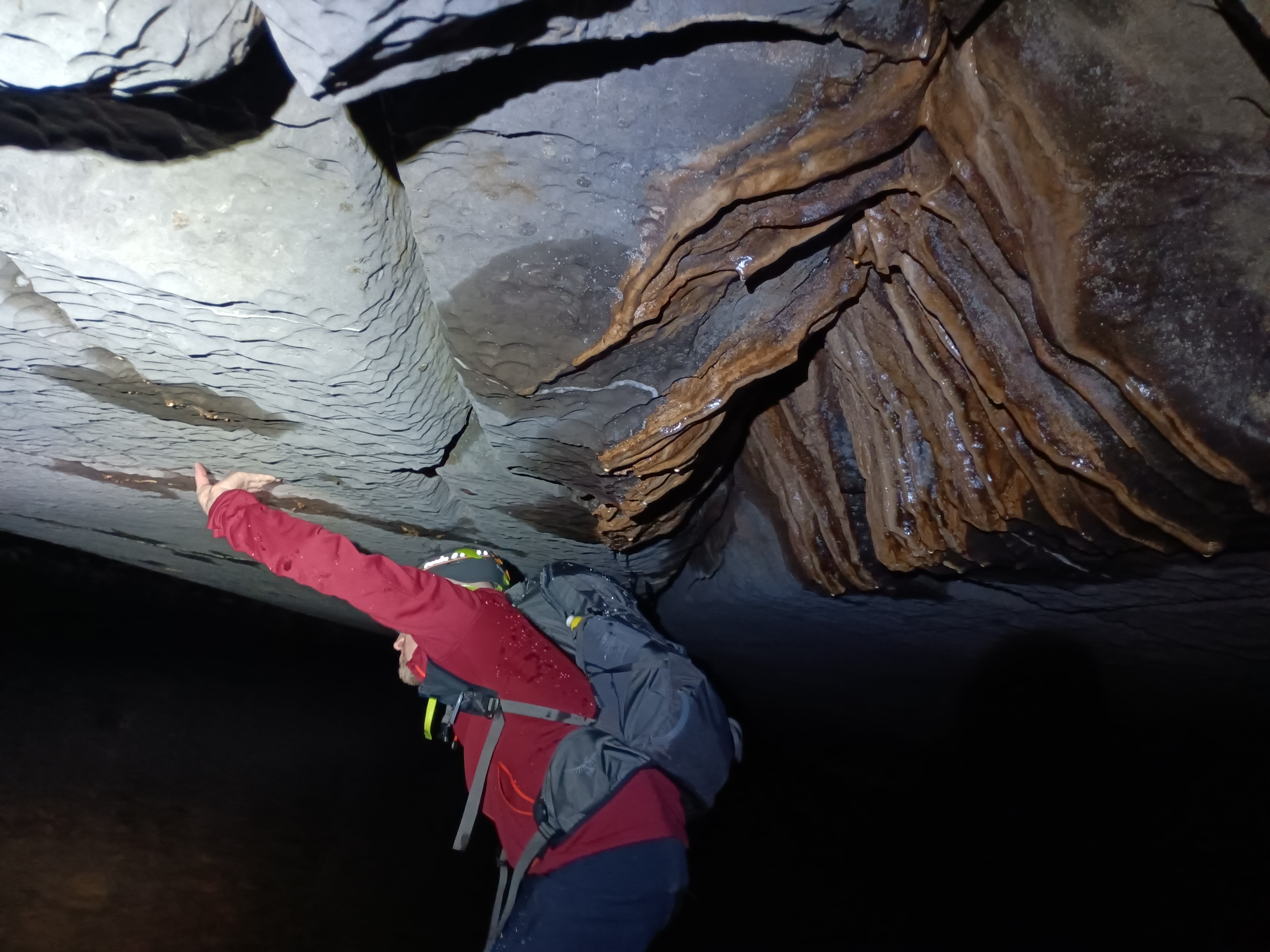
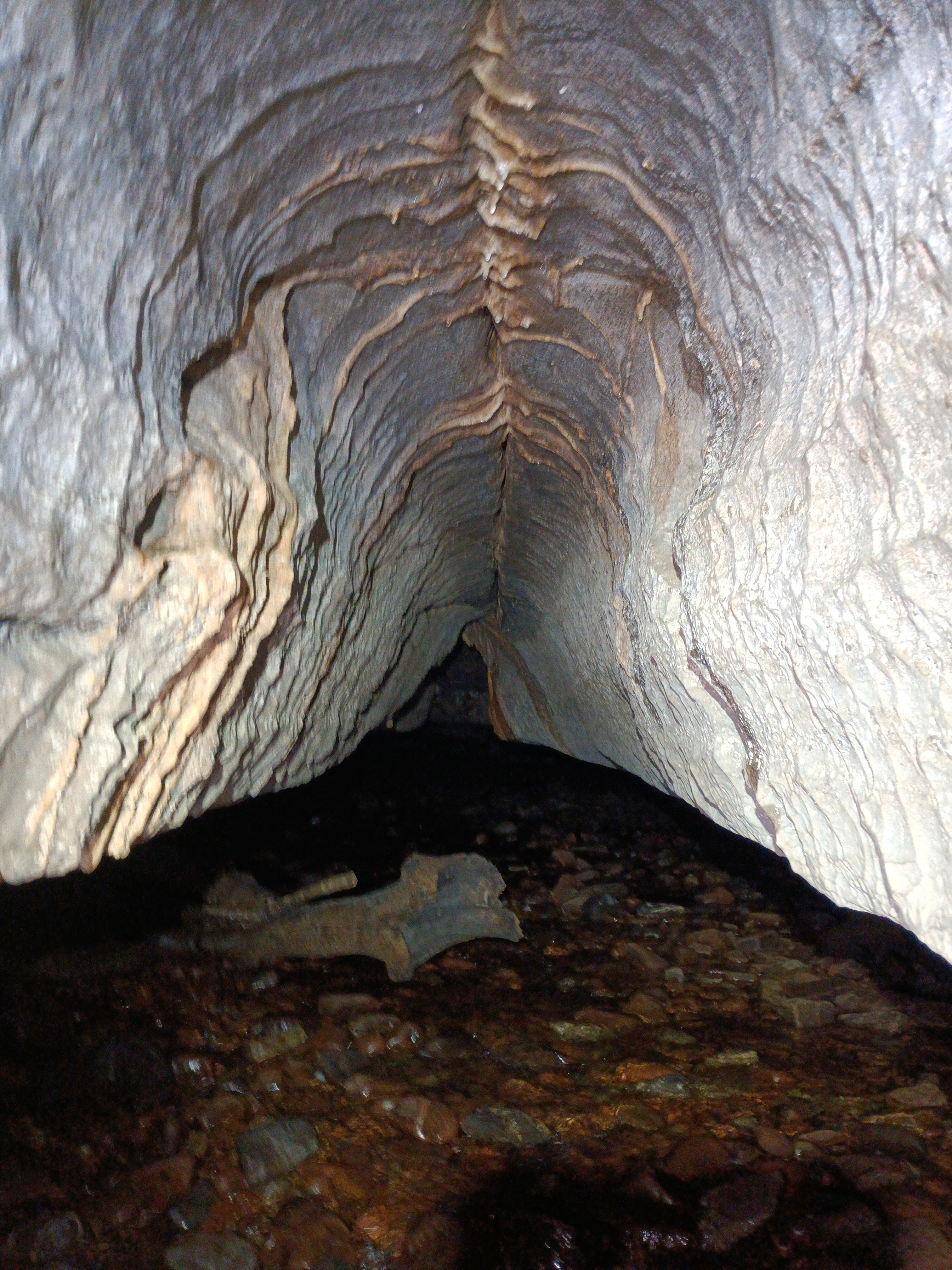
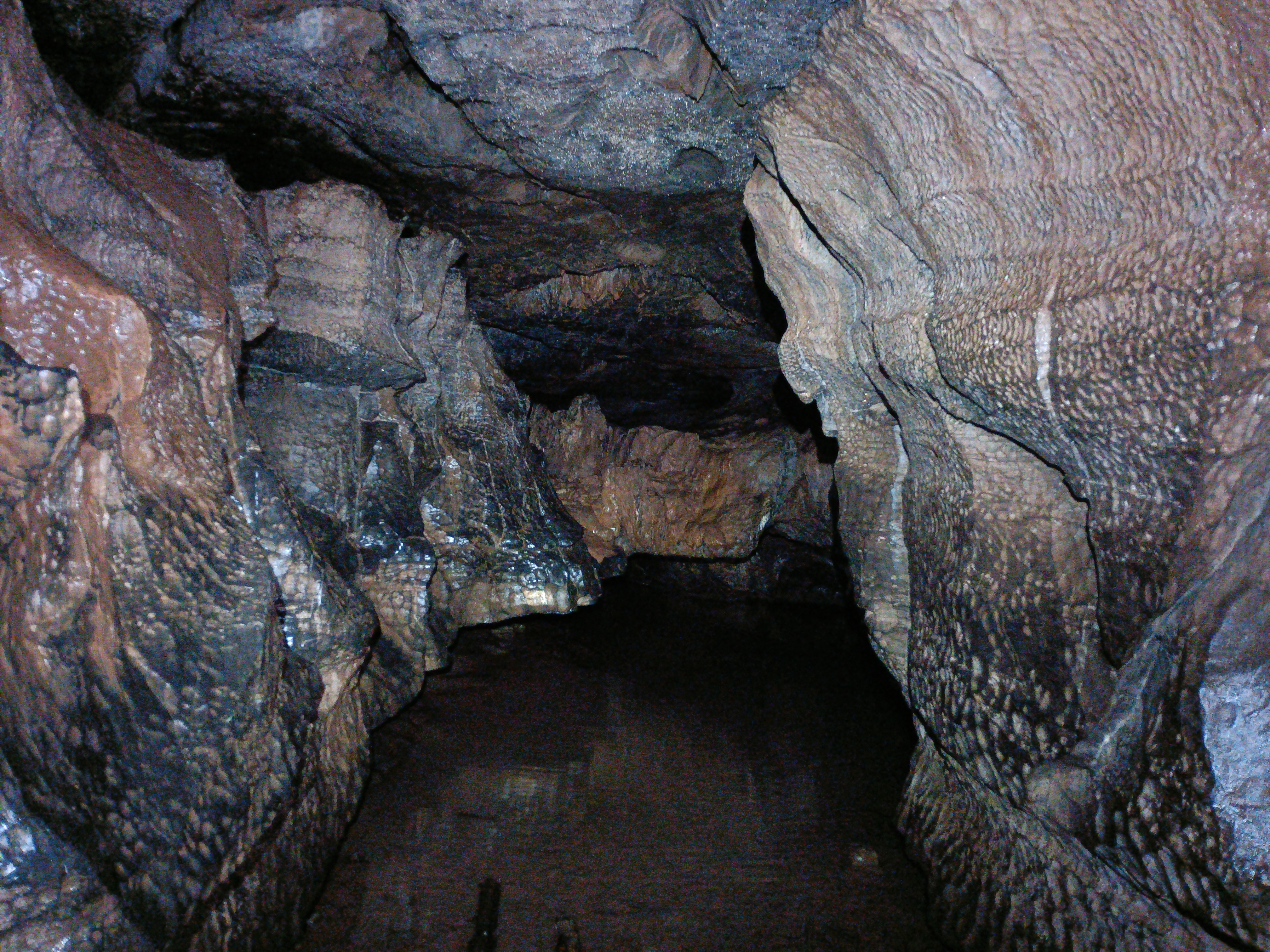
We wade through the river with the cavern roof getting closer and closer, until we are ducking down wet up to the waist, this is as usual pretty exciting and there are some really cool flowstone formations in the roof you can stand up inside which make a great photo and give us a break from being hunched over. Some form strange almost spine like structures in the roof.



The Resurgence Pool
We are coming to the end of our mini adventure, and I also want to show my mate the seven waterfalls while we are here, we avoid a dangerous aspect of the cave which is the resurgence pool, signs warning of the danger are on the walls near an exit – here the water quickly leaving the cave has made a deep pool of 7 metres with underwater ledges. Apparently this is the most dangerous feature known in any British cave with strong undercurrents which have caused the deaths of eleven people, some of these were trainee soldiers and experienced cavers / instructors. It’s likely there were others deaths here before 1957 however I’ve just quoted the recorded ones. I haven’t any photos of the thing as we decided to go nowhere near it, being the wise thing to do. We emerge into the light and start pouring river water out of our boots.
Thinking of visiting Porth Yr Ogof? If you are new to caving it’s best to go with a guide – as has been mentioned plenty in this blog this cave has taken it’s fair share of lives, and even though it is a favourite for tour groups it can as with any cave be dangerous. This cave is very accessible so it’s important to look after it if unsure how to protect the cave environment please read the British Caving Association Guidelines. These are amazing spaces we are lucky to be able to experience so – don’t be a dick!
 Requiem For The Extreme