

If you like some easy Urbex or to explore abandoned places and you are in North Wales, Porth Wen on Anglesey is a great place to start. Ironically described as a ‘hidden gem’ by an Instagram page I’ll leave you to guess the name of, Porth Wen is now about as hidden as an elephant in your back garden. Due to this and though It probably won’t help reduce the mess on the site already I’m not going to tell readers how to get there, if you really want to you’ll find out how. And in my mind at least that makes a trip here more of an adventure. Unfortunately way too many explorers who turn to the site leave rubbish here, and probably because the sites pretty easy if illegal to access this seems to attract a small percentage of lazy and inconsiderate assholes. The kind that turn up to a beautiful and/or unique place and leave their junk all over it, and Porth Wen has clearly suffered a fair amount because it’s not that far from civilization. Thankfully it’s definitely a theme that people who cause the issues on sites like this are usually the sort of people who rarely seem to turn up at sites that take a proper effort to find and to get to. If you do fancy visiting Porth Wen bear in mind you’ll be technically trespassing, do everyone else a favour take your junk home with you and don’t be that idiot with the disposable barbeque near dry brush. In a nutshell don’t be a dick – it’s a good philosophy to live by and more people need to try it!
A Brief History Of Porth Wen
Porth Wen is thought to have started operations in the late 1800’s from information found on some of the old maps of the area. The site has closed, reopened and exchanged hands a few times up until 1949 when the site closed for good having been plagued with access and subsequently issues shipping product. The site has a small quay which you can still see the remains of, built for loading and unloading ships however many did not want to dock here due to heavy swells and a rock seabed which damaged boats, a contributing factor in the sites eventual closure. Above the site there is a small quarry above the site that provided the quartzite for brickmaking. Quartzite was especially important in the production of the bricks made on site being a rock made from mainly quartz which is a silicate mineral. This made bricks of a distinct yellow colour which unlike for example a house brick could withstand very high temperatures, and were used in applications like the construction of high temperature furnaces. During the Victorian era and the industrial revolution steel was in high demand, and as it needed high temperature furnaces, brickworks like Porth Wen provided the bricks. Just in case you are wondering at this point I don’t have some kind of brick fetish I’m just very aware I’ve written ‘brick’ quite a lot already. I don’t have a pet brick but if you want one there’s some great information here on keeping a brick as a pet http://www.ratbehavior.org/petbrickfaq.htm
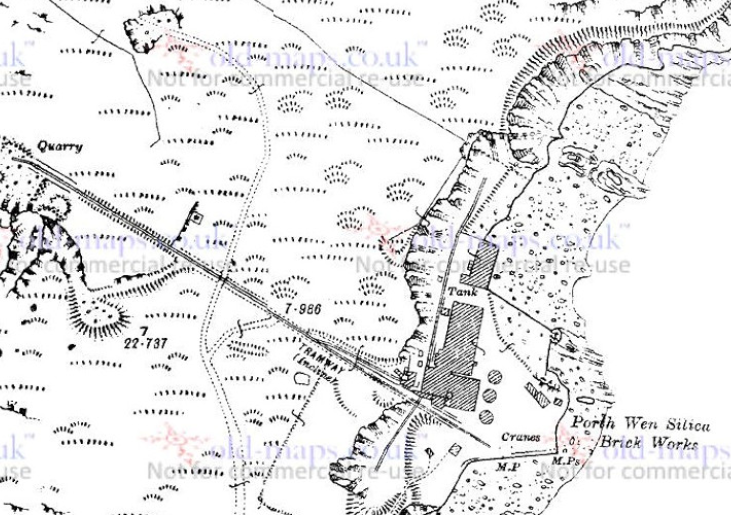
This site is so striking this is the second time I have been here. The photography opportunities are always amazing, this time however it’s winter, and it’s new years eve. The last time I was here was came with my friend Egle and it was a lovely summers day. It’s a huge contrast but different seasons have quite an effect on the look of the place.
Today however severe winds were forecast and as me and Rob and Andy approach the site the wind is so strong the telephone lines are bent sidewards in crescent shapes. In fact on the way here in my little go cart of a car the wind was blowing us all over the place as we drove down the coast road through Llandudno and Conwy. Even with Andy and Rob as ballast it was like driving a high powered golf cart in a wind tunnel. We are hiking around the coast path here while the wind strafes us aggressively and I’m keeping an eye out just in case one of the telephone poles decides to get uprooted and creates a human game of ‘whack a mole’. (That was an automated arcade game where you had to hit mole puppets with a club for those too young to know.) I’m pretty surprised we made it here being as me and Rob both have the flu, and Andy is pretty brave being around us. Despite my dislike of New Year and that I’m being eaten from the inside out by flu, I’d rather be out on and adventure than sitting at home feeling like death.
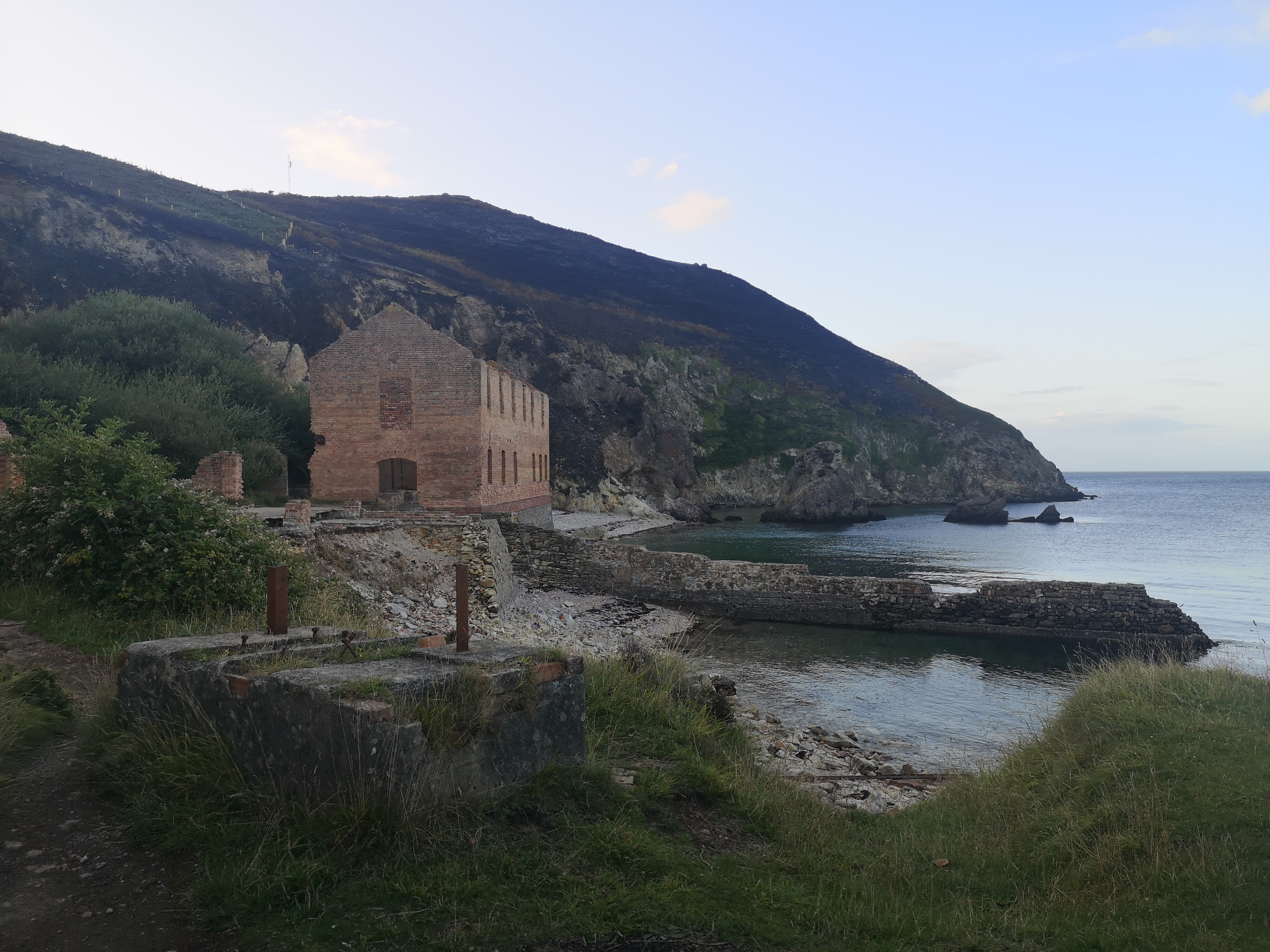
The approach to the site is usually through a locked gate, which this time is actually wide open. and down trails thick with clay mud at the moment. A steep trail heads down steeply to the site through gorse bushes, a lot of which are burnt as a result of a fire back in July of 2023. The cliffside has barely recovered yet which is a shame. As the fire here reportedly started at 9pm the likelyhood was it could have been started by a disposable BBQ or a ill advised campfire. You can see the devastation the fire caused in this Wales online article https://www.walesonline.co.uk/news/emergency-services-called-fire-welsh-27257396
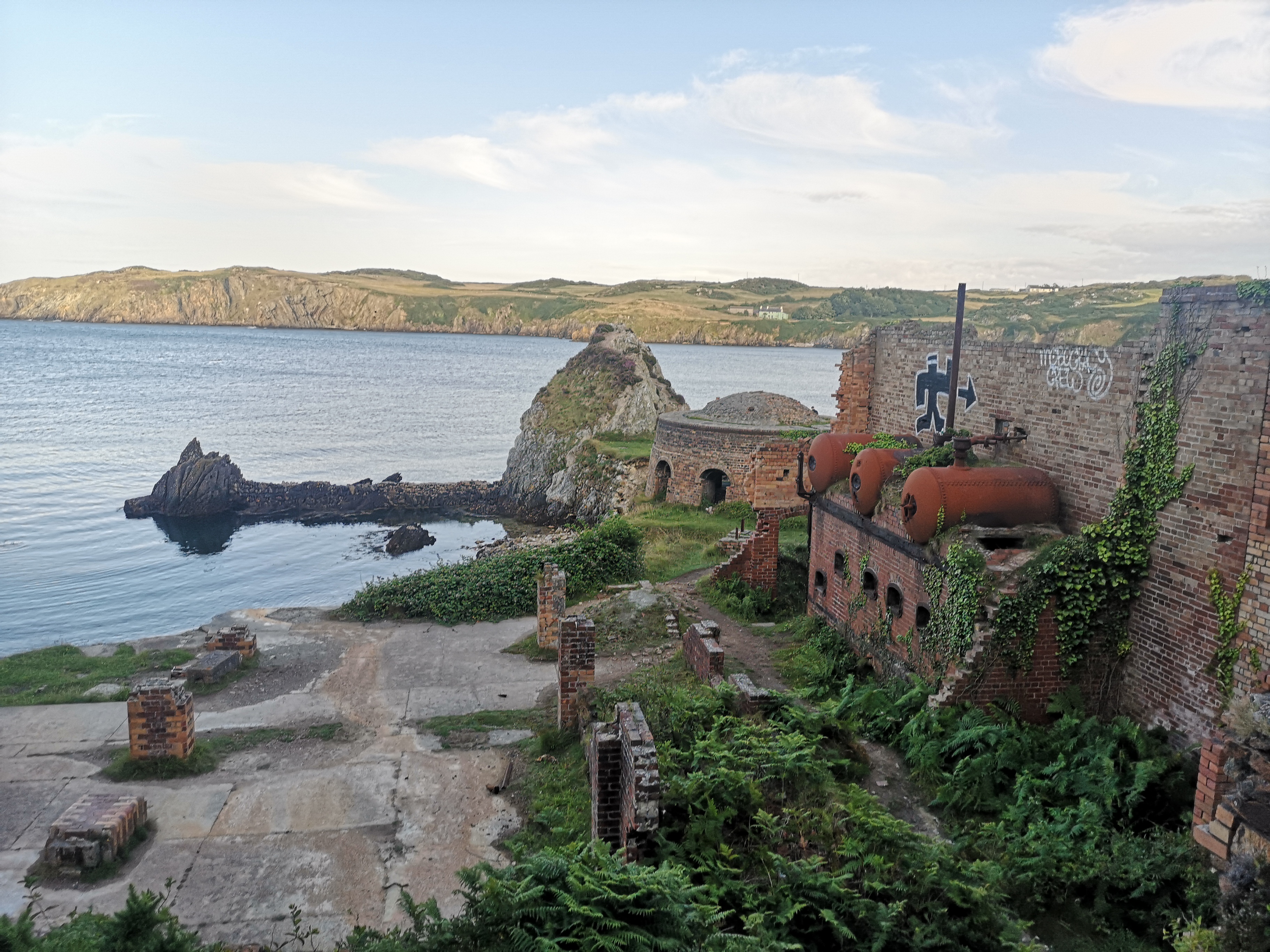
Entering the brickworks you have a number of massive drops that you need to watch out for, people have been injured here and rescued here in the past. Other dangers are the possibility of falling masonry, the junk left on the site and at low tide the water underneath the sea walls and the quay is super shallow so you wouldn’t want to fall off it. The view we get of the site as we walk down the path and it comes into view is really impressive if a bit ruined by the graffiti which as if to add insult to injury isn’t even very good graffiti. Ivy crawls up some of the walls below and the rusting tanks of the three drum boiler house are visible from here.
The Storage Bins
As mentioned before there are some pretty high drops on entering the site where we are currently standing these are where the crushed quartzite was stored. This silica ore would have been crushed by the ‘napping’ machine above and then deposited in these compartments, then moved to a pan mill mixed with lime and water then pressed into bricks.

The Three Drum Boiler House
The three drum boiler house looks like exactly what it is, the drums being the most obvious feature, also known as Stirling boiler it has five door openings for ash removal you can see the remains of. I’m not going to go into how this bit of engineering works as I’d be writing all day, if it interests you though there’s a great article via this website where the image of these types of boilers originates from. https://asope.org/sites/default/files/Documents/The_Stirling_Boiler-2.pdfThe article does give an idea how the boiler would have looked, though there’s clearly lots of variation on designs. The boiler would have created steam for steam powered equipment such as the napping machine above.

The Workshops And Accomodation Area
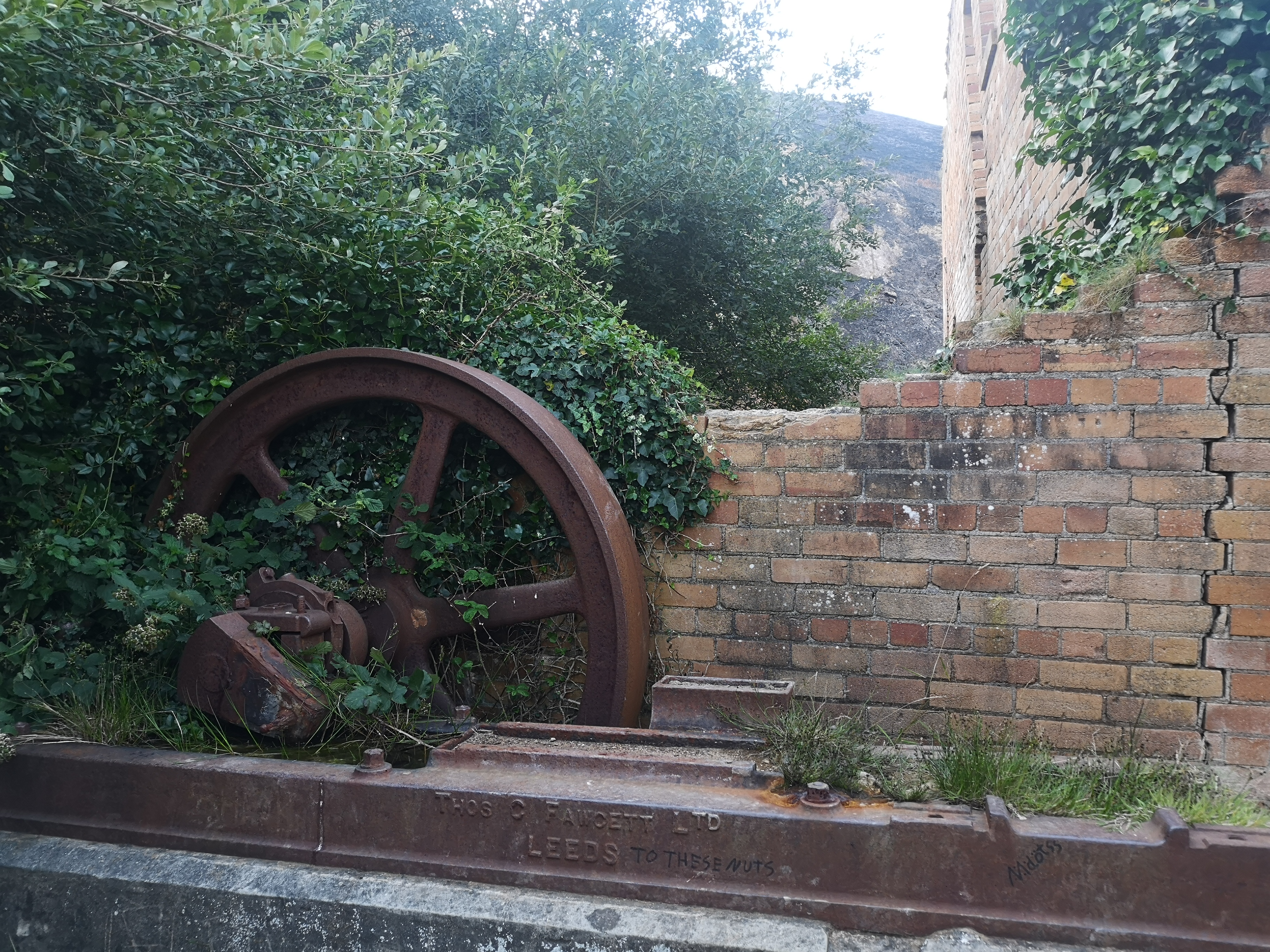
This building is still mainly standing which is impressive considering the ingress of the sea and it’s slow collapse, no doubt one day it will topple down at some point. To access this and the far beach you have to pass by the steam engine which as my mate Rob observes is in remarkably good shape considering it’s exposure to the wind, rain and the salty sea air. You can even still clearly read the manufacturers name on the side of it.


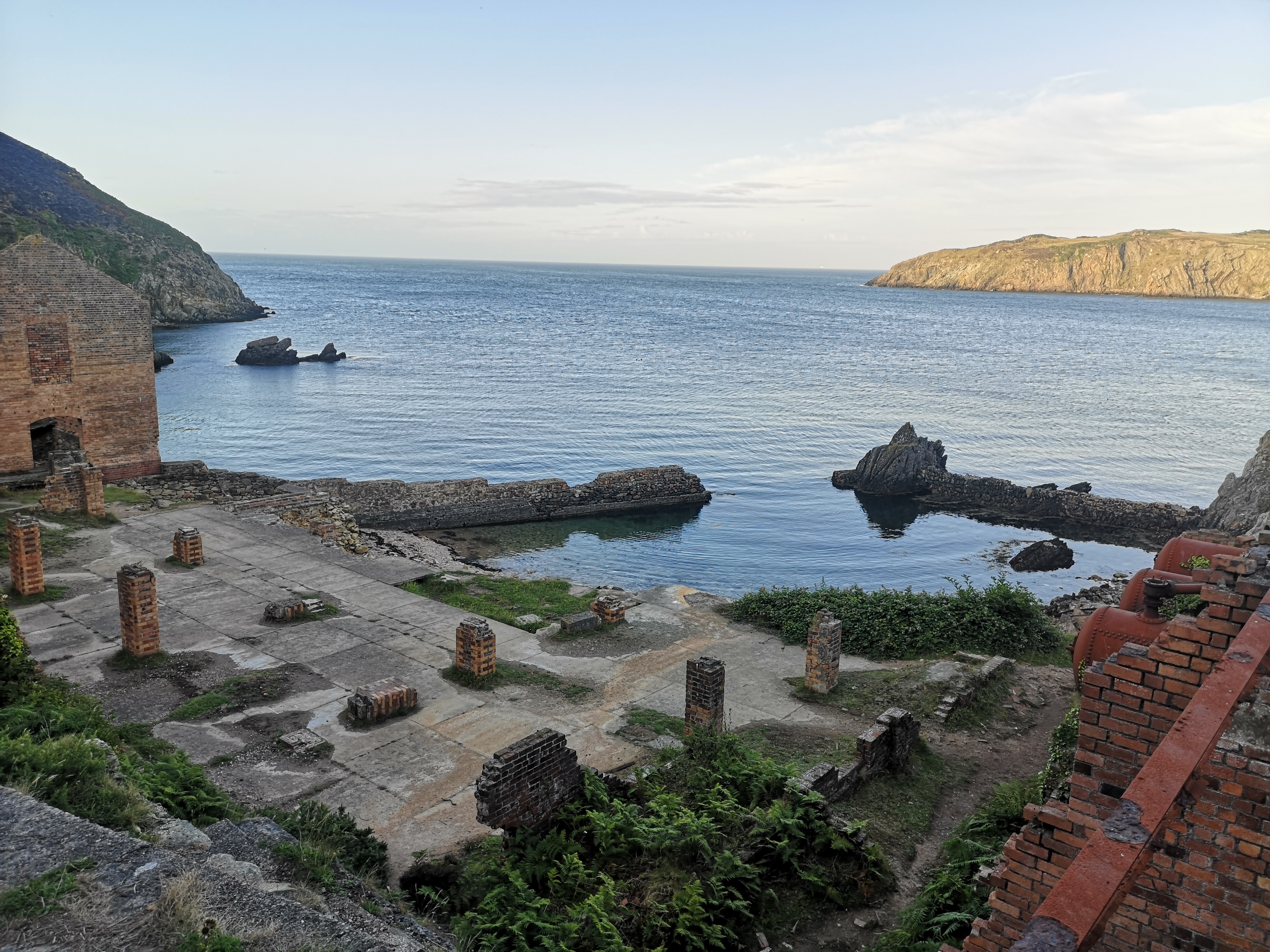
You have to be careful here as the floor of the workshops has collapsed almost entirely and you are very close to the edge. The way the building is being slowly torn apart by the elements is a reminder that nothing last forever. Next to this is the remains of the small quay, it’s walls slowly surrendering to the Irish Sea .You can almost imagine the braver captains boats coming in to take away the bricks. There would have been cranes here according to old maps, for loading this boats.

The Beehive Brick Kilns
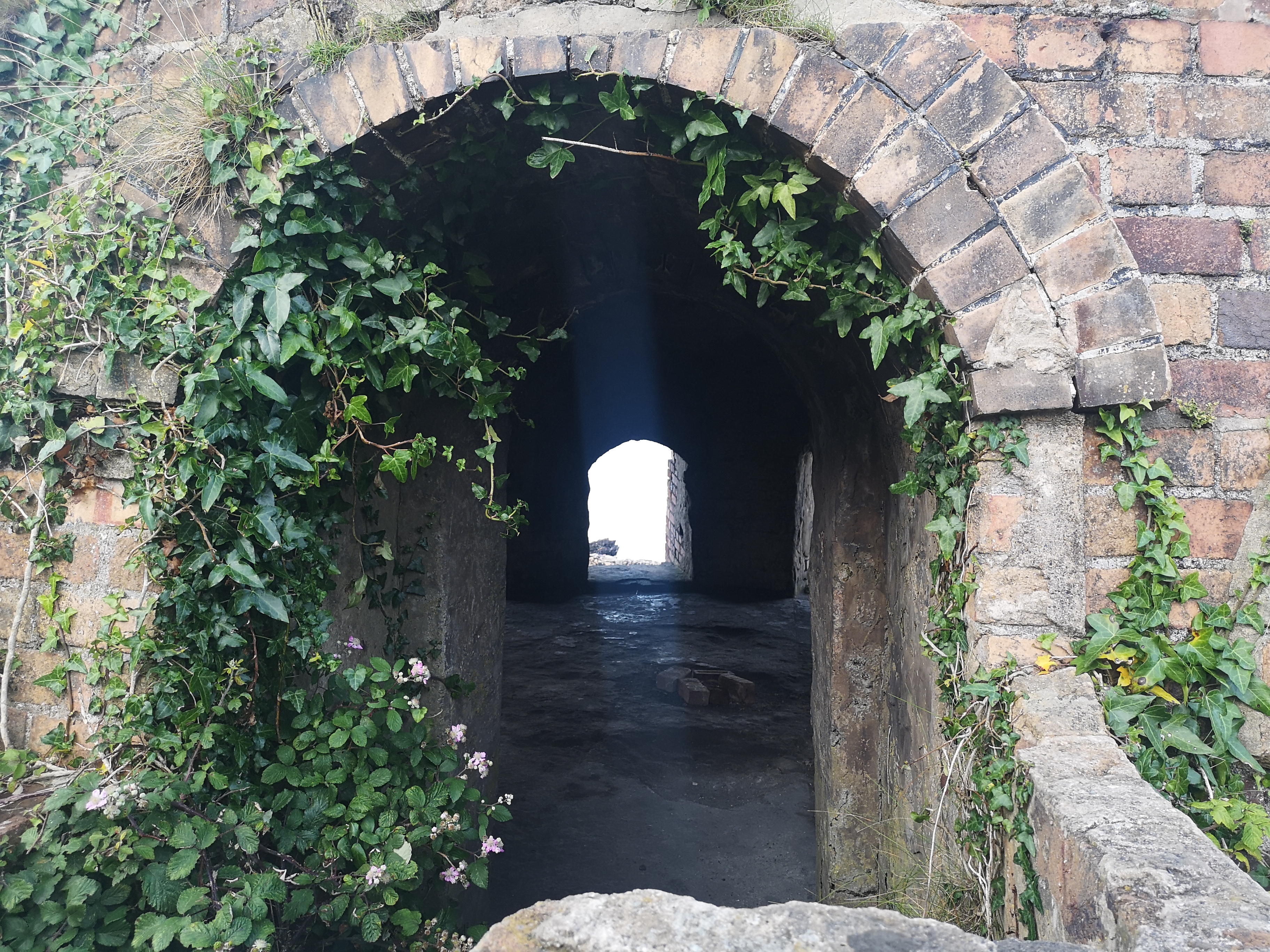
These striking looking small structures would have been where the moulded bricks would have been stacked and fired. The fuel for the fire would have been placed around the outside and the kiln sealed creating the yellow bricks. As it goes these are the the most intact structures on the site and well worth a look inside, though you’ll need to duck to get into them.


This really is a cool ruin and it’s well worth exploring, though I found it’s better to go when it’s cold because there’s rarely people here when it is. It is great in summer and the photo opportunities are great however you’ll probably have a bunch of people in tents obscuring the view.


Want to get updates on new places to explore, equipment reviews and more? Subscribe to requiemfortheextreme below for all new posts straight to your inbox.
 Requiem For The Extreme