
This isn’t really an extreme adventure more a brief travel story and a look at some Tuscan history. Being as me and the guys have been out here for a few days to celebrate the grim hand of death getting closer to my shoulder otherwise known as a birthday, we decide we need a day out for a hike. We head to the Parco Archeominerario Di San Silvestro arriving at the visitor centre a bit worse for wear from the night before, having spent most of it stuffing ourselves with wine and cheese. Which is another great thing to do in Tuscany the food is amazing, that’s something for another blog however.
Deep Inside The Temperino Mine
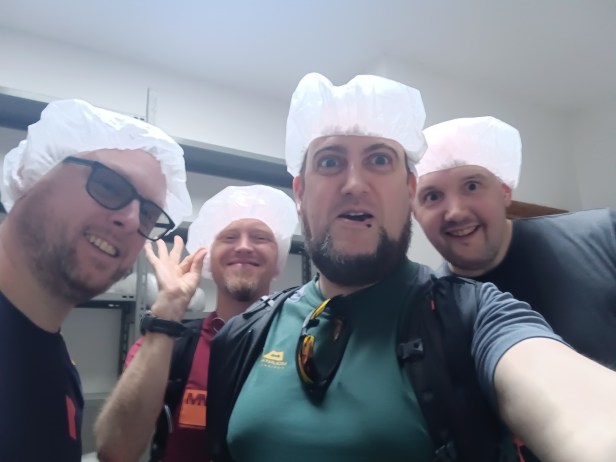
Despite it being late in the afternoon at this point after some really bad international communication on our part with the person operating the tour booth, we manage to get on the last mine tour of the day and we are led into a sterile sort of room to put on what look like shower caps or chefs hats to go on underneath our miners helmets, making us look like we just opened a bakery together or something.
After a quick talk from the guide we head into the cool darkness of the Temperino mine, which I’m informed by the website is always 14 degrees and advised to have a jacket handy. Not much of an issue being English and being pretty much used to being at this temperature above ground at home if you are lucky! If you want to check out the website follow the link below.
It’s been a while since I’ve had what I’d consider a nice easy stroll around a mine, the last mine I can recall being more of a hike being when me Andy and my caving club entered and explored the vast workings of Moel Fferna slate mine in Corwen. You can read all about that here, if you fancy a more adventurous tale! Exploring Moel Fferna In this case however this is far more within the limits of most of my group of friends than my usual approach which tends to start with me being attached to a rope, and being lowered or lowering myself into a mysterious hole in the floor. Much like when Llur, Andy and myself embarked on the epic and pretty terrifying Croesor-Rhosydd through trip. Though that is far more exciting I don’t think my hungover friends would be up for tackling it like that, this is far safer.
Walking Back Through Time
The section of the mine we are exploring was started by a French mining company and is the most modern section extending 360 metres. And of course, just in case it tries to collapse the ceiling is held in place with massive rod and plate devices. My intrusive thoughts win and my mine shows me an image of me getting crushed by thousands of tonnes of rock, thanks brain. As usually I bury that thought like I do when I’m caving, no pun intended. Mining in this area originated with the Etruscans , an iron age culture who preceded the Roman empire and began extracting ore here in the 7th century BC. Etruscans were far more advanced in metalworking and farming than other societies in existence around the same time despite this their language is still for the most part unknown. Even though Etruria would eventually be absorbed into the Roman Empire, it heavily influenced it’s culture.
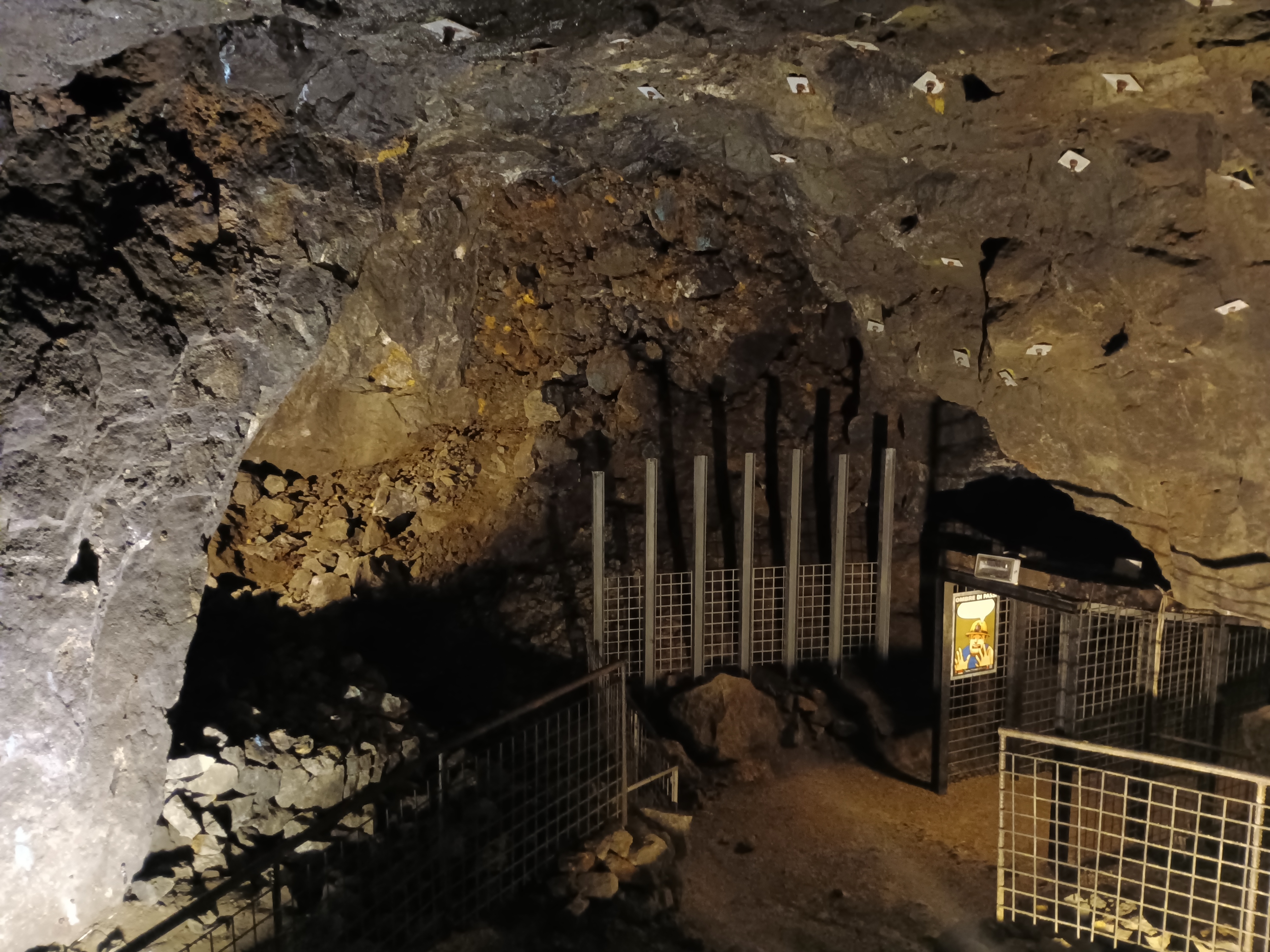
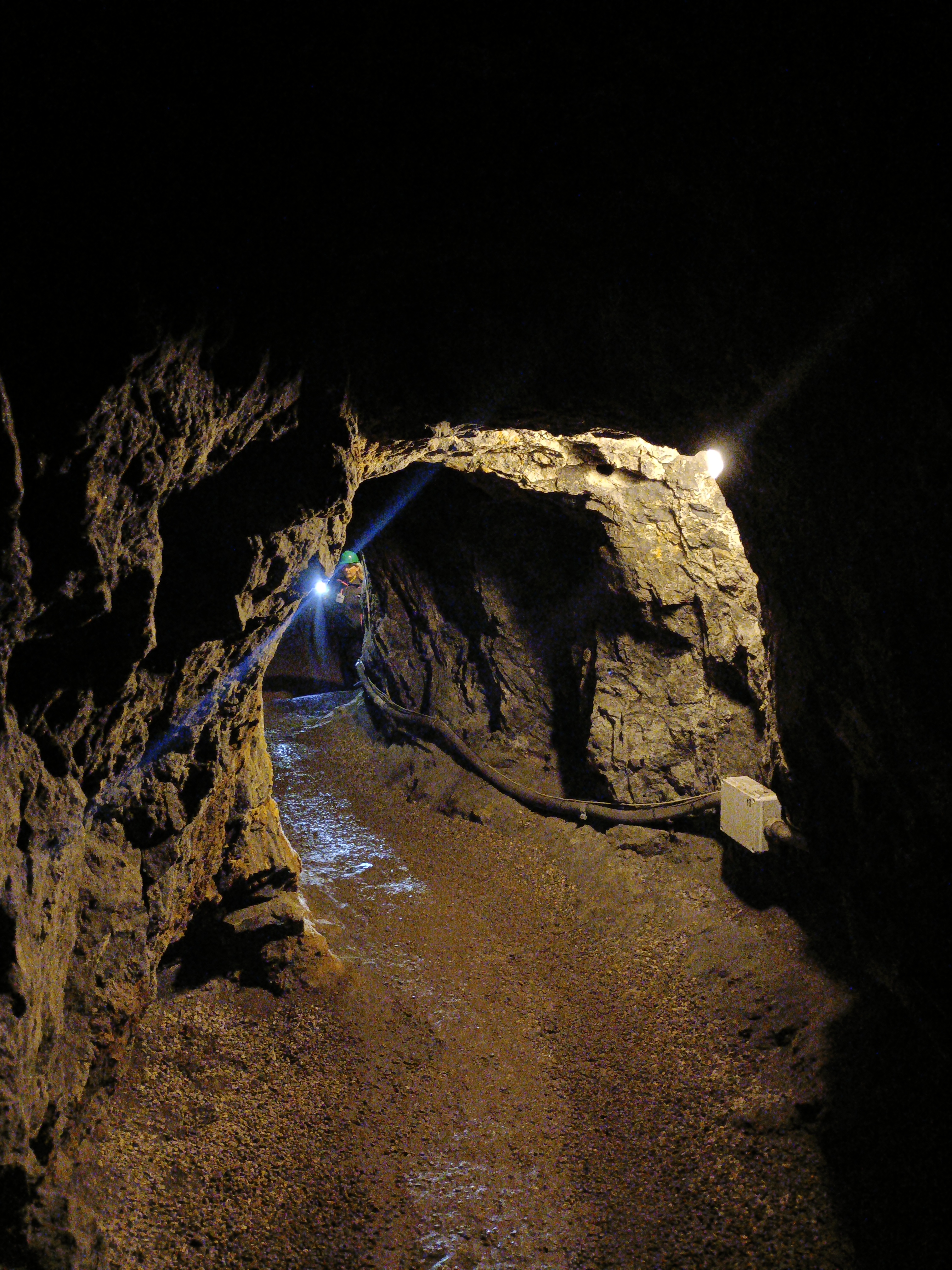
Along our route through the mine we pass through 19th Century works all the way back to the ancient Etruscan, some of which we see from the surface later. As usual I’m firing off lots of photographs which come out very atmospheric. The lighting in the mine definitely adds to this, with the rusting mine tracks extending off into the distance through narrow wood supported and panelled passages of the middle age, slightly reminiscent of an Indiana Jones film, and the impressive larger caverns where the lighting barely penetrates the darkness.
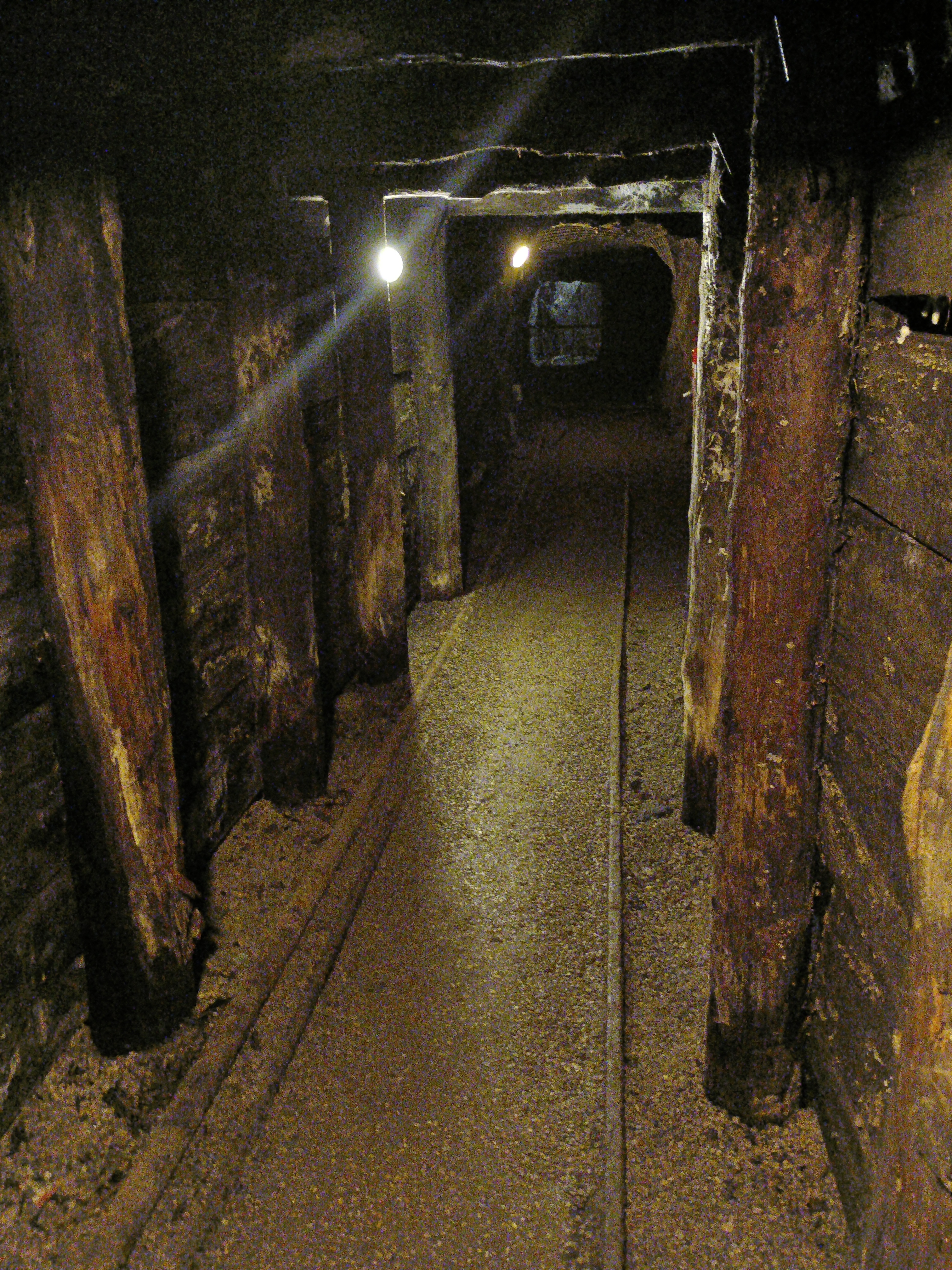
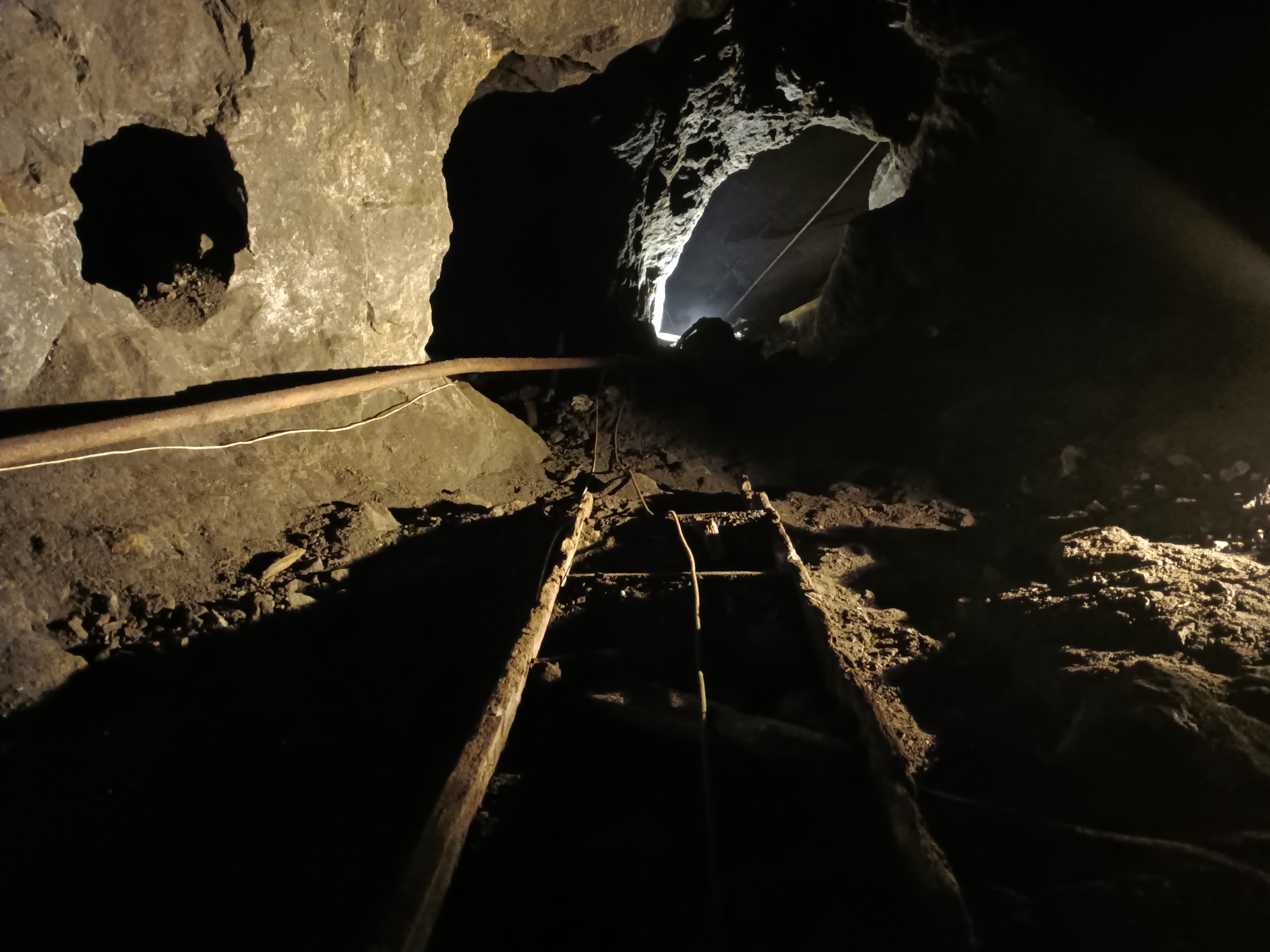
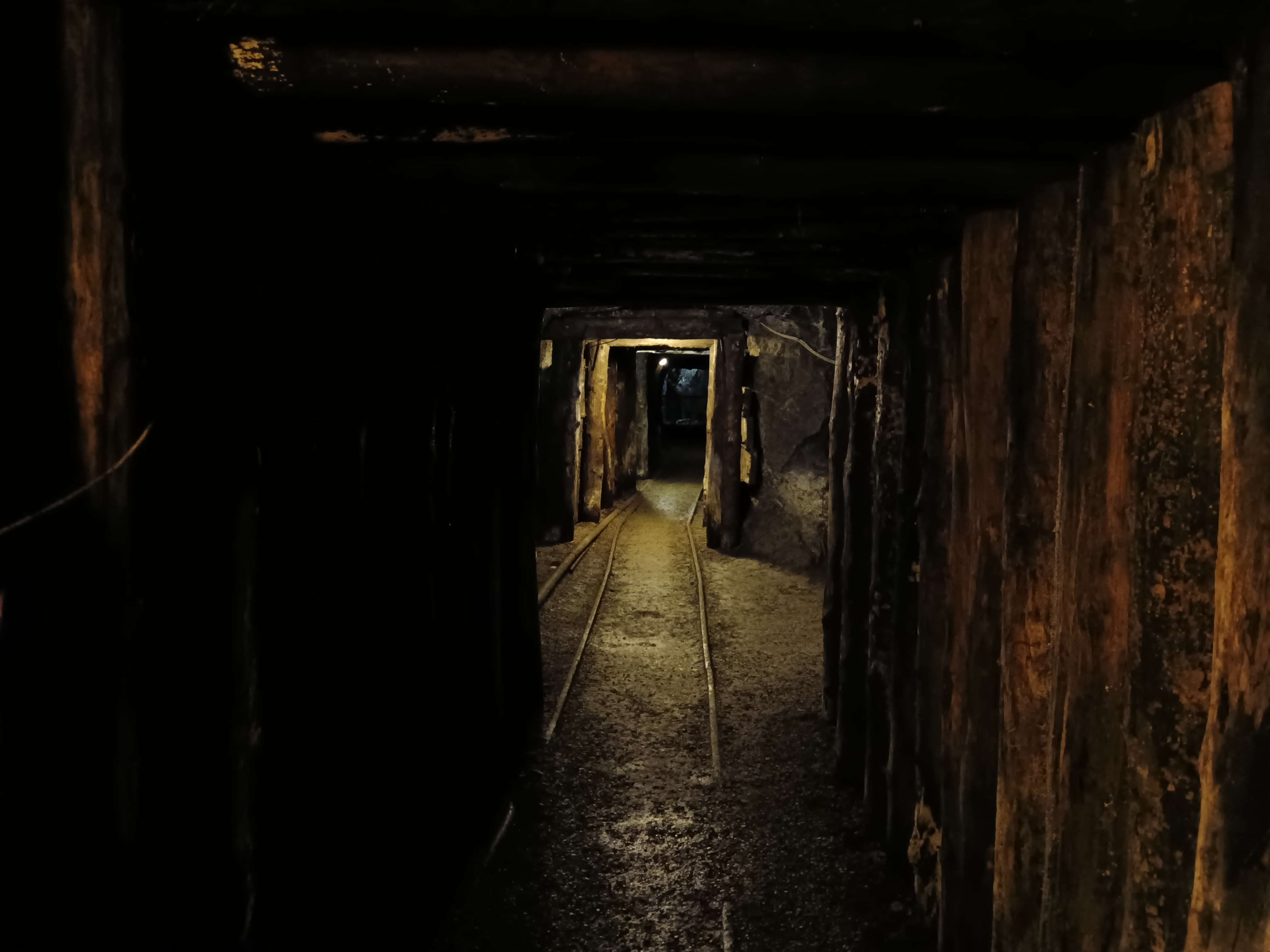
Along the route we take there are holes in the ceiling in places, more Etruscan mining shafts which the guide points out are really narrow, which leads many to believe they used children as workers. Though a grim thing to have knowledge of this is something that occurred in many cultures even in Victorian times in the UK, children being small of course were ideal for working in tight spaces, digging air shafts and manoeuvring equipment with a lack of space. Not the kind of Minecraft I think modern children would enjoy though.
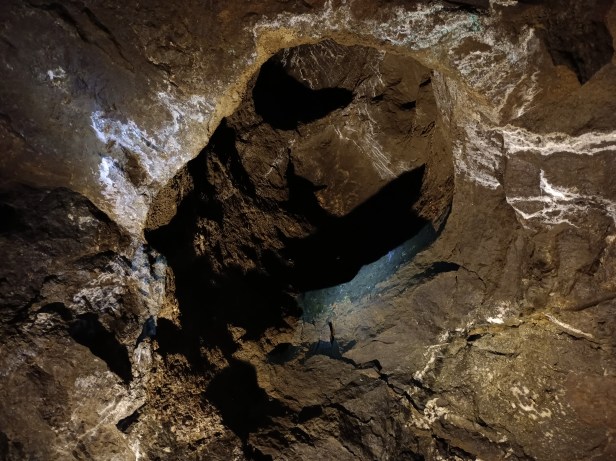
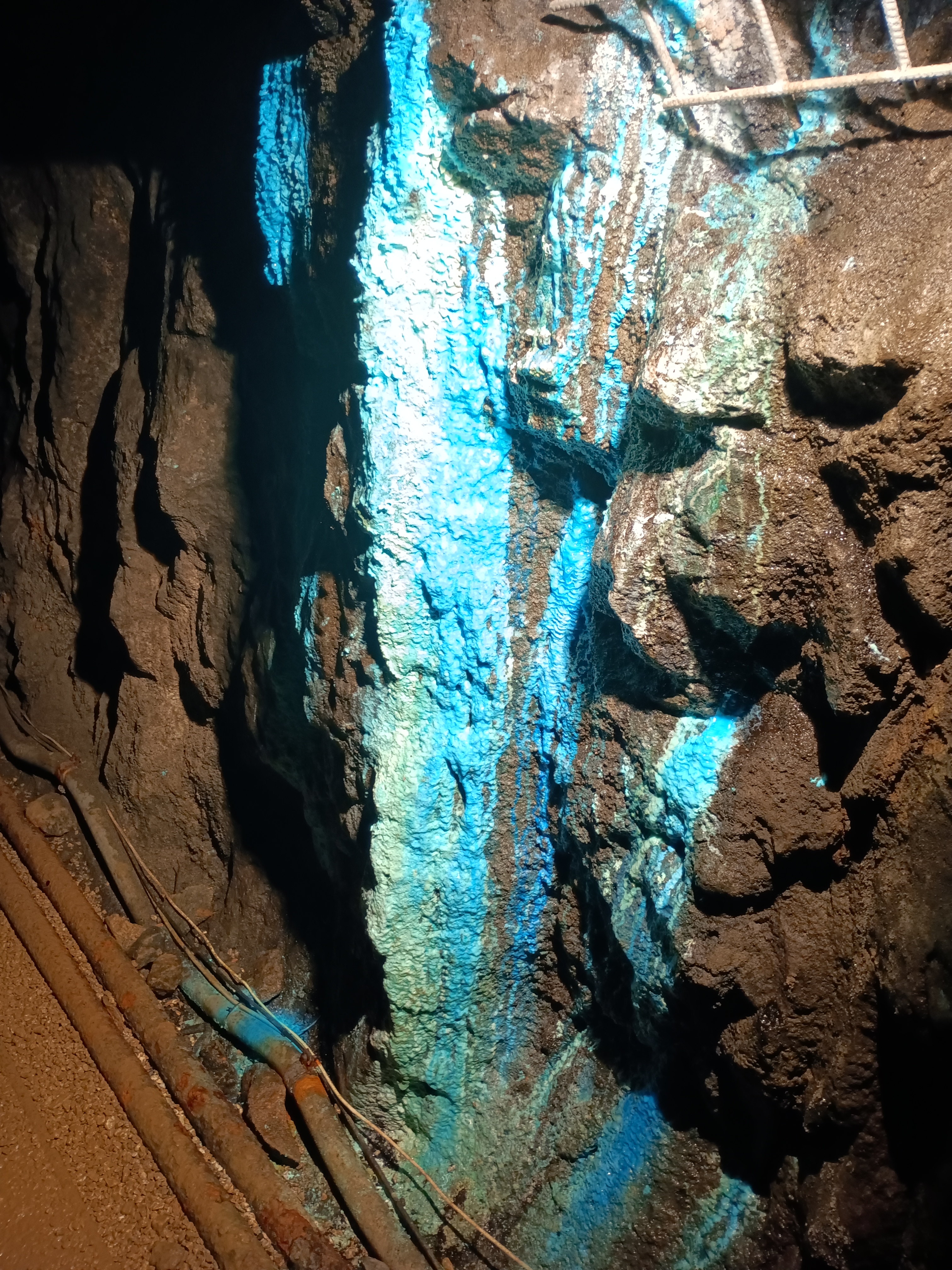
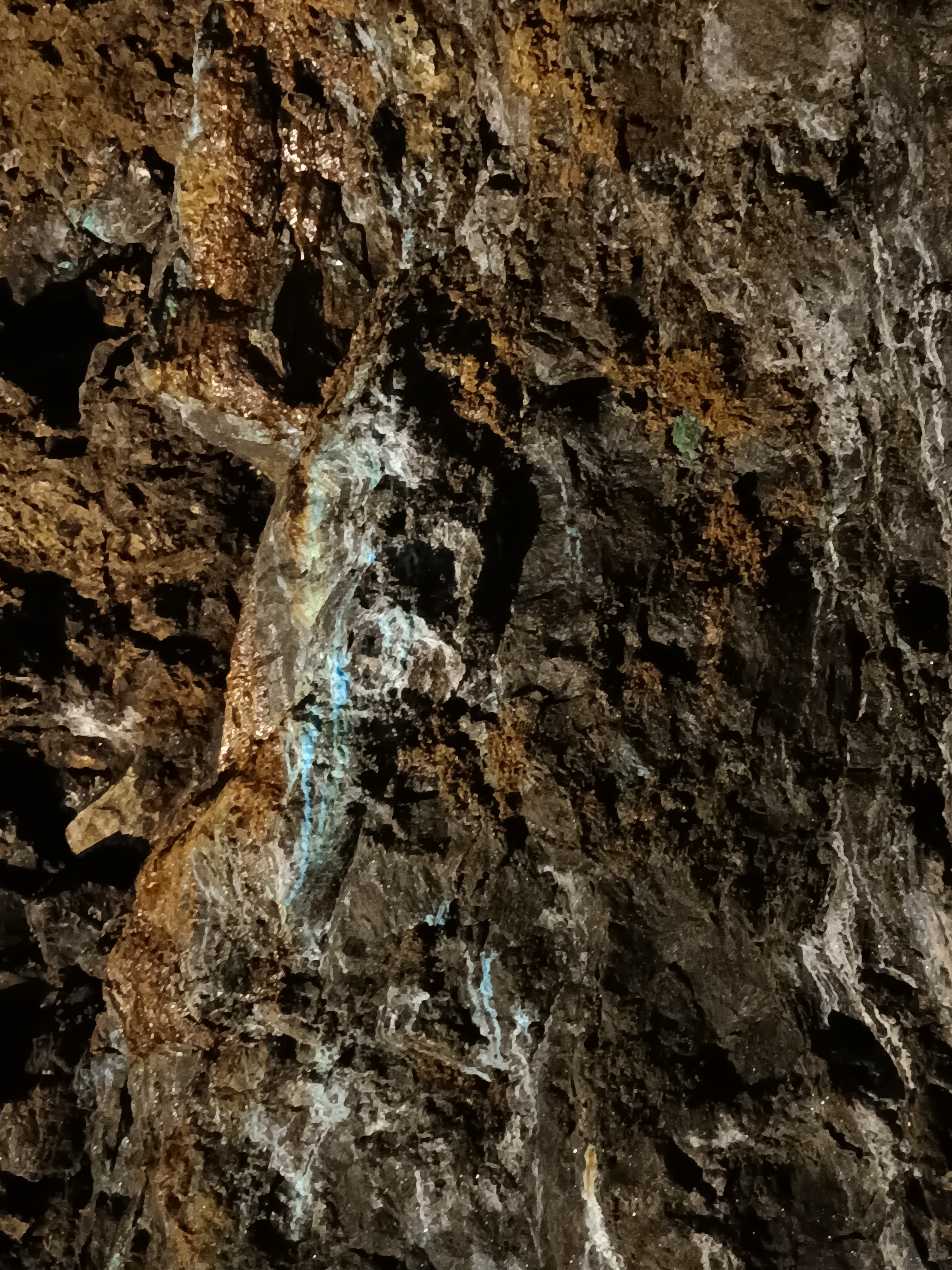
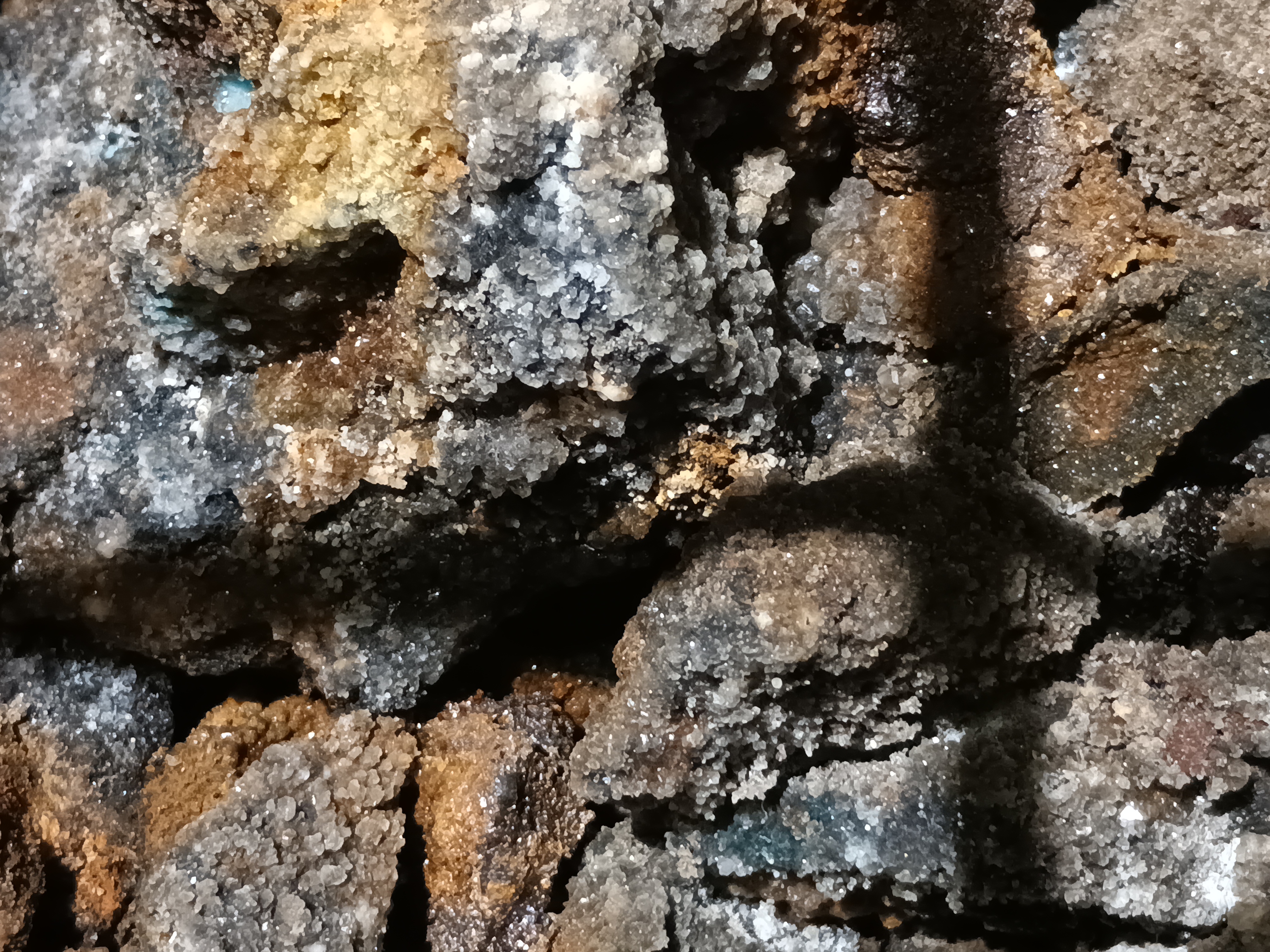
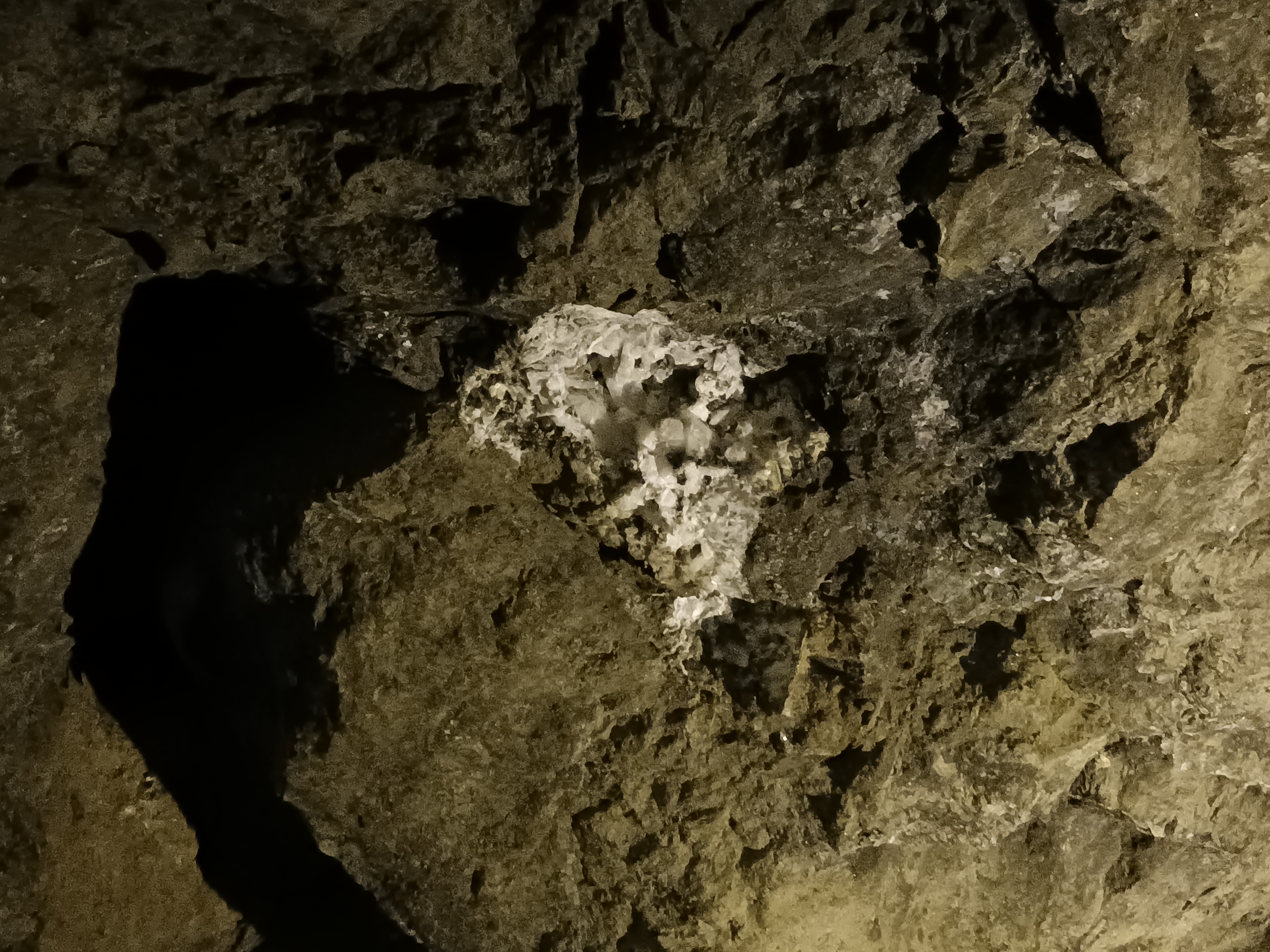
There are examples of ancient and modern mining techniques along the route we are shown in fact this site was operational as recently as the 1970’s and throughout time the Metalliferous mineral deposits here have yielded Silver, Zinc, Lead and Copper. Many examples of crystals and ore can be seen in this mine and are pointed out along the way by the guide. Such as the stunning blue of copper mineral deposits on the walls of the mine passage which is known as chrysocolla, or “gold glue”. Though that sounds like an unusual name the term “Chrysocolla” comes from the Greek “chrysos” (Gold) and “kolla” (Glue) and the term is used as it apparently resembles a substance used to solder gold together in jewellery. This is formed by the combination of copper deposits and water and as we are informed by the guide cannot be touched as this would turn white and the colour would be lost. It’s pretty cool how it looks as if it is spilling out of the wall, which I guess it is, just very very slowly.

The Medieval Town Of Rocca San Silvestro
Eventually we emerge again from the darkness into the warm evening sun of the beautiful Lanzi Valley and it would be a shame to head back to where we are staying so soon. We decide hike out from the visitor centre to explore the trails of the park. Either side of the trails are huge piles of waste minerals and the kid in me still makes me stop every now and then and see if there’s any crystals or similar lying about, though my friends fill my car with enough rocks without me adding to it. The area is rough and ruggedly beautiful and there isn’t a cloud in the sky. It’s great to be in this area in Tuscany in this sort of weather.

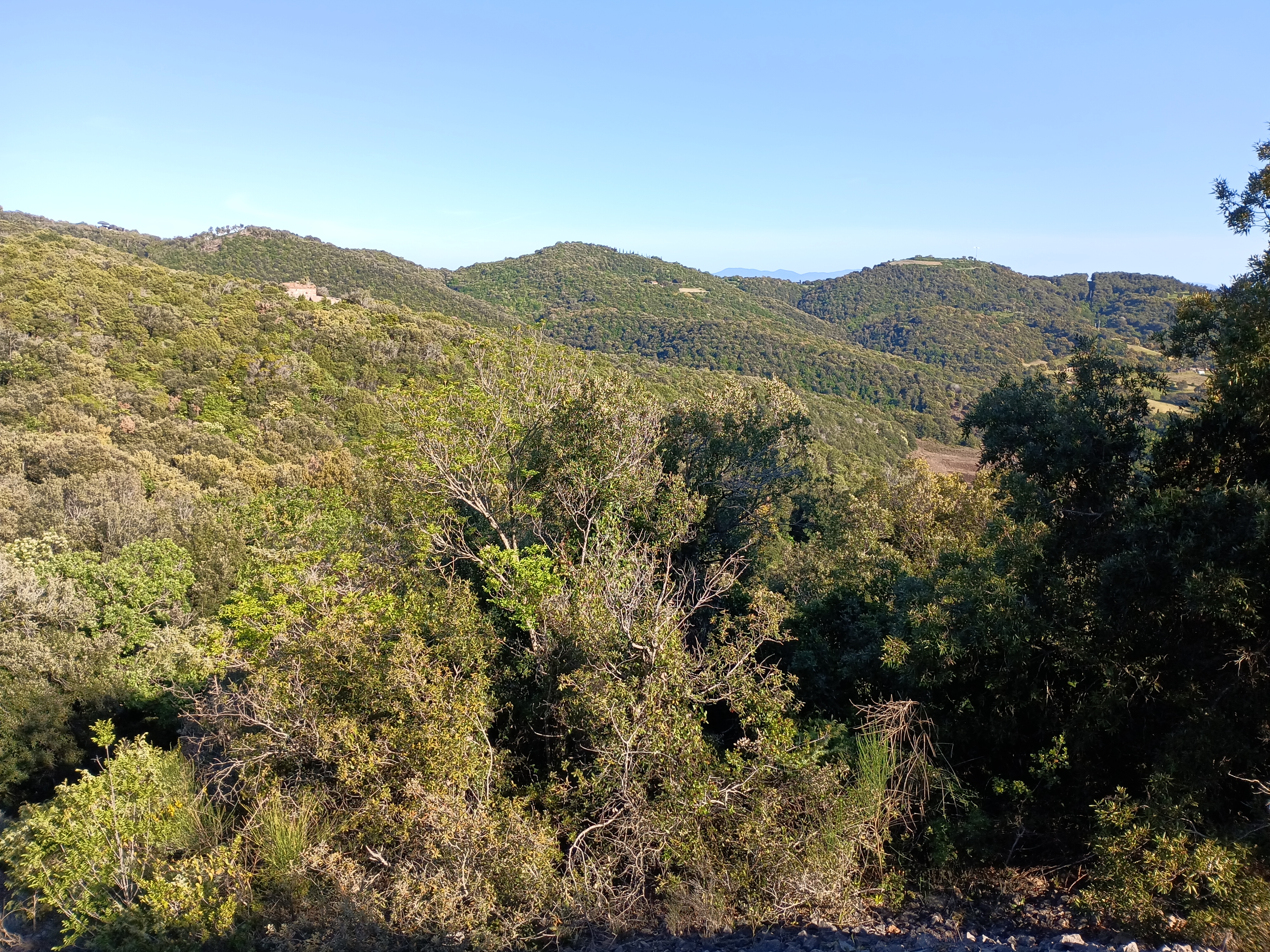
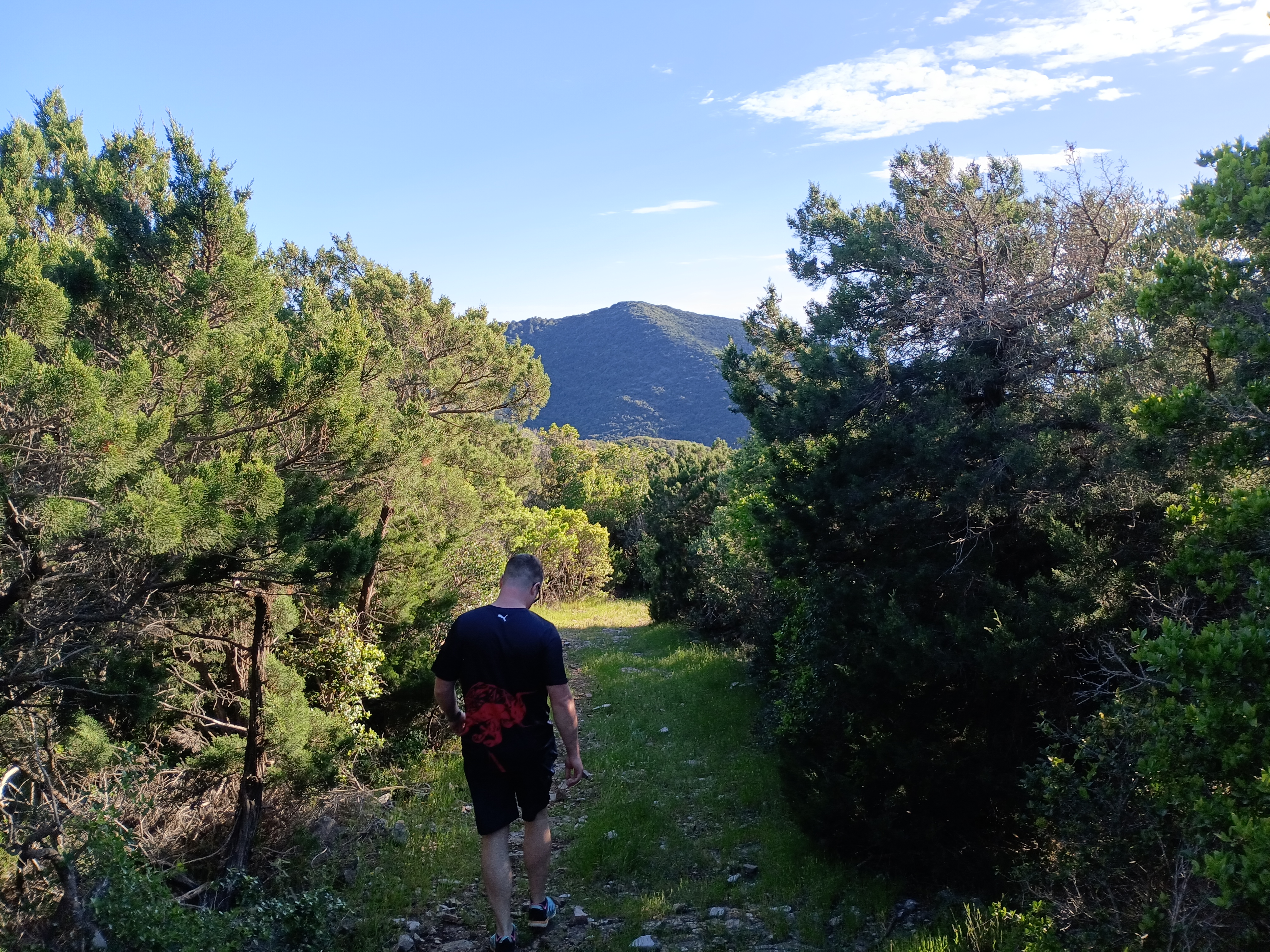

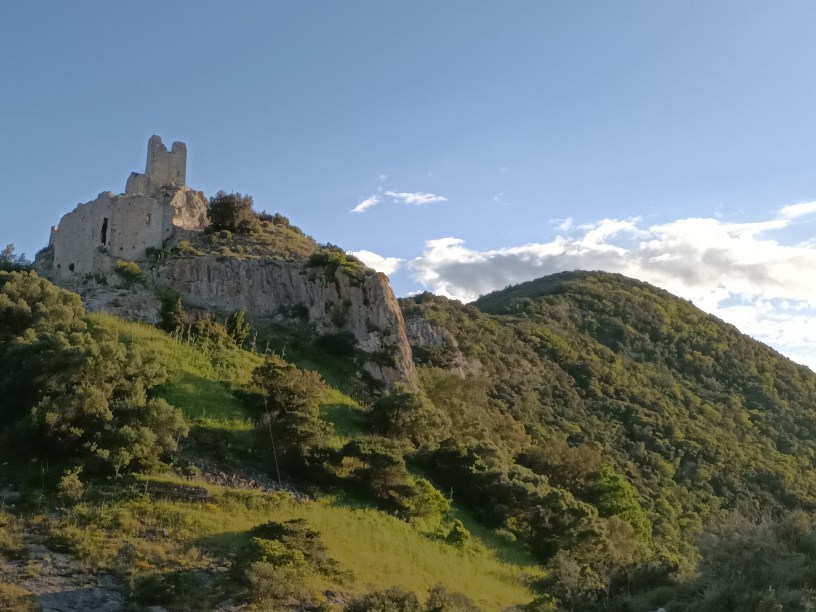
There’s a lot to explore in the park however we decide we are most interested in the Rocca San Silvestro which we follow the trail towards. This is a striking looking monument and the closer we get the more I start thinking this looks like a sunny version of the ruins of Dol Guldur in the Lord Of The Rings. Obviously its a lot more warm and welcoming looking however it still looks like part way between enchanted fortress and paranormal film location.


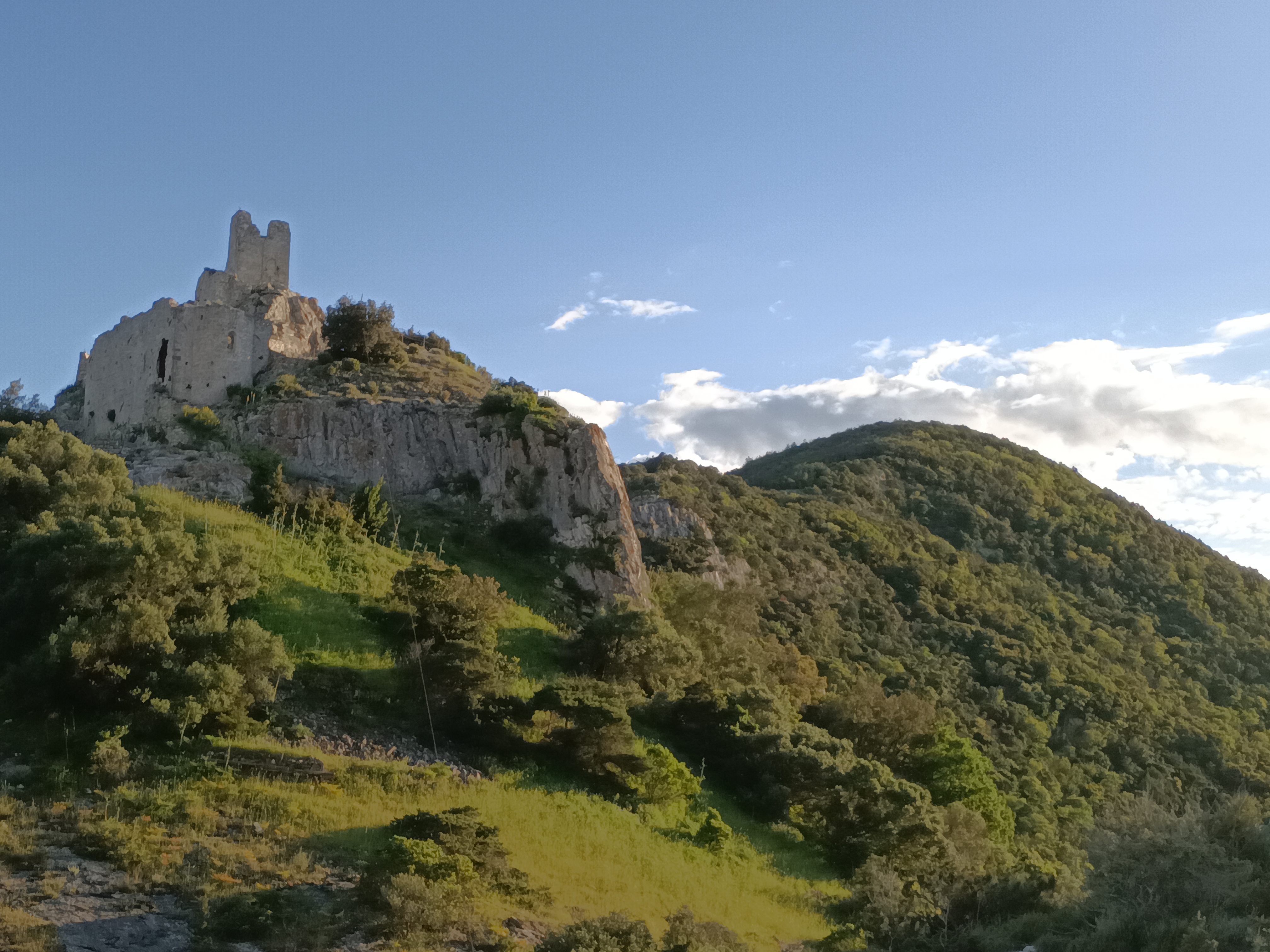
Rocca San Silvestro is a fortified village, built in a strategic position overlooking was was originally marshy coastal lowland between the the Gulf of Baratti and the Metalliferous Hills, however it also processed silver copper and lead from mines of the area. It has a commanding view of the surrounding area which would have been important as ores from the area were used in the production of Silver and Copper making it I’d expect quite the target. With the event of economic troubles, wars and even the plague (the black death) the village experienced population decline and was abandoned in the 14th century. It is late in the day now and because of that we can’t go and explore the village as you can only go as part of a guided tour, we get some cool photographs from where we are though.
While hiking along the other trails we pass shafts driven from the surface to below which I’d expect are the Etruscan works that we saw in the ceiling of the mine below. Part of my brain really wants to abseil down them however I’ve not got my gear with me. Also I think suddenly rappelling down in front of a confused mine tour group probably wouldn’t go down very well. We decide at this point to head back, it’s been a great place to visit if very briefly, and if you are in Tuscany with spare time and less hungover than we were its well worth a visit.


 Requiem For The Extreme