
Good Morning Adelaide
I wake from an overly sweaty sleep to the sound of what sounds like someone screaming ‘argh! and feel around for my phone to look at the time, it’s about 7am and it takes me a moment looking around the unfamiliar room, before it twigs I’m in Adelaide. The ‘Argh’ noise which I keep hearing intermittently is either a bird which all seem to make strange noises, here or someone’s accidentally located a snake.
A few shafts of light shine through the gaps in the curtains and the temperature is already rising as I roll out of bed. I’m in South Australia visiting my mate Jordan and I’m up early – which is pretty easy to do when the temperature is in the mid to high thirties – I’m talking Celsius here – every day, the coolest part of the day being the morning after which it just gets hotter. I’m not complaining though, having recently visited the Sahara this seems almost comfortable.
Once I’m fully awake my first task is waking Jordan up because we need to be at Port Adelaide, the main seaport of South Australia by 8:30. Playing it safe by just calling his name to wake him doesn’t work so I have to resort to giving him a shoulder shake which still take a couple of minutes, and just short of me having to push him physically out of bed like I’m rolling a dead body in a carpet he wakes up with a start maybe thinking he is about to be assaulted by some unknown assailant, until consciousness kicks in and he remembers who I am.
Shortly after this we jump in the car and drive off in the direction of Port Adelaide, our destination is a place called Garden Island, a small island in the North Arm of the Port River. Before we get there though we have a brief stop at ‘Hungry Jacks’ which is what Burger King has to call itself in Australia – for an unhealthy attempt at breakfast. Tired looking workmen in fluorescent vests who seem to make up about 70 percent of the population of Urban Australia stare at us like we just walked in wearing clown suits to buy our ‘Turkish Brekky Rolls’. I’m laughing while I write this after finding out the small / younger tradies get nicknamed ‘glow worms’ and the ones in pink get called ‘safety flamingos’.
Don’t Wreck Your Friends
When I was looking up some adventures for me and Jordan to get up to without completely psychically destroying him I’d seen some pictures of the wrecks around Garden Island and it looked like it was pretty impressive for a mini adventure on the water. It turns out the weather is so toasty and the UV is so high you could probably cook an egg on the car dashboard so this is turning out to be a great day to be out on the water, and I do love a bit of Kayaking. Jordan is worried he isn’t going to be able to keep up so we decide to go for a double kayak when we get there, because I have no issue acting like an outboard motor.
Garden Island And The North Arm
Even though we stopped to fuel up we still get to the Garden Island jetty before anybody else, the water is almost totally still with only a gentle breeze and shines like a slightly distorted mirror, there isn’t a cloud in the sky and its not yet as hot as the day will get. Nobody is here yet apart from us and the guide judging by the big trailer of kayaks we pulled up next to. As you already know from the blog title this area is a ship graveyard in fact one of nineteen in South Australia, here in the Port River there are five of those nineteen and this is also a Dolphin Sanctuary. It might seem strange for the Dolphins to choose a place so close to a busy port to breed and live however because of the mangroves and inlets the area is very sheltered and has an abundance of fish. The sanctuary covers a massive 118 square kilometres and Garden Island that we are standing on right now was actually a landfill site originally – it was capped with clay and soil and populated with native plants. It’s not so obvious to see now I think, the only giveaway being the bricks seen in and around the waters edge in places. As we stand looking out across the water to the wreck of a more recently abandoned ship – possibly the Trimaran mentioned in the article below – people start to arrive to join us on the tour, and after brief introductions we get into life jackets and choose our kayaks.
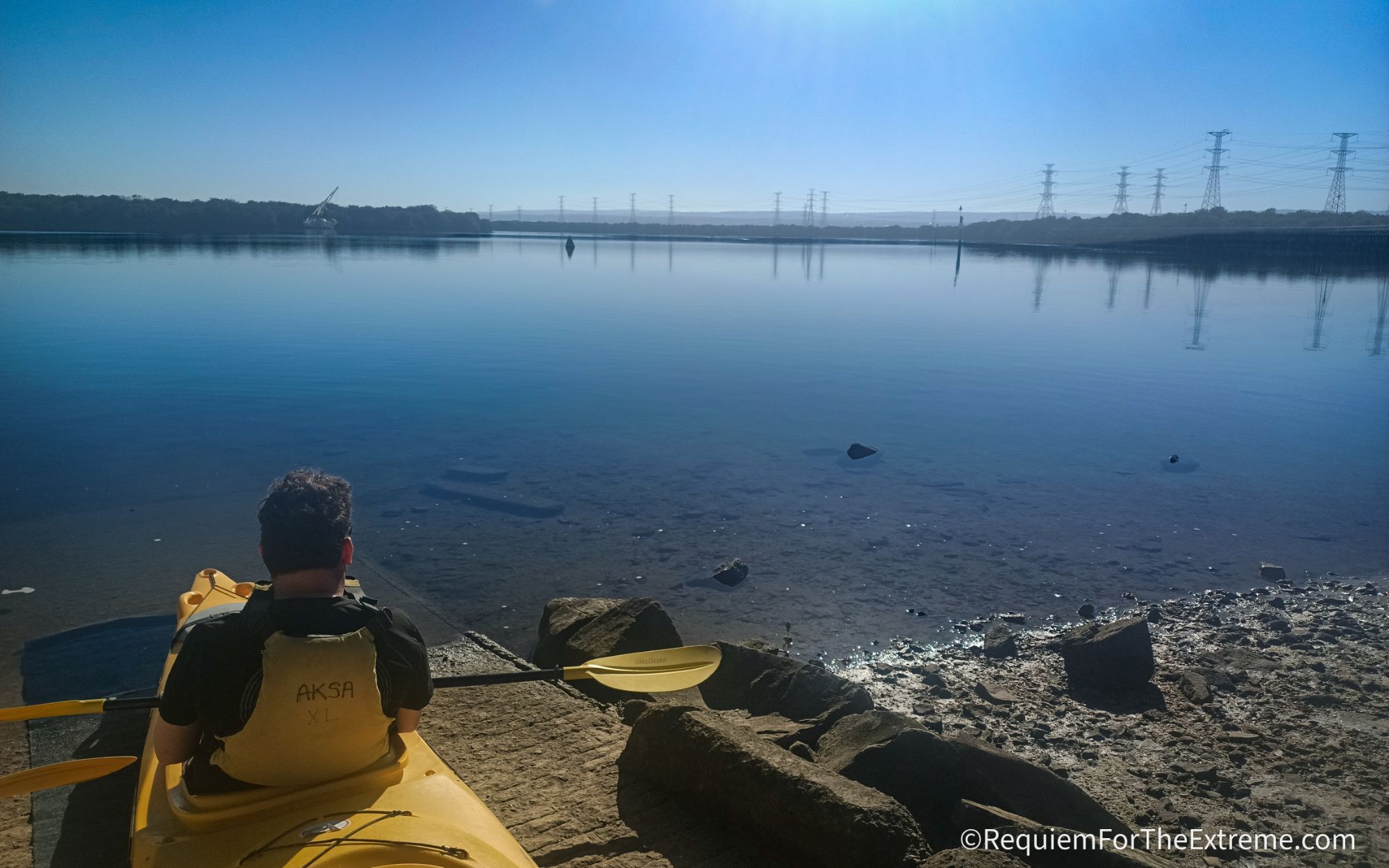
As we carry our big yellow kayak down to the shining water I imagine we look like two men carrying a giant banana, and we get in, the instructor giving us a push sending us gliding out into the calm water. We paddle out a little and we wait patiently for the rest of the group to join us. I’m not going to lie the temptation to tear off exploring without them is strong because it looks super cool out here. Obviously that wouldn’t be very polite though so we float about while at least one person realises maybe a little late that they don’t have the ability to use a kayak. Once this is sorted we start paddling out into the North Arm of the Port River.
The North Arm is an area where twenty five vessels, that are known of have been abandoned – ranging from ferries, pontoons, barges, dredges and even steam sailing ships. From 1909 to 1945 this was a final destination for ships that nobody could repair, were no longer of any use or in case of the ship ‘Dorothy H Sterling’ which we will later see, victims of the great depression. Some of the ships out here in the graveyard even saw use during World War One and World War Two before finally ending their journey here.
So why use this area as a ship graveyard? Simply put it was cheaper to abandon vessels here, there was less distance to take the ships than taking them into deeper waters, and the shallows made dismantling the ships for parts easier. The graveyard is now a piece of nautical history which is still of great interest to archaeologists and what remains of the vessels here is protected by the mangrove channels, mud flats and salt marsh of the estuary. Despite this and in the case of the remains of The Santiago which we are paddling towards now further efforts were made to preserve it’s remains in the form of sacrificial anodes being attached below the waterline of the hull, which are intended to slow the rusting of the structure.
The Santiago
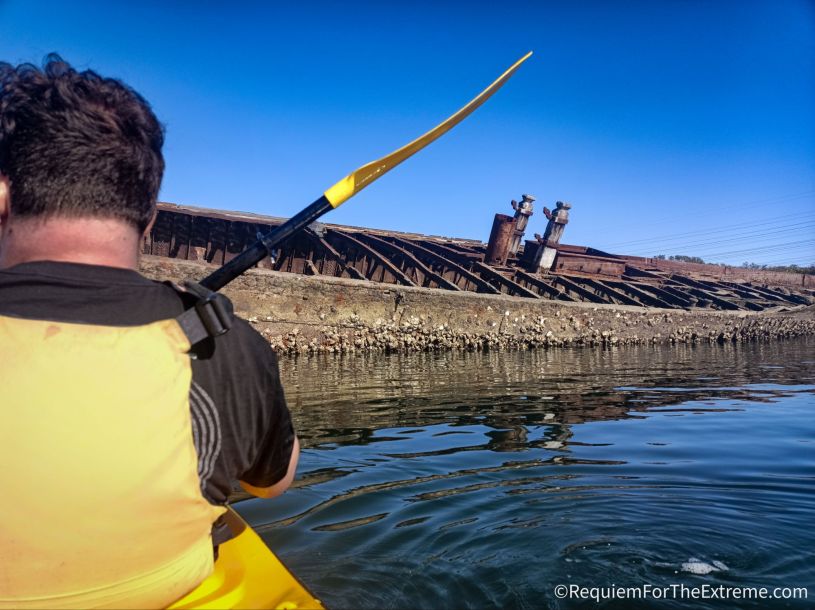
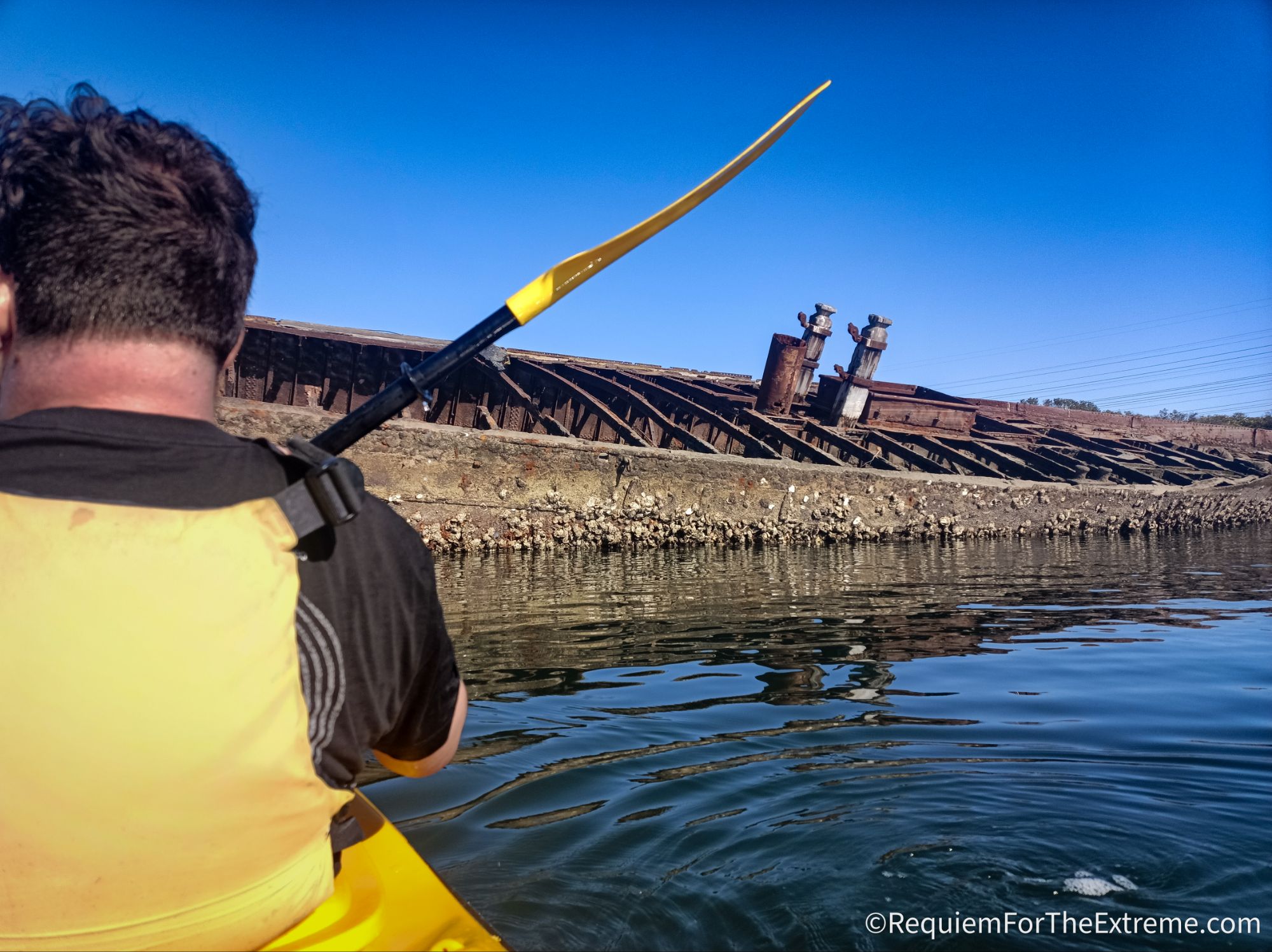
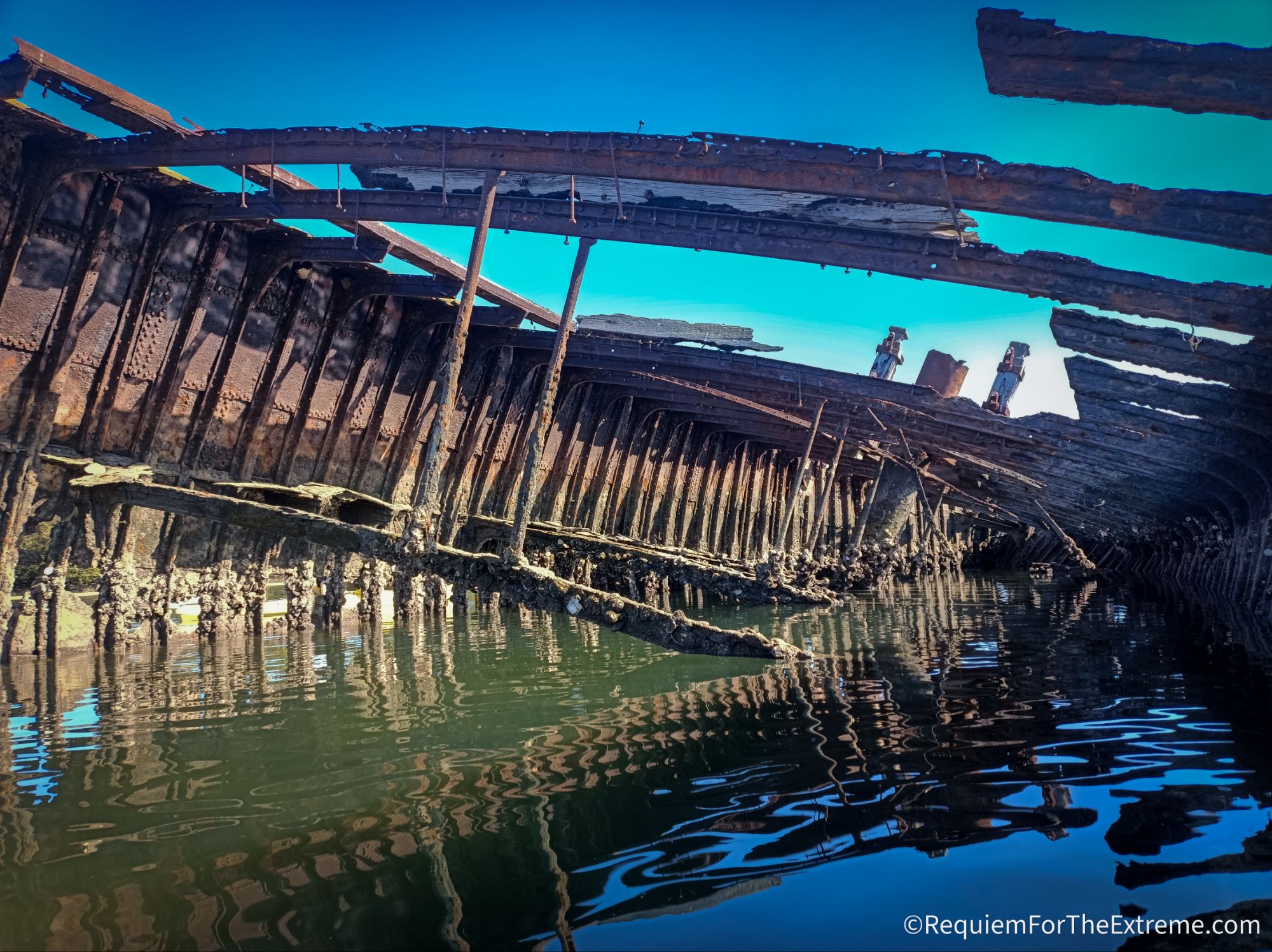
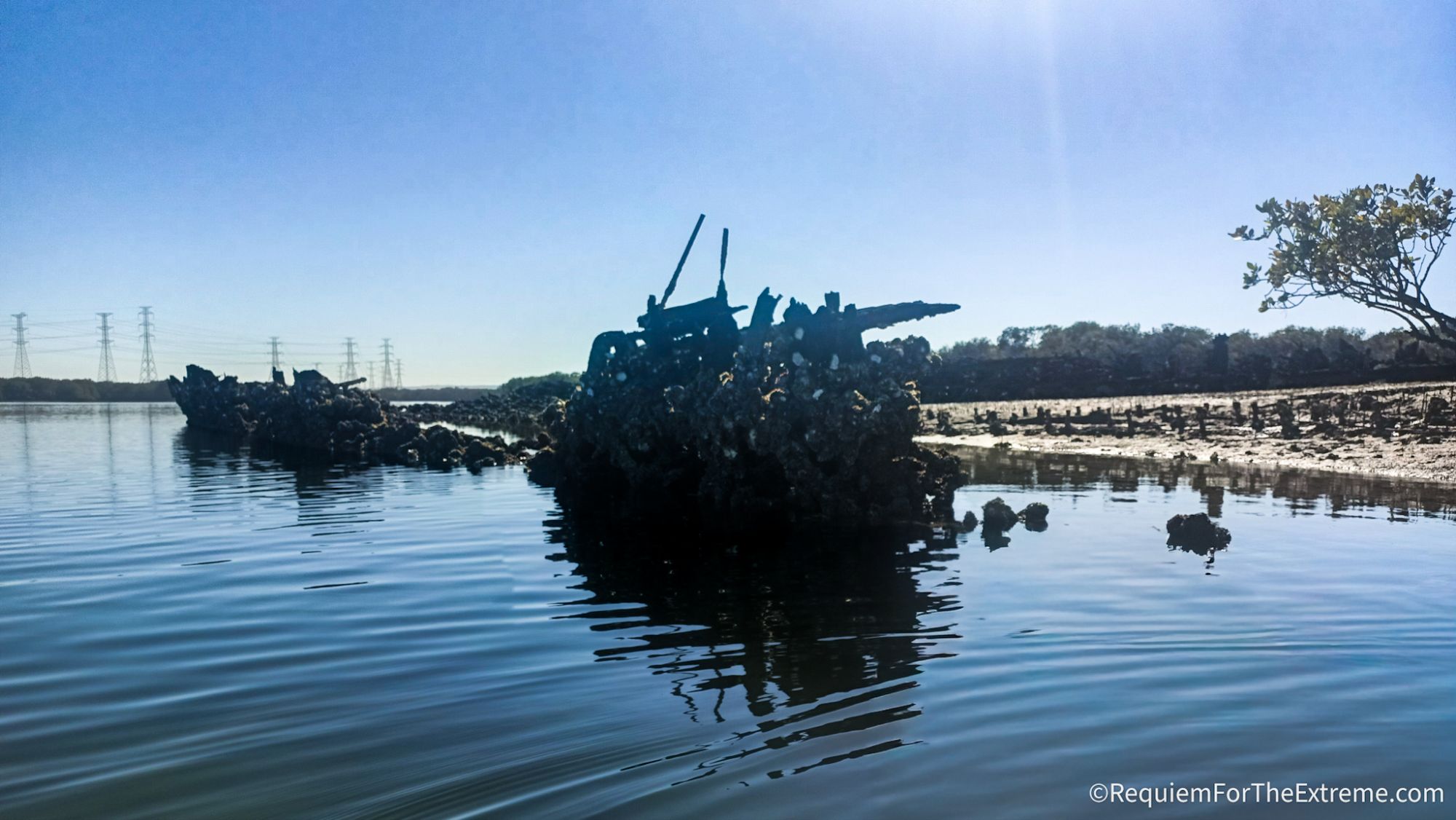
The Santiago is difficult to miss and it’s massive rusting hulk only gets more impressive the closer we get, the hull is a reminder of a bygone area that soon there will be few people left alive to remember. The wreck is now populated with local wildlife instead of long gone sailors, the most noticeable being around the waterline where the hull is encrusted with sharp barnacles and oysters. The upper reaches of the wreck are pitted and in places slowly starting to crumble, flaking away and slowly become less of it’s former self by the year.
This iron hulled three masted sailing ship measured 49 metres when it was built all the way back in the UK in Methil, Scotland around 170 years ago in 1856. Not only is this the oldest ship that was abandoned out here but it was also the last. After working global trade routes it was eventually ‘hulked’ – which is the action of stripping the ship of it’s machinery, masts and rigging leaving just the hull – in 1900 by the Adelaide Steam Tug Company and used for the remainder of it’s working life as a coal lighter – a barge used to refuel larger ships docked out in deeper water- before being finally abandoned out here in the North Arm in 1945.



Dorothy H Sterling And Wooden Transformers
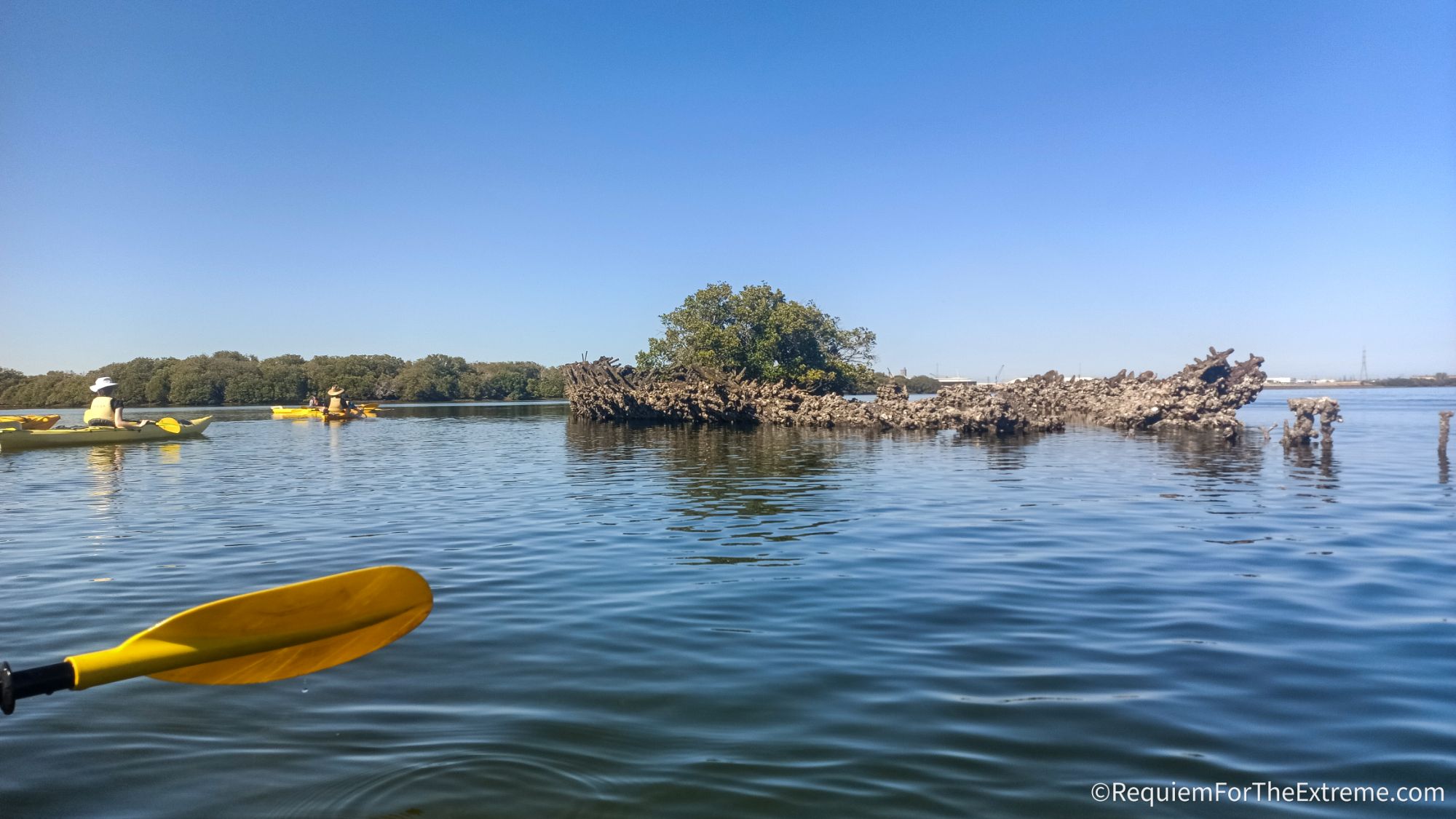
The next wreck we come across is the remains of the Dorothy H Sterling, a six masted schooner. Incidentally a schooner is also a term for a beer here slightly smaller than a pint which being English I don’t really get the point of. I’m sure some Australians can educate me in the blog comments. We find ourselves in front of what remains of the ship which now has found some natural purpose as a mini island formed by sediment and mangroves now protrudes from the centre of the wreck in a ever present reminder that everything returns back to nature eventually. The Dorothy was built back in 1920 around 106 years ago in Portland Oregon and originally named rather unoriginally ‘Oregon Pine’ nope that’s not a transformer it was what the ship transported. And if you are now thinking of wooden transformers you can blame me I guess. It sailed from America to Australia with it’s cargo and was given the name ‘Dorothy H Sterling’ a very grandma sounding name by its new captain E.R Sterling after he purchased the ship in 1927.

The ship ended up here as a final resting place due to the great Great Depression – the most extreme time of economic downturn in history. I’d make a dark Great Depression joke here but I wouldn’t want too many people getting invested in it. *buh boom*. Anyway to sum up this period of time globally employment rates fell, banks failed, investments lost their value and generally capitalism showed everyone that it could fail. Unfortunately this will probably start to sound familiar as history has a nasty habit of repeating itself. How all this put the Dorothy in it’s final resting place is described incredibly poignantly and really sets the scene in a column in the Adelaide paper ‘The Advertiser’ on the 5th February 1932 of which the opening paragraph states
“In a few weeks the Dorothy H.Sterling, once a trim six-masted barquentine which rounded the Horn under bare poles and sailed the broad Pacific under crowded canvas, will know the sea no more, for at the end of this month she will be towed from the Basin at Port Adelaide, where the relentless hand of the ship-breaker has wrenched all her beauty from her to the desolate wastes of the North Arm. that graveyard of broken ships where the waves lap sadly and the wind sighs mournfully through the timbers of what were once graceful craft”
You can read the rest of that article at https://trove.nla.gov.au/newspaper/article/73854424 and it is a very well written piece – in fact it’s made me feel like I need to put more effort in myself.


For the last part of our adventure we head towards the Mangroves, spotting the occasional dolphin of which the dolphin sanctuary has approximately 20 in residence and apparently around another 400 that visit. These are the Indo-Pacific bottlenose dolphin and we are warned not to approach them, only let them approach us if they want to. This is in order to protect the dolphins by not interrupting their natural behaviour. I’m kind of gutted they don’t take an interest, as apparently people have become boring to them and we sit and watch patiently from afar as they play, and I mentally kick myself for not bringing a telephoto lense with me for the camera.
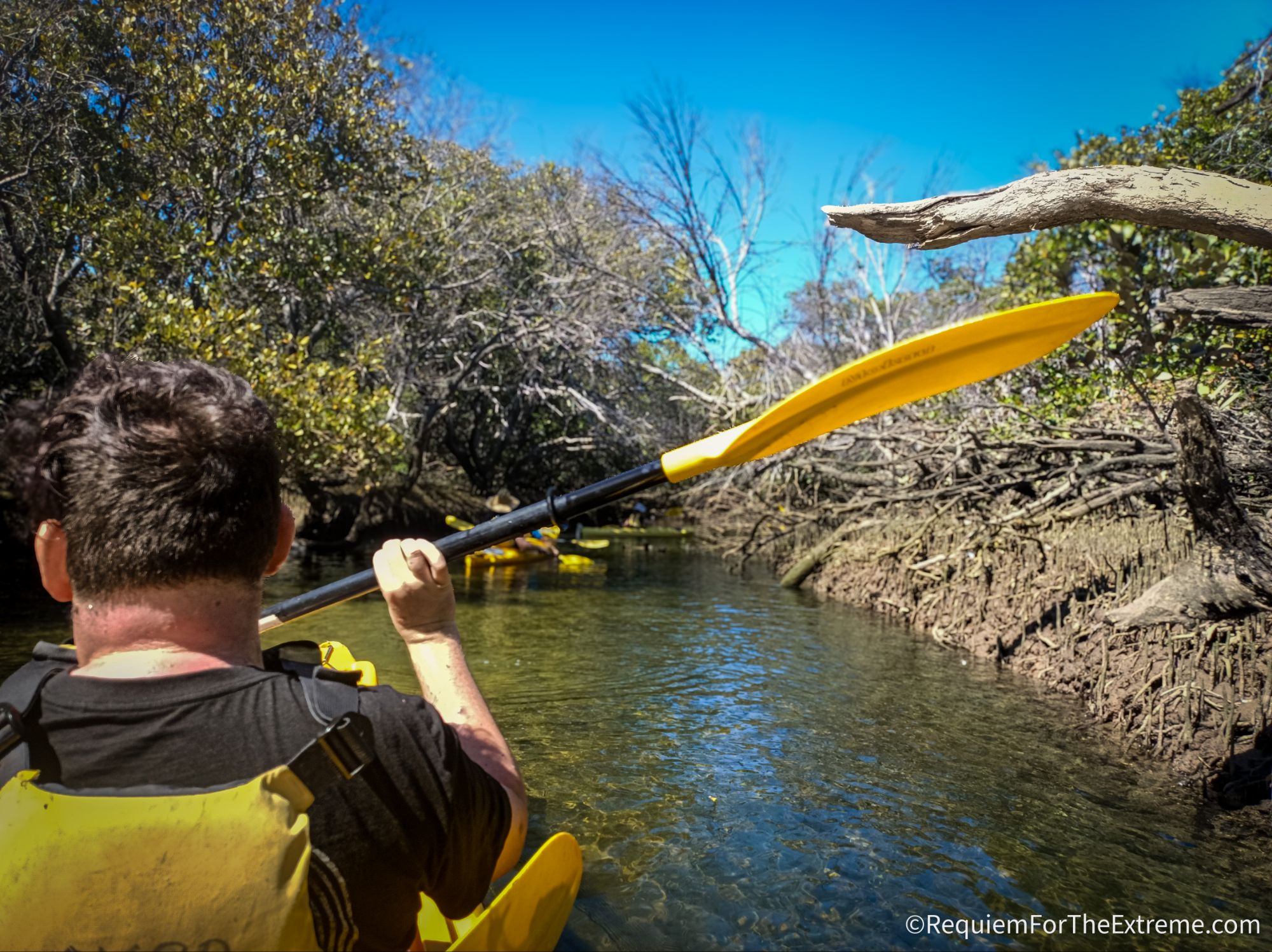
We move on and paddle into the green dappled shade of the mangroves where the light sea breeze gently rustles through the leaves. This is the first time I’ve been amongst mangrove trees and it’s pretty visually striking to see the contrast between the branches and the oyster shells and the sharp roots protruding from the muddy banks of the channels between the trees, making them resemble beds of nails. The forest here is made of grey mangroves, and it is pretty mind blowing knowing that it has been here for over 10,000 years – the beginning of the current epoch we are now in the Holocene when megafauna, giant beasts would have roamed around Australia. The mangroves survive using the roots we can see pointing up out of the banks and are used kind of like snorkels, breathing through tiny pores and filtering out sea water in fact up to 90% of the salt. The remaining ten percent salt probably explaining the taste of the mangrove seeds we see floating and bobbing past our kayaks. The guide explains that while you can eat these seeds they are not very tasty but we can try it if we like – for once I pass on the opportunity only to later find out apparently they also taste bland, and bitter on top of the saltiness. I’m a big foodie but I don’t feel like I’ve missed out on much here!
Leaving the mangroves we head back into the burning sun of the day and as we make our way back across the water with the idea of a cold pint in the local brewery in mind. I would love to come and explore this place solo at some point, I can imagine kayaking around the whole area would be amazing what’s more, we really we only scratched the surface of the ship graveyards this tour so something to look forward to in the future!

Enjoyed this blog and want to be updated when the next goes live? Sign up below and we will send you out some free stickers plus be in for a chance to win when our brand giveaways go live!

