“…………in the final analysis the only true bulwark against death is to live. Biafra rejects death…Biafra lives.
C. Odumegwu Ojukwu
A Side Quest
Standing on the summit of Toubkal our guide gives us a choice, descend the way we climbed up or take a more interesting route back to Imlil. And of course we say yes to this because we love an adventure, and we follow him into the top of Toubkal’s large North-West couloir down some seriously slippy scree. For those who don’t hike or ski – a couloir which means a corridor in French in this case usually is used to describe a narrow deep gully with steep sides though weirdly they can also be quite wide in some cases such as this one. We start climbing again and I’m wondering why exactly however we don’t ascend very far, and when we stop we see a strange sight.
Something’s Out Of Place
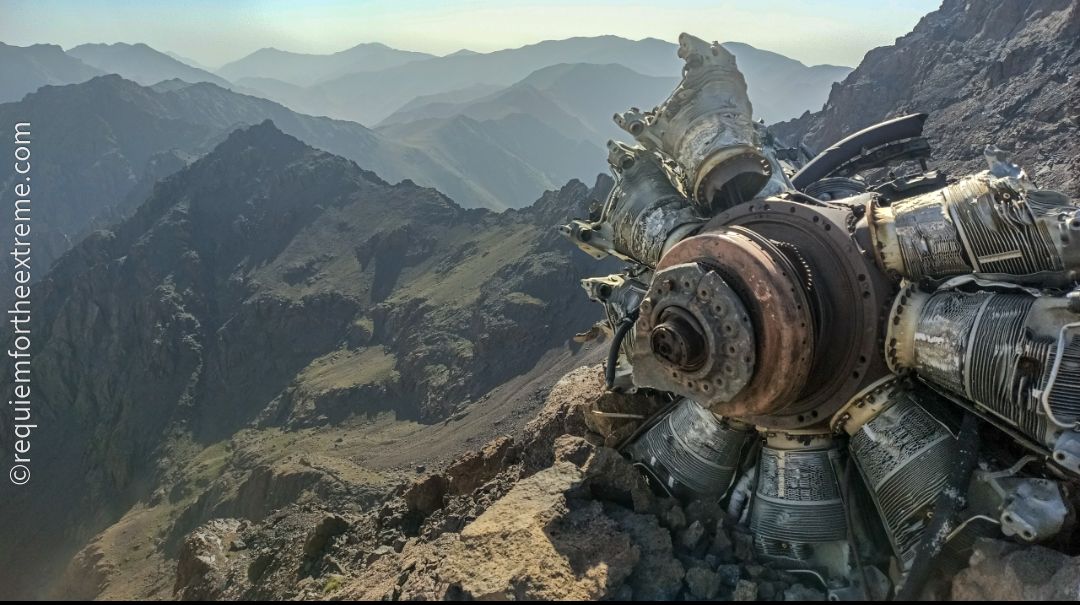
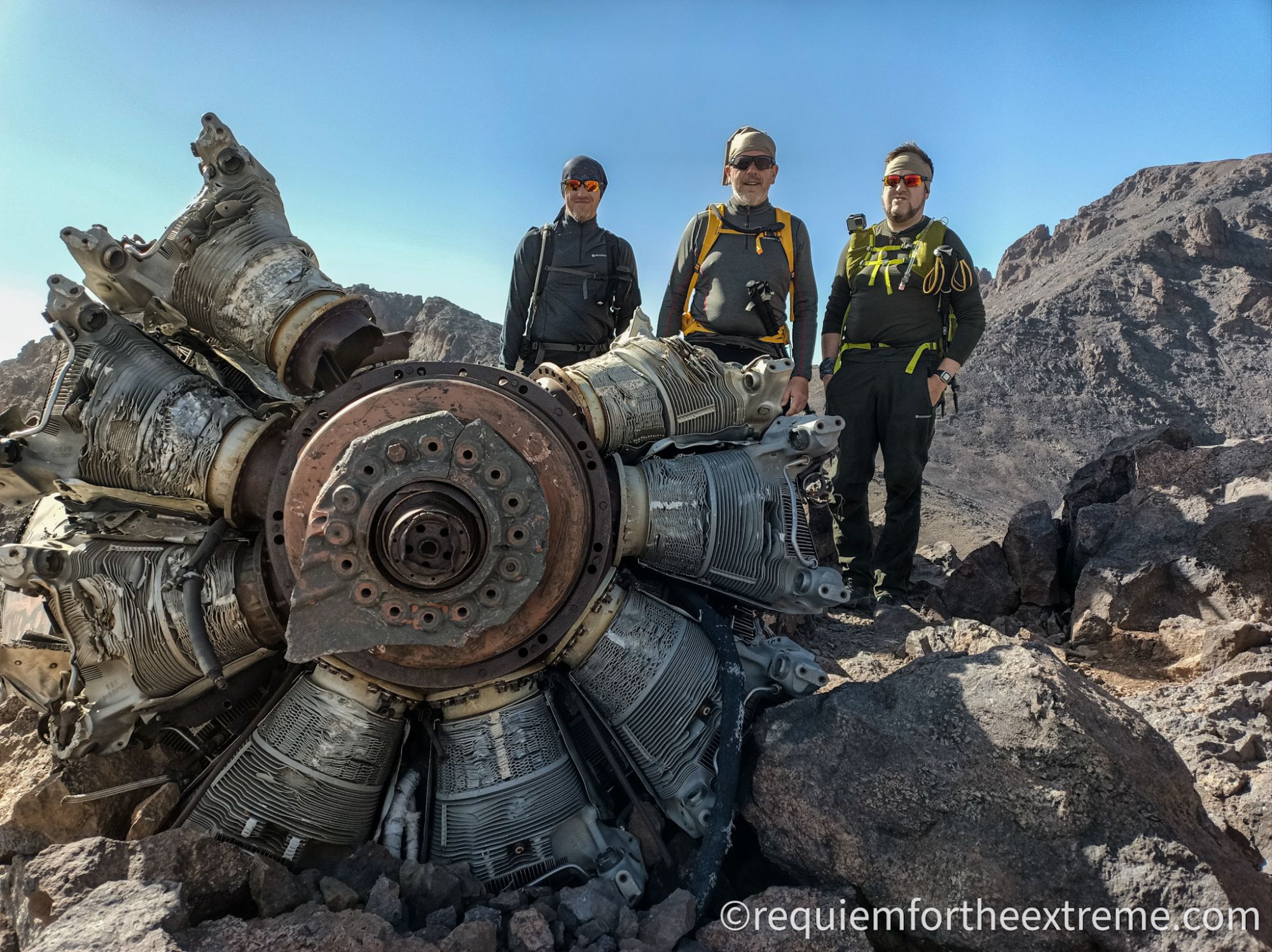
This is part of Tibhirine/Tibherine East and embedded here in the peak looking stark and alien against the backdrop of the dusty Atlas Mountains, which in the hazy early morning light look like a vast oil painting, is a heavily damaged aircraft engine almost melded into the rock and here high up and looking out into the vastness of the Atlas, it seems quite surreal.
This engine is from a Lockheed L-749 Constellation aircraft which crashed here on Nov 28th 1969. This aircraft had a top speed of 377 mph and weighed around 26 tonnes even before loading cargo. When this plane crashed over 26 tonnes of weight would have hit the mountainside at over 300 mph. Knowing this, it’s hardly surprising that this engine is embedded in mountain here. Below is a video of one of these engines closer to the way it should look.
“The crew was performing a cargo flight from Faro to Uli with an intermediate stop in São Tomé with ammunition on board. While overflying Morocco by night, the crew encountered engine problems and informed ATC they want to divert to the nearest airport. The aircraft lost altitude then struck the slope of Mt Tibhirine located near the Mt Toubkal, south of Oukaïmeden, in the Atlas range. All SAR operations were suspended after few days as no trace of the aircraft nor the crew was found. In July 1970, the debris were located on the top of the mountain, at an altitude of 3,900 meters. All eight occupants were killed and the aircraft was totally destroyed by impact forces”https://www.baaa-acro.com/crash/crash-lockheed-l-749a-constellation-mt-tibhirine-8-killed
The Tragic Tale Of The Lost Republic
The plane was headed to a newly formed successionist republic in West Africa and our guide tells us when it crashed it was loaded with ammunition and money. It had this cargo because on the 30th May 1967 under the leadership of Lieutenant Colonel Chukwuemeka Odumegwu Ojukwu – yes one hell of a mouthful to say the republic had formed from three states of the Eastern region of Nigeria and declared it’s independence under the name of the ‘Republic Of Biafra’. The Nigerian federal government did not accept the succession, one reason more than likely being the Eastern regions abundance of oil reserves, and declared war on the newly formed republic which began the Nigerian civil war.
In 1968 Biafra lost it’s seaports in the conflict with the federal government, and famine set in. By 1969 when Biafra was possibly at it’s lowest ebb, suffering from a shortage of ammunition and widespread starvation federal troops launched a massive attack on Biafra. The plane wrecked on Tibhirine during this lack of ammunition – it may have been one of the last heading to Biafra in this capacity. On January 11th 1970 Ojukwu fled to the Ivory Coast, which is understandable as if he had stayed he may well have been executed. Four days later Biafra surrendered in Lagos putting an end to the conflict and of course the republic of Biafra itself which was integrated back into Nigeria shortly after. Figures put the death toll at Between 500,000 and 3 million people. Most of the deaths were children who died from disease and starvation.
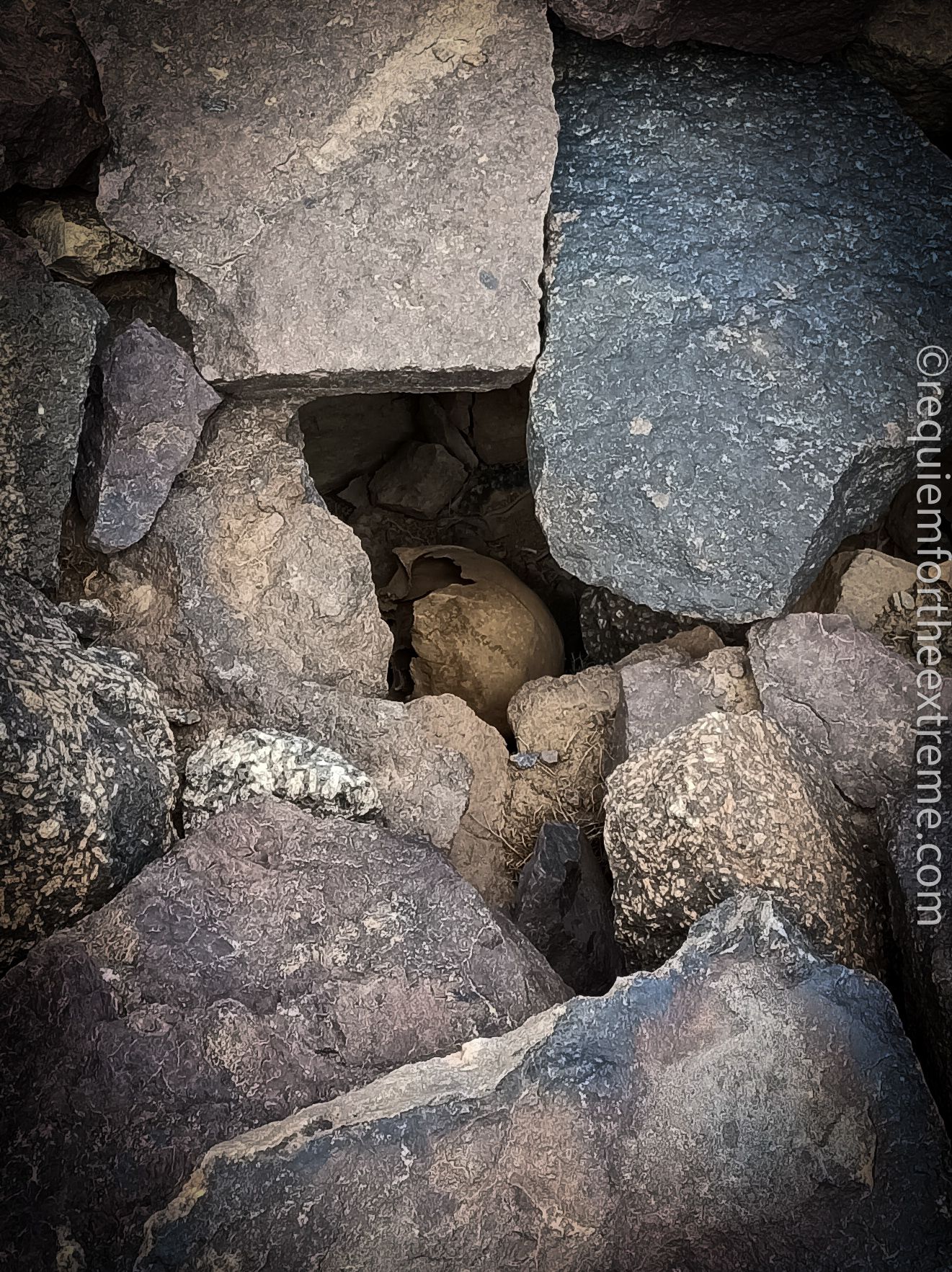
We hike down the northwest couloir of Toubkal seeing more and more pieces of fuselage and bits of engine appearing in view showing us just how devastating this crash would have been. Near the bottom of the couloir our guide stops us and says ‘they are here’. We all say ‘who?’ feeling a little confused. ‘The people who were in the aircraft, look down at your feet’ he says, and we all look down. Looking through the boulders I realise they cover a shallow rocky pit and I’m looking at the back of a smashed human skull.
He tells us that people tried to searched the area looking for survivors who needed to be rescued but none were found. Long after the search was called off the bodies of eight people were discovered and they were placed in the simple grave you can see here. you would easily walk past the final resting place of the aircraft occupants and never know. And even if you did notice it’s likely you’d never know their connection to an African Republic that no longer exists and that they made the ultimate sacrifice, just maybe not in the way they thought they might. Even if some had survived the crash if you were severely injured in this environment and people did not know you were here you would not survive long. There are no obvious sources of water where we are now, only far below in the valley we are descending to which is a challenge even uninjured. All of this gives us something to think about as we hike down the arid dry dusty slopes and towards Sidi Chamharouch.
Enjoyed this blog and want to be updated when the next goes live? Sign up below and we will send you out some free stickers plus you’ll be in for a chance to win when our brand giveaways go live!